Former President Donald Trump's renewed campaign for the United States to seize or purchase Greenland has ignited a significant backlash from within his own Republican party, with senior figures warning the move could cripple the US economy and fatally undermine the NATO military alliance.
Senior Republicans Sound the Alarm
The controversy intensified over the weekend as Trump threatened new tariffs on European allies, including Denmark, Germany, France, and the UK, until the US is permitted to buy the autonomous Danish territory. This followed the deployment of NATO troops to Greenland on Thursday in response to Trump's earlier threats of a forceful takeover.
Prominent Republican senators were quick to condemn the strategy. Senator Lisa Murkowski labelled the proposed tariffs "unnecessary, punitive, and a profound mistake" in a post on X. She argued they would push core European allies away while doing nothing for US security, forcing NATO to divert resources to Greenland. "This dynamic plays directly into [Vladimir] Putin's hands," Murkowski warned, "by threatening the stability of the strongest coalition of democracies the world has ever seen."
Her colleague, Senator Thom Tillis, was even more blunt, stating that "actively pushing for coercive action to seize territory of an ally is beyond stupid." He asserted the approach was "bad for America" and beneficial only to adversaries like Putin and China's Xi Jinping, undermining Trump's own legacy of strengthening NATO.
Warnings of a NATO Breakup
The criticism extended beyond the Senate. Mike Pence, Trump's own former Vice President, expressed concern that the current posture "does threaten to fracture that strong relationship, not just with Denmark, but with all of our NATO allies." He reaffirmed Denmark's status as a strong US ally during an appearance on CNN's State of the Union.
Perhaps the starkest warning came from Republican House member Michael McCaul on ABC's This Week. He cautioned that while the President has full military access to Greenland for defence, an invasion would be catastrophic. "It would turn NATO on its very head and, in essence, press a war with NATO itself," McCaul said. "It would end up abolishing NATO as we know it."
Protests and Political Manoeuvring
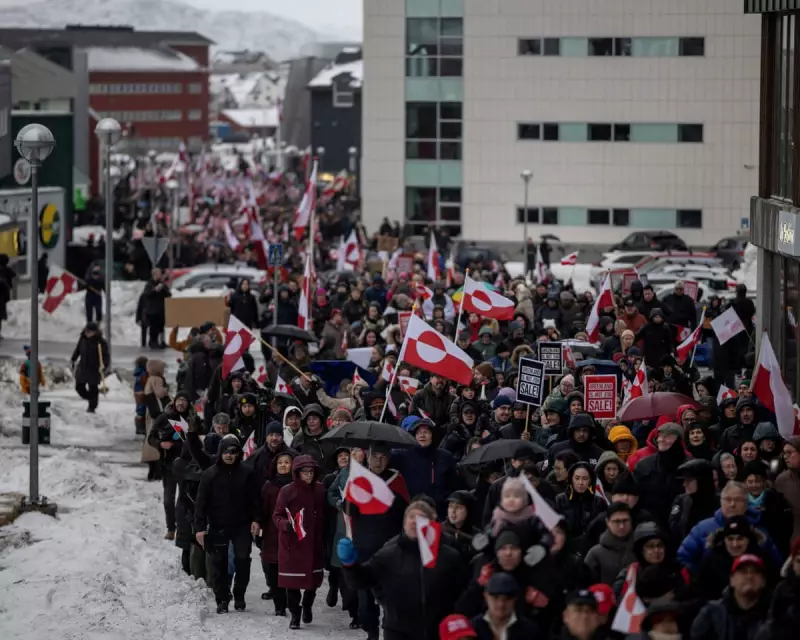
The political storm unfolded against a backdrop of public anger in Greenland itself. On Saturday, thousands of Greenlanders marched in the capital, Nuuk, protesting Trump's demands and calling for the island to determine its own future.
A bipartisan delegation of US lawmakers, including Tillis and Murkowski, travelled to Denmark to meet Prime Minister Mette Frederiksen and emphasise Republican opposition to any forcible seizure of Greenland. This dissent reflects broader American opinion, with polls showing a substantial majority of the public opposes taking control of the island.
While most Republicans voiced alarm, some offered support. Former House Speaker Newt Gingrich described Trump's posture as "a lot of noise to set up a negotiation" to secure tourist, economic, mineral, and national security rights. He highlighted Greenland's vast natural resources, including oil and gas reserves, as a "huge economic opportunity" sought by the US, China, and Russia.
Trump has repeatedly justified the pursuit of Greenland on national security grounds, citing concerns about Russian and Chinese expansion in the Arctic. Despite insisting Denmark cannot protect the island in a confrontation, he has also suggested "something will work out" regarding its future governance.