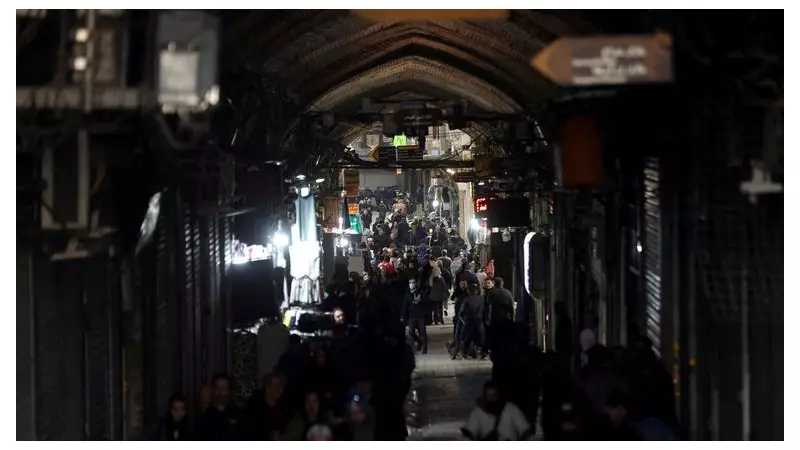
US President Donald Trump has issued a stark threat to intervene in Iran's escalating domestic protests, prompting a sharp warning from Tehran that such action could destabilise the entire Middle East.
Trump's 'Locked and Loaded' Ultimatum
In a post on his Truth Social platform on Friday 2 January 2026, President Trump wrote: "If Iran shoots and violently kills peaceful protesters, which is their custom, the United States of America will come to their rescue." He added a direct military warning, stating: "We are locked and loaded and ready to go."
The threat comes as Iran faces its largest demonstrations in more than three years, sparked by a severe economic crisis. The national currency, the rial, has collapsed in value, with one US dollar now costing approximately 1.4 million rials, sending domestic prices soaring.
Iran's Defiant Response and Protest Toll
Iran's leadership swiftly condemned the US President's remarks. Ali Larijani, Secretary of Iran's Supreme National Security Council, responded on X, formerly Twitter. He warned that American interference "would mean destabilising the entire region and destroying America's interests." Larijani also addressed the US public directly, stating: "Trump started this adventurism. They should be mindful of their soldiers' safety."
The protests, now in their sixth day, have turned deadly. At least seven people have been reported killed in violence across parts of the country, including the capital Tehran. While the demonstrations are the most significant since the nationwide unrest triggered by the death of Mahsa Amini in police custody in 2022, they have not yet reached the same intensity or geographical spread.
Broader Tensions and Domestic Pressure
The exchange occurs against a backdrop of already heightened US-Iran tensions. In June, the Islamic Republic launched missiles at the US Al Udeid Air Base in Qatar, retaliation for American strikes on Iranian nuclear sites during a concurrent conflict with Israel.
Domestically, Iran's reformist President, Masoud Pezeshkian, has signalled a desire to negotiate with protesters. However, he has publicly acknowledged there is little his civilian government can do to halt the rapid depreciation of the currency, which remains the core grievance driving people onto the streets. What began as protests over the cost of living have increasingly included chants against Iran's theocratic regime.
The situation presents a volatile mix of deep-seated economic discontent and the potential for international confrontation, with Washington's substantial military footprint in the region adding to the precarious stakes.