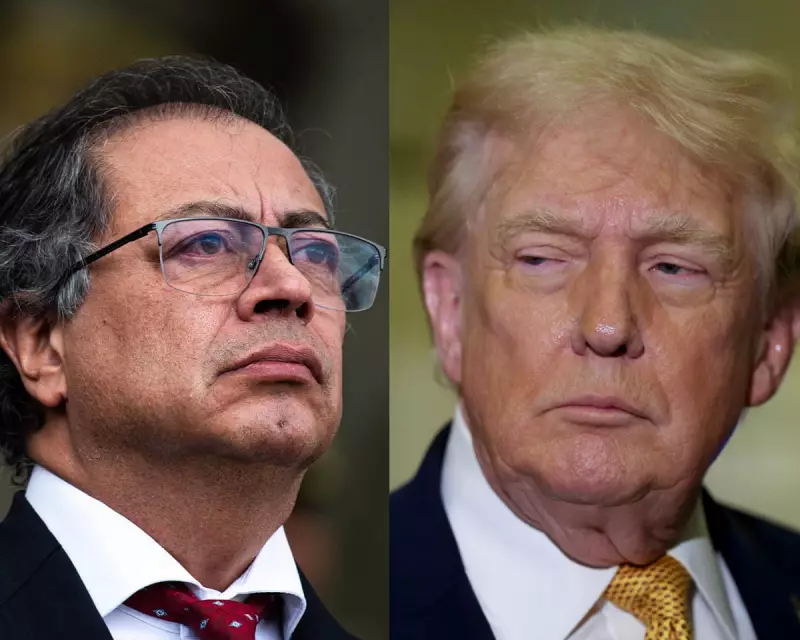
A dramatic escalation in rhetoric between the United States and Colombia has plunged relations between the long-time allies to a new low, with threats of military action and armed resistance now dominating the discourse.
Trump's Cocaine Accusations and Invasion Threat
Speaking to reporters aboard Air Force One, former US President Donald Trump launched a scathing verbal attack on Colombia and its leader. He labelled the South American nation as "very sick" and claimed it was "run by a sick man who likes making cocaine and selling it to the United States." Trump further alleged the existence of "cocaine mills and cocaine factories" and ominously suggested the situation would not last long.
When questioned on whether military intervention in Colombia—similar to recent US action in Venezuela—was a possibility, Trump replied, "It sounds good to me." These remarks mark a stark departure from decades of largely bipartisan support in Washington for Colombia, a key partner in anti-narcotics efforts.
Petro's Defiant Response and Guerrilla Warning
Colombian President Gustavo Petro, a former leftist guerrilla with the M-19 group, issued a fierce and personal rebuttal. He categorically denied Trump's allegations, stating, "I am not illegitimate and I am not a narco." In a post on the social media platform X, he challenged Trump to "stop slandering me" and asserted the former US president was "speaking without knowledge."
Petro, who demobilised in the 1990s and later helped draft Colombia's 1991 constitution, issued a stark warning about the potential consequences of a US attack. He argued that bombing campaigns would turn "peasants" into "thousands of guerrillas in the mountains." Furthermore, he warned that detaining a popular president would "unleash the 'jaguar' of the people." In a powerful declaration, Petro stated, "I swore not to touch a weapon again ... but for the homeland I will take up arms again."
Background of Strained Relations and Security Concerns
The war of words is the latest flashpoint in a relationship that has deteriorated sharply. The US revoked Petro's visa in September 2023 after he called on American soldiers to disobey illegal orders. In October, it imposed financial sanctions on Petro, his wife, and several close collaborators.
While Colombia remains the world's largest producer of cocaine, the trade is controlled by illegal armed groups like the Gulf Clan, the National Liberation Army (ELN), and dissident FARC factions—not the government. The administration of President Petro, elected in 2022, has continued to combat these organisations.
In a clear sign of heightened alert, Colombian Defence Minister Pedro Sánchez announced on Saturday that the president's security detail had been reinforced. Notably, while some figures within Colombia's right-wing opposition have expressed support for Trump, the broader political spectrum has united in rejecting the threat of a US attack on Colombian soil.
As US forces increased their presence in the Caribbean to pressure Venezuela's Nicolás Maduro, they have also conducted strikes on suspected drug boats in the eastern Pacific region off the Colombian coast, further complicating the already tense bilateral dynamic.