Trump's Diplomatic Nominee Confronts Senate Scrutiny Over Controversial Statements
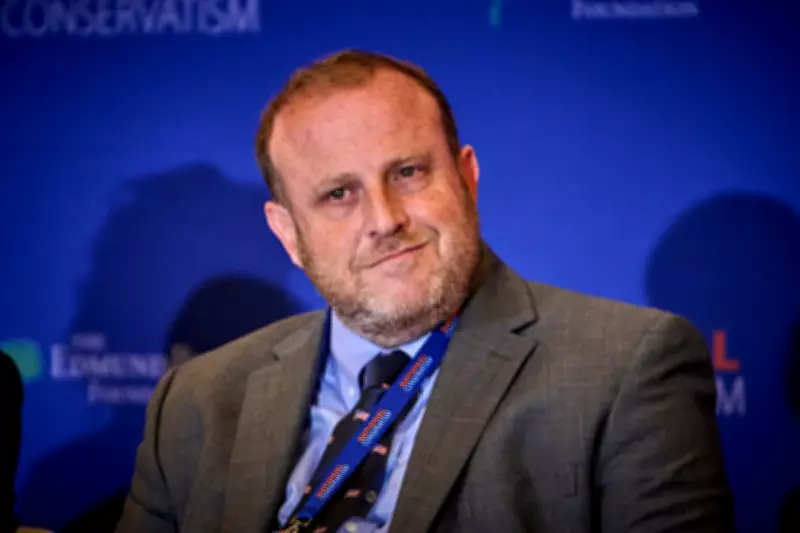
Jeremy Carl, President Donald Trump's nominee for assistant secretary of state for international organizations, is facing intense scrutiny from Senate Democrats as he prepares for his confirmation hearing. The nominee, who would oversee U.S. relationships with the United Nations and its agencies, has a documented history of making inflammatory remarks that have drawn accusations of racism, antisemitism, and homophobia.
Background and Nomination Details
Carl, a Montana native who previously served as deputy assistant secretary of the interior during Trump's first term, is currently a senior fellow at the Claremont Institute, a conservative thinktank based in Upland, California. His expertise focuses on immigration, multiculturalism, and nationalism issues. His nomination hearing before the Senate foreign relations committee represents a critical moment for the Trump administration's diplomatic appointments.
Controversial Statements and Deleted Social Media Posts
The nominee faces significant opposition due to his extensive record of controversial statements, many of which have been deleted from social media platforms. Carl has repeatedly expressed sympathy for the "great replacement" theory, a baseless conspiracy suggesting that immigration is deliberately engineered to replace white populations. In September 2021, he wrote: "Imagine thinking the Great replacement is a conspiracy theory."
In response to comments about systemic racism from then-congresswoman Cori Bush in 2021, Carl wrote: "There is no 'peaceful coexistence' we are going to have when our opposition is led by people like this. We either win or die." That same year, he inaccurately claimed a "total absence" of white Protestants in Joe Biden's administration, dismissing the creation of Juneteenth as a federal holiday as "race hustling and white-shaming."
Additional Inflammatory Remarks
Following the conviction of Proud Boys members for seditious conspiracy, Carl wrote that he would "rather be a Black man on trial for the assault of a white man in 1930s rural Mississippi than I would be a right-winger in DC today on trial for political crimes." After Derek Chauvin's conviction for murdering George Floyd, Carl repeatedly described Floyd as a "violent felon" and "thug," adding that Floyd was "looking up from hell."
Last September, CNN reported that Carl had deleted at least 5,000 social media posts, including expressions of sympathy for January 6 Capitol attackers whom he described as "political prisoners." He attempted to have material removed from the Internet Archive's Wayback Machine, though not all content disappeared. In December, Jewish Insider highlighted additional past comments, including an apparent reference to addressing the "Jewish question."
Criticism from Former Officials and Advocacy Groups
Desirée Cormier Smith, co-founder and co-president of the Alliance for Diplomacy and Justice and former state department special representative for racial equity and justice, expressed serious concerns about Carl's nomination. "My concern with Mr Carl is that he not only has no multilateral qualifications for the job but, perhaps more important, he has espoused white supremacist, racist, antisemitic and homophobic views," Smith stated.
She continued: "He is a proponent of the great replacement conspiracy theory, which essentially says that Jewish people and people of colour are in cahoots to 'replace' white people around the world. He has written books about a white genocide and how anti-white racism is going to ruin American democracy. He has called the Civil Rights Act of 1964 an 'anti-white weapon.' This is someone who has extremely dangerous and offensive worldviews."
Potential Impact on U.S. Diplomacy
Smith warned that confirming Carl would further damage America's global standing, noting that "white people only represent about 7% of the global population. Imagine how he would be able to credibly engage in a respectful manner as partners with diplomats from Africa, from Latin America, from the Caribbean, from Asia, from Europe who are not white? How could they engage with someone who essentially believes in white supremacy?"
This concern comes amid broader challenges to U.S. diplomatic relationships under the Trump administration, including tariffs, threats regarding Greenland, and reductions to the United States Agency for International Development. A Pew Research survey last year found positive ratings of the U.S. had dropped significantly in 15 countries, with one of the biggest declines occurring in neighboring Mexico.
Senate Opposition and Political Dynamics
The Senate foreign relations committee appears united in Democratic opposition to Carl's nomination. With no votes to spare, he will need every Republican on the panel to support his confirmation to advance to the full Senate. Senator Jeanne Shaheen, the committee's top Democrat, told Axios: "I am going to ask him about his statements with respect to women, and the antisemitic comments."
Senator Tim Kaine added: "I'm amazed that Republicans have not pulled his nomination. He has such a flagrant series of just horrible missteps, discriminatory, antisemitic comments." Democratic minority leader Chuck Schumer took to the Senate floor earlier this week to denounce the nominee, stating: "To call Jeremy Carl a radical and a bigot and unqualified is all far too kind," and accusing him of a "long history of making violent, antisemitic and openly racist comments on podcasts and on social media."
Previous Confirmations and Current Challenges
The Senate has previously confirmed controversial Trump nominees including Pete Hegseth as defence secretary, Robert Kennedy Jr as health secretary, and Kristi Noem as homeland security secretary despite concerns about extremism or lack of experience. However, Carl's nomination may represent a more significant challenge due to the extensive documentation of his controversial statements and the specific diplomatic nature of the position he seeks.
The state department did not respond to requests for comment regarding Carl's nomination or the controversies surrounding his public statements. As the confirmation hearing approaches, the debate highlights ongoing tensions within U.S. foreign policy appointments and the broader political landscape surrounding diplomatic representation.