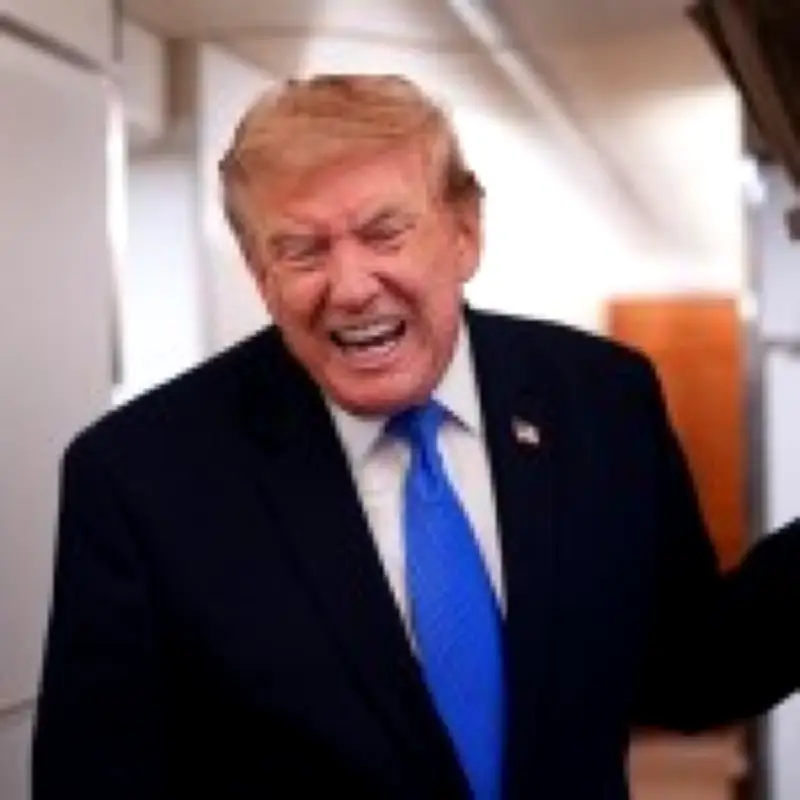
Donald Trump has sparked fresh controversy after making another joke about Japan's attack on Pearl Harbour while fielding questions on Air Force One about a US intervention to strengthen the yen. The President, speaking yesterday, quipped that Japan had been a good ally “with the exception, of course, of Pearl Harbour” – a remark that drew laughter tinged with discomfort from those present.
“We have a good relationship with Japan,” Trump said. “We're very strong – very, very strong financially, and they have a weakening yen, and they wanted a little bit of help. We're always there for Japan. Japan's been very good for us – with the exception, of course, of Pearl Harbour. They were not good.”
Another ill-timed joke
This is not the first time the President has referenced the 1941 attack in a diplomatic setting. In March, while sitting beside Japanese Prime Minister Sanae Takaichi in the Oval Office, Trump was asked why he had not warned allies in advance about his military action against Iran. He responded by saying: “Well, one thing, you don't want to signal too much. You know, when we go in, we went in very hard, and we didn't tell anybody about it because we wanted… surprise.”
Leaning forward, he then added: “Who knows better about surprise than Japan? Why didn't you tell me about Pearl Harbor?” According to reporters present, Takaichi shifted awkwardly in her seat, and a burst of nervous chuckling quickly gave way to an excruciating silence.
The latest comment, made while discussing economic policy, is seen by observers as particularly inappropriate given the context. The attack on Pearl Harbour on December 7, 1941, killed more than 2,400 US soldiers and civilians. The following day, the United States declared war on Japan, and Germany and Italy subsequently declared war on the US, formally dragging America into the Second World War.
Yen intervention and Iran's shadow
Yesterday's US move to purchase yen to bolster Japan's currency marked the first such intervention in almost 30 years. The yen has been under severe strain for years, but its slide has been exacerbated by the energy crisis triggered by the ongoing war in Iran. Japan is heavily reliant on oil and gas imports from the Middle East, leaving it particularly vulnerable to supply disruptions and price spikes.
The timing of Trump's jest – immediately following a substantive policy discussion – underscores his tendency to deflect serious questions with historical references. While some may view his remarks as an attempt at humour, critics argue that making light of an attack that killed thousands of Americans risks alienating a key ally and trivialising a pivotal moment in world history.
Despite the awkwardness, no official comment has yet been issued from the Japanese government regarding yesterday's remark. During the March incident, Tokyo also remained silent, reportedly to avoid escalating a diplomatic embarrassment.
Historical sensitivity
Pearl Harbour remains a deeply sensitive topic in US-Japan relations, symbolising the deadliest day in American naval history. The surprise assault on the naval base in Hawaii crippled the US Pacific Fleet and propelled the United States into the global conflict. For Japan, the attack is generally taught as a militarist misstep that ultimately led to the country's defeat and post-war pacifist constitution.
Trump's repeated references have raised eyebrows even among some of his allies, who note that diplomatic protocols usually avoid invoking wartime tragedies in bilateral settings. Yet the President has shown no sign of restraint, using the historical disaster as a punchline in two separate interactions with Japanese leadership within five months.
As the yen intervention moves forward, market analysts will be watching to see whether the currency stabilises and whether the joke has any tangible impact on diplomatic trust. For now, the incident adds another chapter to Trump's unconventional approach to international relations, blending policy announcements with unexpected historical callbacks.