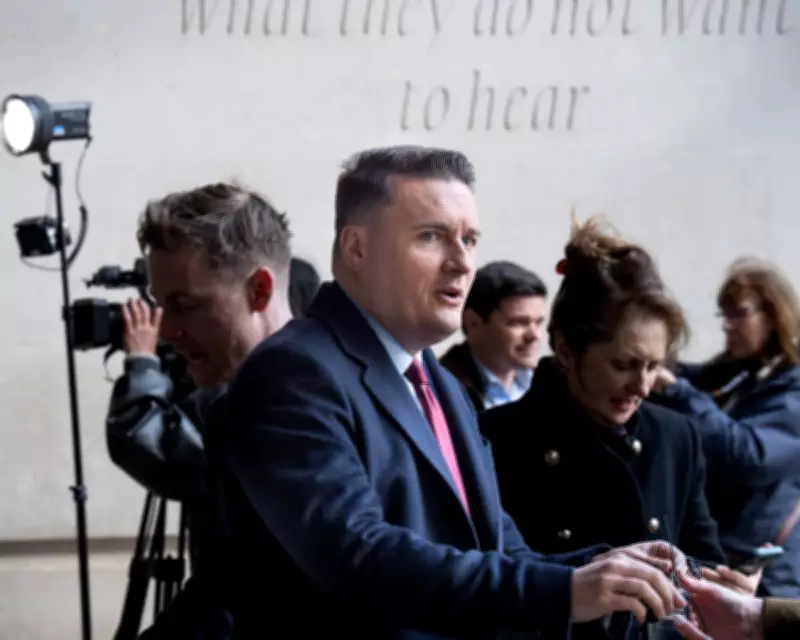
Wes Streeting Condemns Trump's 'Outrageous' Iran War Rhetoric
Health Secretary Wes Streeting has launched a scathing critique of former US President Donald Trump's language regarding the Iran conflict, labeling it as "incendiary, provocative and outrageous." Streeting made these remarks during an appearance on Sky News' Sunday Morning With Trevor Phillips, where he also expressed disappointment over the collapse of recent US-Iran peace negotiations.
Diplomatic Setback and the Need for Persistence
The fragile two-week truce announced earlier in the week was thrown into uncertainty after 21 hours of negotiations between Washington and Tehran concluded without a peace agreement in the early hours of Sunday. US Vice-President JD Vance, who participated in the talks held in Pakistan, cited Iran's refusal to commit to not building a nuclear weapon as the primary obstacle to a deal.
Streeting emphasized the importance of ongoing diplomatic efforts, stating, "As ever in diplomacy, you're failing until you succeed. So while these talks may not have ended in success, that doesn't mean there isn't merit in continuing to try." He highlighted the global impact of the war, noting that it affects countries worldwide, including the UK, and stressed that a breakthrough is "in all of our interests."
Strained UK-US Relations and Broader Disagreements
The health secretary acknowledged that the relationship between the United Kingdom and the United States has faced significant challenges in recent months. He pointed to disagreements over the Iran war, issues concerning Greenland and the Chagos Islands, as well as Trump's harsh criticism of the UK's defensive capabilities and personal attacks on Prime Minister Keir Starmer as factors that have "undoubtedly strained" bilateral ties.
Despite these tensions, Streeting underscored the enduring alliance, saying, "On so many other things, our interests as the UK and the US are intertwined. We are old and close friends and we've got a shared outlook as democratic countries and we've got shared security interests."
Trump's Rhetoric Versus Actions
When questioned about Trump's recent social media posts, in which he warned Iran that a "whole civilisation will die" if demands were not met, Streeting noted that many people would have gone to bed "wondering what on earth would happen overnight." He advised distinguishing between the shocking rhetoric and the actual reality, remarking, "I think we've all come to learn that you judge President Trump through what he does, not just what he says."
UK Leadership and International Response
Prime Minister Keir Starmer has urged both sides to "find a way through" following the failed peace talks and called for the ceasefire to continue after discussions with Oman's Sultan Haitham bin Tariq Al Said. Britain is set to host further talks with a coalition of countries next week aimed at reopening the Strait of Hormuz shipping lanes, a move prompted by Starmer's conversation with Trump about developing a "practical plan" to facilitate maritime traffic.
Streeting praised Starmer's "grit and guts" in deciding not to support initial US-Israeli strikes on Iran, defending the prime minister against criticism from figures like former Labour Prime Minister Tony Blair, Kemi Badenoch, and Nigel Farage. He argued, "I am glad that we didn't join this war. Imagine the extent to which we would be in it up to our necks... When the prime minister made that judgment, he got flak from his predecessors. He got flak from people who would happily take his job at the next general election – they have all been proven completely wrong."
Economic Implications and Chancellor's Warning
Chancellor Rachel Reeves reiterated concerns about the economic fallout from the Iran war, stating in the Sunday Times that it would "come at a cost to British families and businesses." She emphasized her commitment to a responsive and responsible economic approach to the crisis, acknowledging the unavoidable costs while prioritizing the national interest.
As diplomatic efforts continue amidst heightened tensions, Streeting's comments underscore the complex interplay of international relations, security concerns, and the persistent need for dialogue in resolving the Iran conflict.