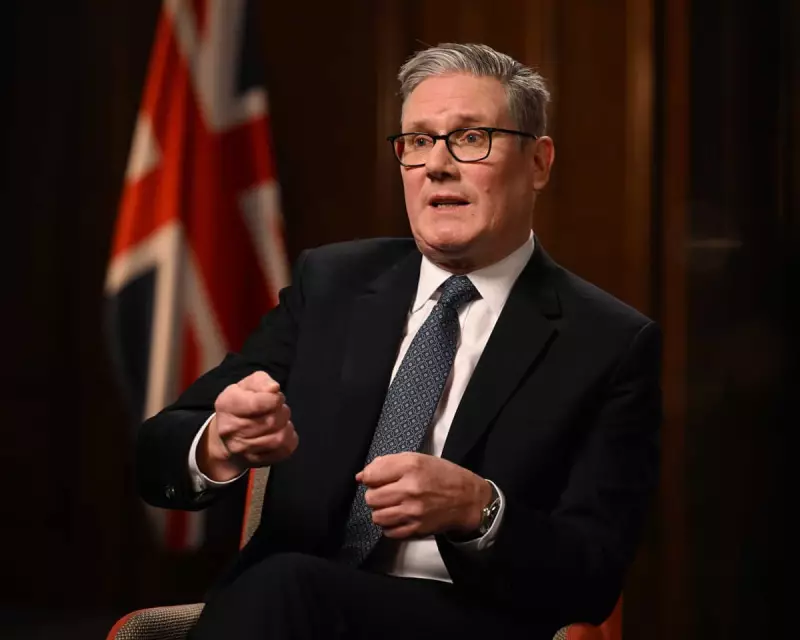
Prime Minister Keir Starmer's government is demonstrating extreme caution in its response to a dramatic US-led military operation in Venezuela, highlighting a delicate approach to relations with Donald Trump's America.
A Masterclass in Diplomatic Hedging
The defining moment came after US forces, authorised by President Trump, conducted a late-night raid to seize Venezuelan leader Nicolás Maduro, accusing him of "narco-terrorism". The UK prime minister took a full 16 hours to issue a public statement, which then carefully balanced condemnation with pragmatism.
Starmer, a former human rights lawyer, stated that the UK regarded Maduro as an illegitimate leader and "shed no tears" about the end of his regime. However, he pointedly reiterated the UK's support for international law, a subtle nod to the controversial nature of the US action.
Since the initial statement, the government's strategy has been clear: say as little as possible that might offend the Trump administration, leave the legal justifications to Washington, and, as one aide bluntly put it, "recognise that it's not our fight".
Internal Disquiet and External Pressure
This fence-sitting has not been universally popular. Progressive political opponents, namely the Liberal Democrats and the Greens, have demanded a stronger condemnation. Even within government circles, there is significant unease.
Some senior Foreign Office officials are reportedly uncomfortable with the extent of the UK's caution, warning that the precedent set by "effectively kidnapping a head of state" for regime change is dangerously destabilising. One minister privately questioned, "If we let this happen without condemning it then where does it stop? Colombia? Cuba? Even Greenland?"
Downing Street has forcefully rejected comparisons between the Venezuela operation and Russia's invasion of Ukraine, calling it a "bad comparison". Insiders suggest the UK would adopt a more robust stance if a European ally were threatened, a point underscored by Starmer's public backing of Denmark over US threats to Greenland.
The Realpolitik Calculation
The core of the government's hesitation lies in a stark geopolitical calculation. With a multibillion-pound trade deal with the US on the table and ongoing efforts to secure US support for peace in Ukraine, the Starmer administration is unwilling to "rock the boat".
"We're taking the realpolitik route," one government insider admitted. Starmer has assured colleagues that a time may come to take a tough stance against President Trump, but that this is not the moment. The Prime Minister has framed it as a choice, asking, "Are we willing to risk damaging our most important economic and national security partnerships as a result?"
The diplomatic dance continues, with Starmer scheduled to finally speak to President Trump after a coalition meeting in Paris. The tone of that call, government sources indicate, is likely to be emollient, as the UK continues its careful walk on the transatlantic tightrope.