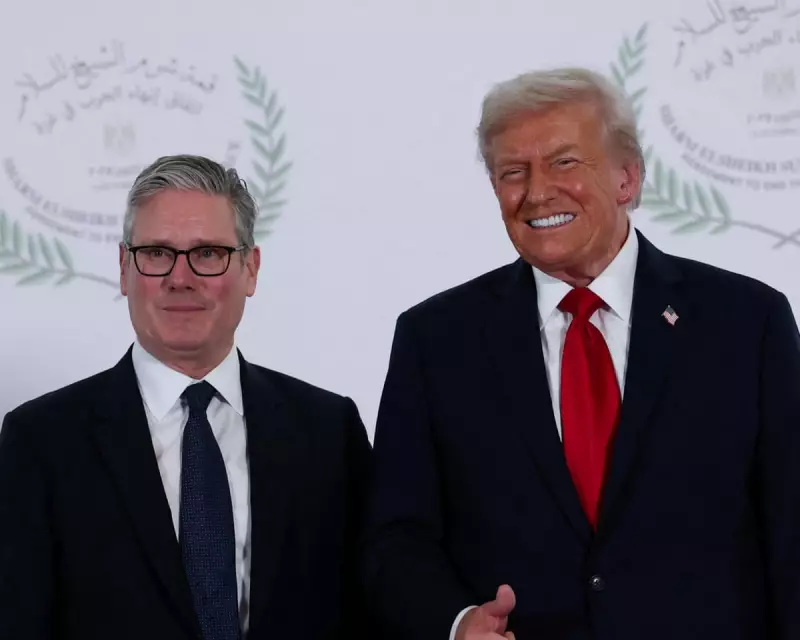
Prime Minister Keir Starmer delivered a blunt message to US President Donald Trump during a critical phone call on Sunday evening, firmly rejecting the American leader's threat to impose tariffs on NATO allies in the escalating dispute over Greenland.
A Flurry of Diplomatic Activity
The conversation was part of a rapid series of diplomatic engagements undertaken by the new UK leader, as European capitals scrambled to respond to the growing crisis. Alongside his discussion with President Trump, Starmer also spoke with Danish Prime Minister Mette Frederiksen, whose nation holds sovereignty over Greenland, European Commission President Ursula von der Leyen, and NATO Secretary General Mark Rutte.
A Downing Street summary of the calls stated that Starmer reiterated his position on Greenland in every conversation. He emphasised that security in the High North is a vital priority for all members of the NATO alliance to protect shared Euro-Atlantic interests. Crucially, the Prime Minister directly addressed the US President's economic threats, stating unequivocally that "applying tariffs on allies for pursuing the collective security of NATO allies is wrong."
Collision Course Over Collective Security
This firm stance from Number 10 places the UK government on a potential collision course with the United States. The diplomatic row intensified after President Trump declared he would sanction eight European nations, including Britain, for deploying troops to Greenland. This military movement was itself a direct response to earlier US threats concerning the future of the vast Arctic territory.
The nations targeted by Trump's tariff warning issued a joint statement on Sunday, arguing that such actions "undermine transatlantic relations and risk a dangerous downward spiral." The situation presents Starmer with one of his first major foreign policy tests, balancing the UK's crucial 'special relationship' with Washington against its commitment to European allies and the NATO principle of collective defence.
Implications for Atlantic Relations
The crisis over Greenland has rapidly become a flashpoint, testing the resilience of the post-war Atlantic alliance. Starmer's immediate and coordinated response, contacting key European and NATO leaders alongside the US President, signals a deliberate and multilateral approach to diplomacy. The Prime Minister's clear rejection of using trade as a weapon in a security dispute underscores a fundamental principle of his foreign policy, even when it means confronting a historically close partner.
As European leaders continue their consultations, the international community watches closely to see if this strong collective pushback will prompt a recalculation from the White House, or if the rift over the future of the strategically vital Arctic island will deepen further.