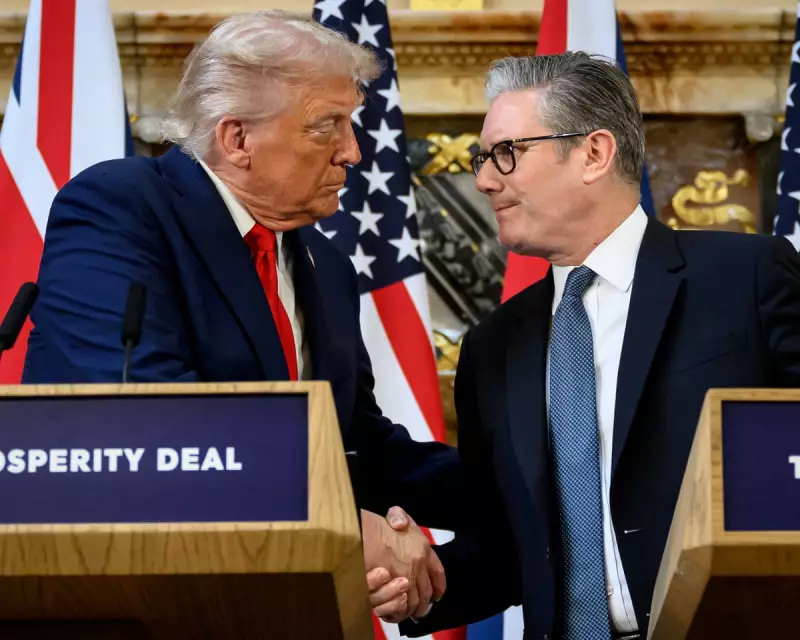
Prime Minister Keir Starmer has publicly condemned former US President Donald Trump's threat to impose tariffs on NATO allies, marking a significant escalation in a diplomatic crisis centred on Trump's controversial plans for Greenland.
A Swift Shift from Diplomatic Pleasantries
The confrontation represents a dramatic pivot from the tone struck by Foreign Secretary David Lammy less than two weeks earlier. While in the United States for the 250th anniversary of the American Declaration of Independence, Lammy helped bury a time capsule containing a letter proclaiming the UK-US relationship had "never been stronger" and that the nations were "the closest of allies". That capsule is not due to be opened until 2276.
However, the diplomatic harmony implied by that message has been shattered by Trump's recent proposal. After a year of notable restraint in criticising the US presidential candidate, Starmer was prompted to speak out directly. The Prime Minister told Trump that his plan to levy tariffs against NATO countries objecting to his (illegal) ambition to annex Greenland was "completely wrong".
Downing Street's Cautious Response
Following a crisis call between the two leaders, Starmer prepared to detail the UK's official response during a press conference at 10 Downing Street. However, briefings suggest the Prime Minister is opting for a measured approach rather than a dramatic confrontation.
Senior British officials indicated to Politico that Starmer is not planning a full "Love Actually" moment—a reference to the film where a UK prime minister publicly defies a US president. Instead of threatening drastic, Macron-style retaliation or accepting a permanent rupture, the UK strategy will focus on de-escalation. "Now it is time to lower the temperature and for cooler heads to promote diplomatic off-ramps", one official stated, noting this would be Britain's focus in the coming week.
A Defining Diplomatic Challenge
Despite the government's calibrated response, the Greenland tariff threat is poised to become a major test for Starmer's administration. Many within UK political circles are urging the Prime Minister to adopt a more robust stance against what is widely viewed as a destabilising move by Trump.
The crisis overshadows other government business, including Chancellor Rachel Reeves's visit to the City of London and Education Secretary Bridget Phillipson's scheduled Commons questions. MPs are also expected to push for an urgent question or ministerial statement on the Trump tariff threats in the House of Commons later this afternoon.
This dispute, erupting from Trump's long-standing interest in acquiring the autonomous Danish territory of Greenland, threatens to strain the transatlantic alliance and defines one of the first major foreign policy challenges for the new UK government.