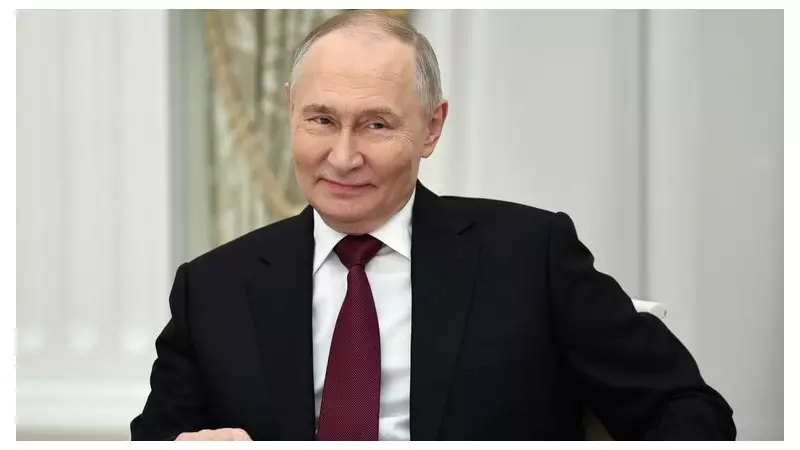
Russian President Vladimir Putin has firmly rejected a proposed peace framework for Ukraine following high-level talks with envoys dispatched by former US President Donald Trump, while simultaneously issuing a stark warning to European nations.
"Productive" But Inconclusive Moscow Summit
The crucial negotiations in Moscow on Tuesday involved Trump's special envoy, Steve Witkoff, and his son-in-law, Jared Kushner, meeting with Putin and his aides. The discussions, which included Russian foreign policy aide Yuri Ushakov and investment envoy Kirill Dmitriev, lasted over five hours and concluded after midnight.
While both sides agreed to keep precise details private, Russian officials characterised the talks cautiously. Mr Dmitriev described the meeting in a one-word social media post as "productive". Mr Ushakov echoed this sentiment, calling it "rather useful, constructive" and stating that peace was, at least, "not further" away as a result.
However, the core obstacle remains unchanged. Mr Ushakov confirmed that no compromise was reached on the issue of territories, specifically Russia's demand for the entirety of the Donbas region, including areas currently under Ukrainian control. The Kremlin sees "no resolution to the crisis" without this concession, a condition Ukraine has consistently refused.
Putin's Defiant Warning to Europe
Just hours before the summit, President Putin adopted a markedly aggressive stance towards Europe. He accused European powers of altering peace proposals with demands Russia finds "absolutely unacceptable" and claimed they were "on the side of war".
"We're not planning to go to war with Europe, I've said that a hundred times," Putin stated following an investment forum. "But if Europe suddenly wants to fight us and starts, we're ready right now. There can be no doubt about that." He added ominously that such a conflict could quickly lead to a situation where "we have no one to negotiate with."
This rhetoric follows the leak of an initial 28-point US peace plan that alarmed European officials for perceived bias towards Russia. An updated framework was formulated last month in Geneva with input from Europe, the US, and Ukraine, but Putin has now indicated he will not accept it.
Zelenskyy's Cautious Optimism During Dublin Visit
As talks unfolded in Moscow, Ukrainian President Volodymyr Zelenskyy was in Dublin on Tuesday, meeting with Irish leaders. He expressed a willingness to meet Donald Trump again, contingent on the outcome of the Moscow negotiations.
Calling it "one of the most challenging but optimistic moments" since the full-scale invasion in 2022, Zelenskyy said the US was "taking serious steps to end this war one way or another". He warned, however, that there would be "no easy decisions" and insisted there must be "no games behind Ukraine's back".
During the visit, the Irish government announced a further €100m (£88m) in non-lethal aid for Ukraine, bringing its total such military assistance this year to €200m (£176m). The new Ireland-Ukraine partnership also includes support for energy infrastructure restoration and Ukraine's path to EU accession, a goal Zelenskyy hopes to achieve within five years.
With the Moscow talks yielding no breakthrough and Putin's rhetoric escalating, the path to peace appears fraught. Mr Ushakov's admission that there is "still a lot of work to be done, both in Washington and in Moscow" underscores the significant diplomatic challenges that lie ahead.