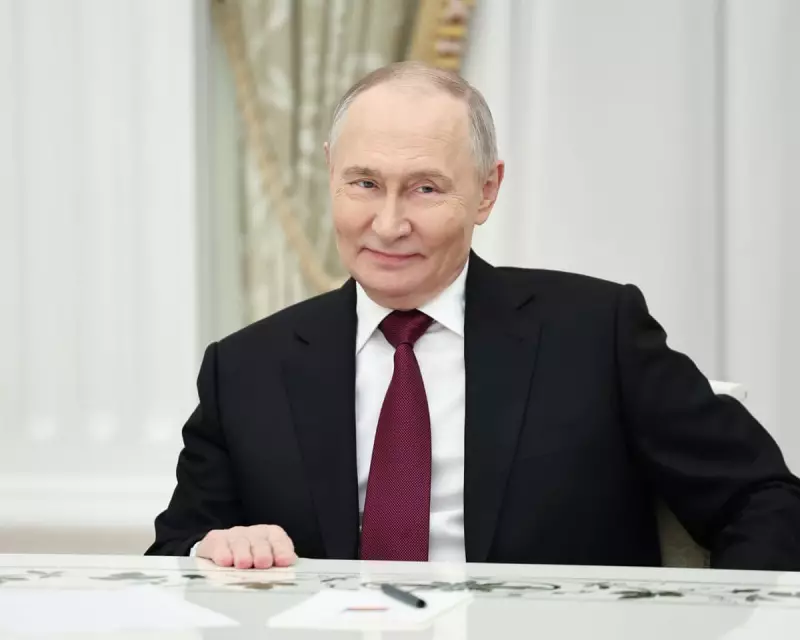
The latest push for a negotiated settlement to the war in Ukraine has hit a formidable and predictable wall: Russian President Vladimir Putin. High-profile talks in Moscow, led by US envoys Steve Witkoff and Jared Kushner, have concluded without a breakthrough, underscoring that the Kremlin leader remains the principal obstacle to peace.
High-Stakes Kremlin Meeting Yields No Progress
The much-publicised negotiations, which lasted for five hours in a Kremlin reception room, were preceded by a symbolic tour of Moscow for the American "deal guys". Despite pressure on Ukraine to make concessions and assurances from the Trump administration that this was a prime opportunity, the process has stumbled over Putin's intractable position. The Russian leader's rejection of the latest proposal was widely anticipated by analysts.
This outcome reinforces a stark reality: the road to peace has always led through the Kremlin, the very power that launched the full-scale invasion nearly four years ago. For weeks, the US administration focused its pressure on Kyiv, the far junior partner, to extract favourable terms to present to Moscow. US Secretary of State Marco Rubio stated the goal was to find a deal "that protects Ukraine’s future that both sides could agree to." The Kremlin's response indicates this is currently impossible.
A Kremlin "Yes, But" and the Sticking Points
Following the meeting, senior Kremlin adviser Yuri Ushakov gave a characteristically ambiguous assessment, calling the talks "productive" but stating the sides were "neither further nor closer to resolving the crisis". This was swiftly interpreted as a rejection of the specific US plan, reportedly drafted with input from another Kremlin adviser, Kirill Dmitriev.
Spokesman Dmitry Peskov disputed this characterisation, framing it as a normal part of a compromise search where some ideas were accepted and others deemed unacceptable. However, the core issues remain unchanged: Russian territorial control and Ukraine's future political and military status. The Kremlin has signalled it is prepared to continue fighting until it secures its desired concessions.
Diplomatic Wrangling and the Path Ahead
Analyst Tatiana Stanovaya noted the meeting was less a negotiation and more a "deliberate presentation of Russia’s preconditions." Meanwhile, former US official Thomas Graham suggested that the Kremlin's agreement to even discuss the proposal could be seen as progress, but highlighted Putin's apparent frustration with the informal, wheeler-dealer approach.
"Putin doesn’t want to see Witkoff coming to Moscow to have these discussions," Graham remarked, indicating a Russian preference for formal diplomatic working groups. For now, the process appears to be returning to that technical level. While this may temporarily relieve pressure on Ukraine by shifting the blame for the impasse to Moscow, the fundamental deadlock persists.
As Secretary Rubio emphasised, the ultimate power to end the conflict rests with one man: "Ultimately the decisions have to be made, in the case of Russia, by Putin alone... Putin can end this war on the Russian side." For the moment, he shows no sign of choosing that path.