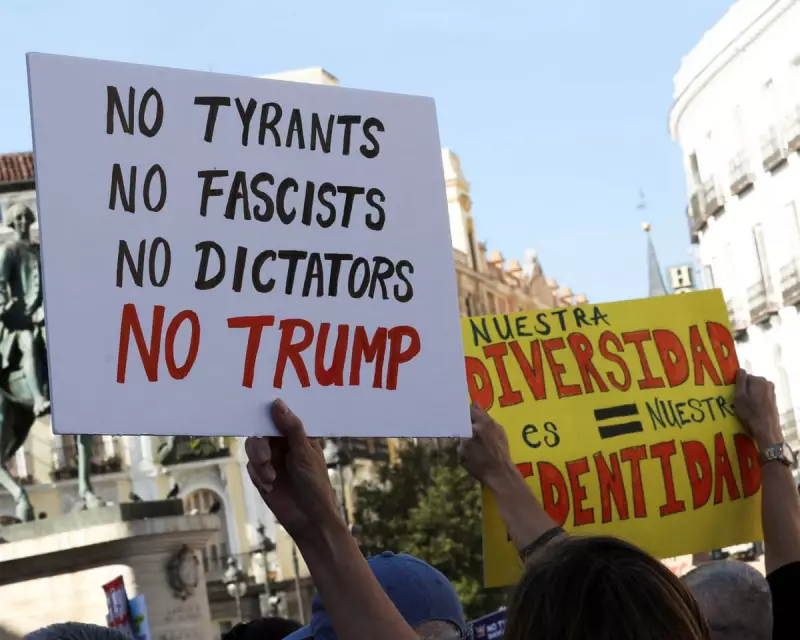
A significant new survey has laid bare the depth of European distrust towards former US President Donald Trump, with an overwhelming majority now viewing him as an adversary to the continent. The findings come in the wake of Trump's controversial comments regarding the war in Ukraine and his stance on Russia.
Overwhelming Distrust and the 'Enemy' Label
The poll, conducted by the European Council on Foreign Relations (ECFR) across 12 member states, presents a stark picture. Seventy per cent of respondents across Europe now consider Donald Trump an "enemy of Europe." This sentiment is remarkably consistent, with majorities in every single country surveyed agreeing with this characterisation.
Only a tiny fraction, a mere 8%, see the former president as a "friend of Europe." The survey, which gathered responses from over 17,000 people, highlights a dramatic shift in perception linked directly to Trump's approach to international conflicts and alliances.
The Catalysing Effect of Ukraine War Comments
The dramatic hardening of European opinion is widely attributed to Trump's rhetoric concerning the ongoing war in Ukraine. His repeated boasts that he could end the conflict "in 24 hours" and his pressure on Republican lawmakers to block vital US military aid to Kyiv have resonated powerfully and negatively across the Atlantic.
These actions, interpreted as undermining European security and emboldening Russian President Vladimir Putin, appear to be the primary driver behind the poll's findings. The research indicates that Trump's position has effectively made support for Ukraine a defining issue of European political identity, uniting public opinion across traditional left-right divides in a way few other topics have.
Mark Leonard, director of the ECFR and co-author of the accompanying report, stated that Trump has managed to "turn Ukraine into a European project" through his opposition, consolidating a pan-European consensus in favour of defending the country against Russian aggression.
Broader Implications for Transatlantic Relations
The poll's implications stretch far beyond mere popularity contests. It reveals a continent psychologically preparing for a potential strategic decoupling from the United States should Trump win a second term in the upcoming November election.
This preparation manifests in two key areas of public opinion:
- European Strategic Autonomy: There is growing support for the idea that Europe must take primary responsibility for its own security, rather than relying on the US-led NATO alliance. This represents a potential historic shift in post-war foreign policy thinking.
- Support for Ukraine Remains Firm: Despite concerns about American commitment, European public backing for continued military and financial aid to Ukraine remains robust. The notion of pushing Kyiv to concede territory to Russia to end the war finds little favour among the populations surveyed.
The data suggests that European leaders could maintain public support for significant defence spending increases and continued backing for Ukraine, even in the face of a hostile US administration. However, it also sets the stage for unprecedented tension within the NATO alliance, challenging a cornerstone of Western security for over seven decades.
As the US election approaches, this poll serves as a clear warning: a second Trump presidency risks not just policy disagreements but a fundamental rupture in how Europeans view their oldest and most powerful ally, with lasting consequences for global stability.