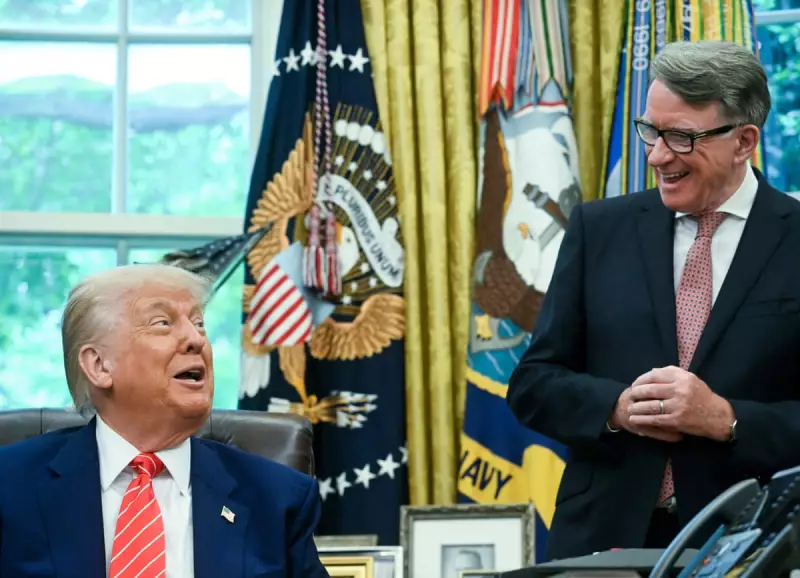
The dramatic capture of Venezuela's former president, Nicolás Maduro, in Caracas last weekend has sent shockwaves through diplomatic circles, serving as a potent symbol of a rapidly changing global landscape. This event, orchestrated under Donald Trump's direction, is being interpreted by analysts as a stark assertion of raw American power, one that deliberately sidesteps established international rules and processes.
A Stark Warning from a Former Insider
In the wake of the Caracas operation, Peter Mandelson, the former British ambassador to Washington, delivered a blunt assessment in The Spectator. He argued that the incident highlights a profound power imbalance. "Trump has the means and the will," Lord Mandelson stated, "and they [Europe and the UK] do not." He pointed out that Mr. Trump achieved more in a single day in Venezuela than years of traditional diplomacy had managed.
For Mandelson, the core issue is "Europe's growing political impotence in the world." He contends that regaining influence will not come from "histrionics" or "fine words" but requires the collective European deployment of "hard power and hard cash." This call for a realist, power-centric approach marks a significant departure from the post-1945 rules-based system long championed by the West.
Deciphering the New American Doctrine
John Bew, a foreign policy adviser to four prime ministers from Boris Johnson to Keir Starmer, offers a framework for understanding this shift. Writing in the New Statesman, he suggests the Caracas episode signifies three key trends in US policy.
Firstly, it demonstrates an increased willingness to use executive authority for rapid military interventions. Secondly, it asserts a form of American mercantilism, focused on securing US control over critical resources like oil, gas, and minerals. Thirdly, as promoted by the state department, it hints at a turn towards a hemispheric approach, potentially ceding influence in other regions to powers like China and Russia.
The Imperative for a British and European Response
The United Kingdom and its European allies are now grappling with how to respond to an America that is transforming from a predictable, necessary power into a more unilateral and unpredictable actor. The questions of power raised by events in Venezuela are, as The Guardian notes, not going to disappear.
While the British government should not be criticised for every moment of hesitation, a prolonged state of indecision is unsustainable. Britain needs a mature, public debate and a clear new course for its international direction. This involves difficult decisions about the economic and technological adaptations required to protect national interests and citizens in a world where the old assumptions are fading.
As Professor Bew argues, while many may mourn the disintegration of the rules-based order and decry the rise of mercantilism, the old world is not returning. The challenge for countries like Britain is to navigate this new disorder, a task that is undeniably complex but essential for future security and prosperity.