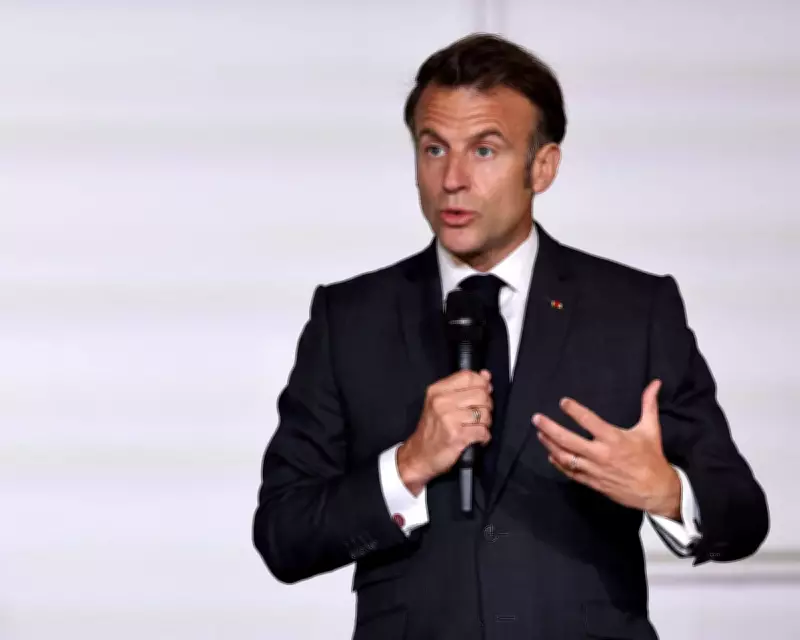
In a world increasingly marked by disorder and uncertainty, French President Emmanuel Macron has experienced what observers are calling a "moment of awakening." This pivotal realization comes as global challenges, from geopolitical rivalries to economic volatility, threaten to reshape the international order. Macron's response has been to champion a more assertive and independent Europe, positioning France at the forefront of efforts to navigate this turbulent landscape.
The Context of Global Disarray
The current global environment is characterized by fragmented alliances, rising nationalism, and persistent conflicts that defy easy resolution. Macron's awakening stems from a recognition that traditional institutions and frameworks are struggling to address these complexities. As he articulates a vision for a sovereign Europe, his rhetoric emphasizes the need for strategic autonomy, particularly in defense and economic policy, to reduce reliance on external powers.
France's Strategic Pivot
Under Macron's leadership, France has taken concrete steps to bolster its role on the world stage. This includes advocating for enhanced European military cooperation, promoting digital sovereignty, and engaging in diplomatic initiatives to mediate international disputes. Macron's approach reflects a belief that Europe must unite to assert its interests in a multipolar world, where power dynamics are shifting rapidly.
Critics argue that Macron's ambitions face significant hurdles, including internal divisions within the European Union and skepticism from other member states. However, supporters contend that his awakening is a necessary catalyst for revitalizing European integration and ensuring the continent's relevance in global affairs.
Implications for International Relations
Macron's moment of awakening has broader implications for international relations. By pushing for a more cohesive and proactive Europe, he aims to counterbalance the influence of major powers like the United States, China, and Russia. This strategy involves fostering partnerships with like-minded nations while maintaining a critical stance on issues such as trade, climate change, and human rights.
As the world grapples with disarray, Macron's leadership style—combining idealism with pragmatism—offers a potential blueprint for navigating uncertainty. His emphasis on dialogue and multilateralism, albeit with a stronger European voice, seeks to address global challenges through collaborative efforts rather than unilateral actions.
In conclusion, Macron's awakening underscores a pivotal moment in global politics, where France is poised to play a decisive role in shaping the future of Europe and the world. As disarray persists, his call for sovereignty and autonomy may define the continent's trajectory in the years to come.