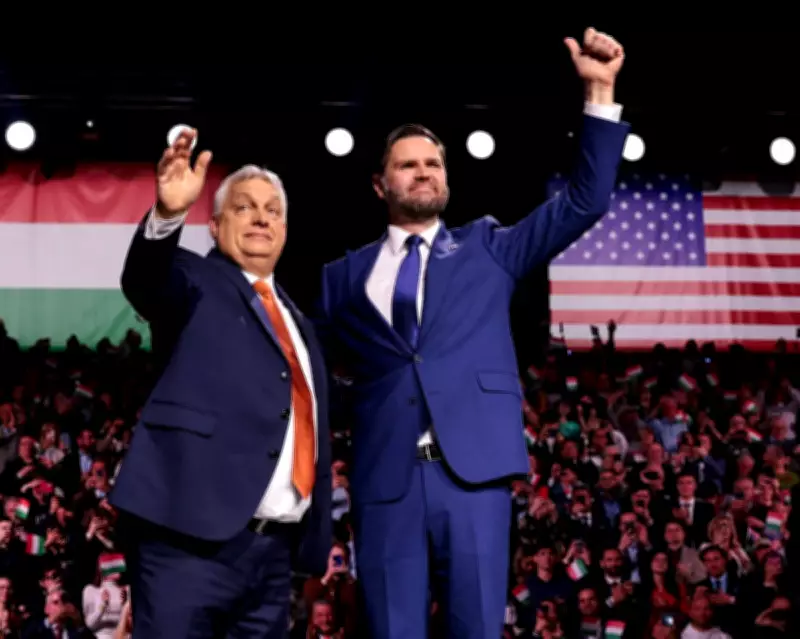
US Senator JD Vance Denies Allegations of Election Interference in Hungary
In a recent statement, US Senator JD Vance has categorically dismissed claims that the United States interfered in Hungary's recent election. The allegations, which have circulated in political circles, suggested American involvement aimed at influencing the outcome in Budapest, but Vance has strongly refuted these assertions.
Vance's Firm Rejection of Meddling Claims
Speaking from his office, Senator Vance emphasized that the United States respects the sovereignty of Hungary and its democratic processes. He stated that there is no evidence to support the notion of US interference, and such claims are baseless and unfounded. Vance highlighted the importance of maintaining strong diplomatic relations between the two nations, without overstepping boundaries in electoral matters.
Context of the Hungarian Election and Viktor Orbán's Government
The Hungarian election, held recently, saw Prime Minister Viktor Orbán's government secure another term in power. Orbán, a controversial figure in European politics, has often been at odds with Western powers over issues such as immigration and democratic norms. Despite this, Vance's comments aim to clarify that the US did not seek to undermine Orbán's position through covert actions.
Vance pointed out that Hungary, as a sovereign state, has the right to conduct its elections free from external manipulation. He reiterated the US commitment to supporting democratic principles globally, but stressed that this does not equate to interference in specific national votes.
Broader Implications for US-Hungary Relations
This dismissal of interference claims comes at a time when US-Hungary relations are under scrutiny. Some analysts suggest that tensions could arise if such allegations persist, but Vance's remarks seek to quell any potential diplomatic friction. By openly denying the claims, he aims to foster transparency and trust between Washington and Budapest.
Furthermore, Vance addressed concerns about misinformation in international politics, urging for a focus on factual reporting rather than speculative narratives. He warned that unfounded accusations can harm bilateral ties and distract from more pressing global issues.
Reactions and Future Outlook
While Vance's statement has been met with support from some quarters, critics remain skeptical, calling for independent investigations to ensure electoral integrity. However, no concrete evidence has emerged to substantiate the interference claims, lending weight to Vance's denials.
Looking ahead, this incident may prompt discussions on how nations can collaborate without accusations of meddling, especially in an era of heightened geopolitical tensions. Vance concluded by affirming the US's role as a partner in promoting stability, not disruption, in Hungary and beyond.