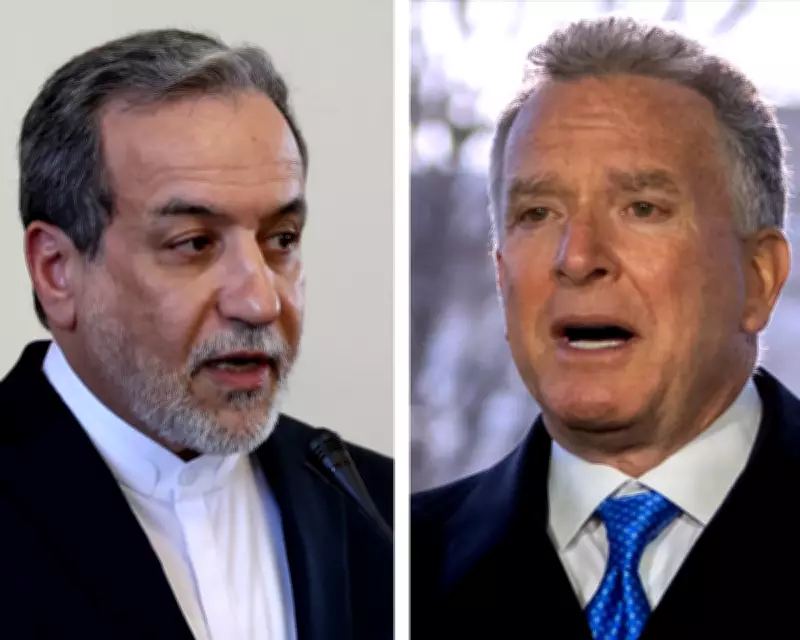
Iran's Veteran Diplomat Clashes with US Envoy in Critical Nuclear Negotiations
As tensions escalate in the Middle East, the United States and Iran are set to engage in high-stakes nuclear talks in Geneva this Tuesday. The outcome could determine whether the region plunges into war or finds a path to peace. At the heart of these negotiations are two contrasting figures: Iranian Foreign Minister Abbas Araghchi and White House special envoy Steve Witkoff.
The Diplomatic Chess Master: Abbas Araghchi
Abbas Araghchi brings over 15 years of experience in Iranian nuclear dealmaking to the table. A lifelong diplomat, he holds a bachelor's degree from Iran's faculty of international relations, a master's in political science from Islamic Azad University, and a doctorate in political thought from the University of Kent in the UK. His expertise is encapsulated in his book, The Power of Negotiation, which delves into the Iranian diplomatic approach.
In his writings, Araghchi emphasizes the importance of patience, repetition, and persistence. He describes the Iranian negotiation style as the 'market style,' akin to tireless bargaining in a bazaar, where endurance is key to victory. He argues that a negotiator's true power stems from national cohesion and military strength, advising against talks without a balance of power—a principle Iran adhered to after the bombing of its nuclear sites in June last year.

Araghchi, a veteran of the Iran-Iraq war, maintains close ties with the Islamic Revolutionary Guard Corps (IRGC), unlike his predecessor Javad Zarif. Experts note that he is more technocratic and cautious, carefully navigating Iran's political landscape to survive and succeed.
The Property Developer Turned Envoy: Steve Witkoff
On the American side, Steve Witkoff represents a different approach. A former property developer who studied law at Hofstra University on Long Island, Witkoff operates under a shifting brief dictated by former President Donald Trump. Trump views diplomacy as a form of pro-wrestling, emphasizing showmanship and force, in stark contrast to Iran's chess-like, strategic mindset.
Witkoff's background in business and law shapes his negotiation tactics, focusing on direct demands and swift outcomes. This clash of styles poses a significant challenge as both sides seek to avoid a regional conflict.
The Stakes and Potential Compromises
The talks aim to revive the 2015 Iran nuclear deal, from which Trump withdrew in 2018. Key issues include Iran's stockpile of highly enriched uranium and the return of UN nuclear inspectors to bombed sites. Ellie Geranmayeh from the European Council on Foreign Relations suggests that Iran may offer irreversible steps, such as diluting its uranium, only if the US reciprocates with actions like releasing frozen Iranian assets abroad.
Ali Ansari, a professor at the University of St Andrews, notes that Iran might make concessions to keep discussions alive, but Trump's administration is in no hurry. Potential economic incentives, such as involving US oil companies, could mark a significant shift in Iran's anti-US doctrine.
Araghchi's philosophy, influenced by Chinese diplomacy, stresses providing a 'Golden Bridge' for adversaries to exit gracefully. He believes diplomacy is not about winning but understanding the other side, a mindset that may prevent triumphalism if a deal is reached.
However, domestic criticism looms for Araghchi, as Zarif once warned that diplomats often become 'victims' in the end. The outcome of these talks will test whether these two negotiators can bridge their differences and avert a crisis.