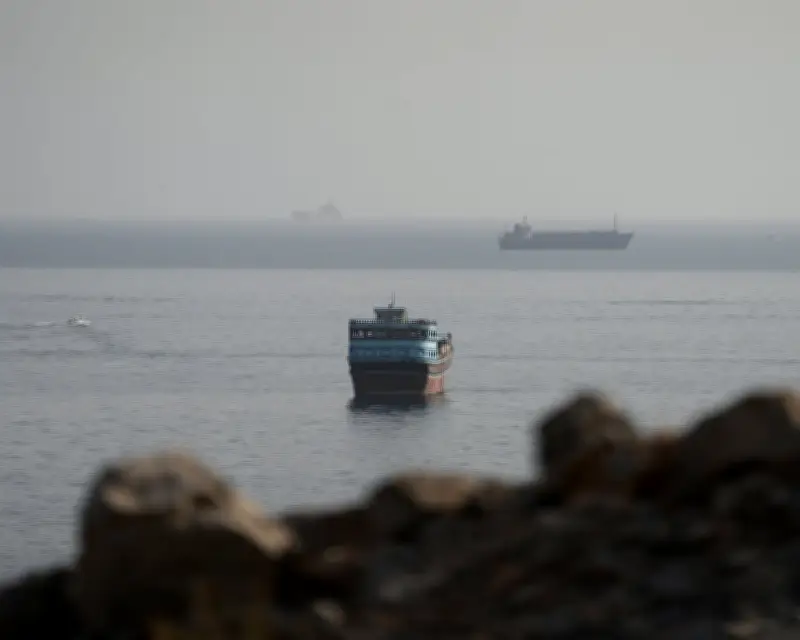
Iran and Oman are close to finalising a deal to reopen the strategic Strait of Hormuz, with reports indicating that Tehran would control inbound shipping traffic through the waterway, while Oman would oversee outbound vessels. This arrangement marks a significant shift from the pre-war status quo, when the strait operated as an open international waterway carrying roughly a fifth of the world's oil and gas supply.
Key Details of the Proposed Deal
Both nations, situated on opposite ends of the narrow strait, have been engaged in talks to jointly manage the key shipping route, which has been effectively closed since the start of the war in February. Iran has insisted that the strait will not revert to its previous open-access model, as it seeks greater control over maritime traffic flow. Several media reports, citing sources familiar with the negotiations, suggest that Oman would be responsible for outbound shipping, while Iran would manage inbound vessels.
Despite these reports, Reuters news agency, citing Iranian sources, rejected US President Donald Trump's claims that a deal was imminent, stating that important details remain unresolved. One source noted, "The concession has already been made regarding some form of control over Hormuz," indicating that the basic framework is agreed but finalisation is pending.
Iran's Conditions and US Involvement
Iran has also stated that reopening the strait would depend on the US lifting its blockade of Iranian ports. President Trump told Fox News earlier this week that talks over the strait were "moving along nicely" and that the strait "is going to be open very soon." The proposed deal is seen as one of the biggest concessions yet to Iran, given its strategic importance.
In a related development, Iran has confirmed that an understanding has been reached on coordinates for the shipping route through Hormuz, according to its officials.
Regional Escalations and Houthi Attacks
Meanwhile, in Yemen, the Iran-backed Houthis announced yesterday that they had attacked two Saudi oil tankers with ballistic missiles, part of their maritime blockade of the kingdom. A Houthi military spokesperson said the latest attacks targeted the eighth and ninth Saudi oil tankers since the blockade began last month. Saudi authorities had no immediate comment.
Israeli Casualties in Lebanon
The Israeli military reported this morning that two reserve soldiers were killed and four seriously injured in an explosion in southern Lebanon, marking the first Israeli deaths since the fragile truce between Israel and Hezbollah in June. An Israeli military official told the Associated Press that "an explosion was detonated" when soldiers entered a site in the village of Majdal Zoun, and the nature of the explosive is under review.
In a separate incident, one person was killed and 12 wounded in an Israeli strike in the southern Lebanese town of Tebnine, according to Lebanon's health ministry. The Israeli military had earlier ordered residents of the village of Mansouri to evacuate, the first such order in more than a month, citing a Hezbollah ceasefire violation.
Ongoing Talks in Rome
These escalations occurred despite US-backed talks in Rome aimed at ending hostilities. Israel requested that yesterday's talks with Lebanon end three hours early, with a source telling AFP that the Israeli delegation's head blamed alleged "misleading leaks" by the Lebanese side. The talks are expected to resume today for a third and final day.
Impact on Shipping Traffic
Shipping traffic through the Hormuz and Bab-el-Mandeb straits, key maritime chokepoints in the Gulf, reduced significantly yesterday from the previous day, according to shipping data. This reduction underscores the ongoing volatility in the region and the critical importance of these waterways to global energy supplies.