ICC Judges Targeted by Trump Administration Sanctions
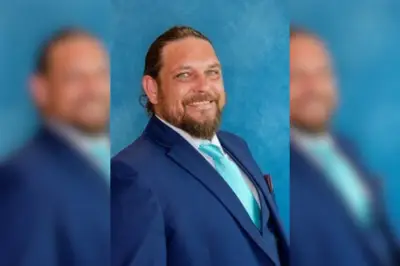
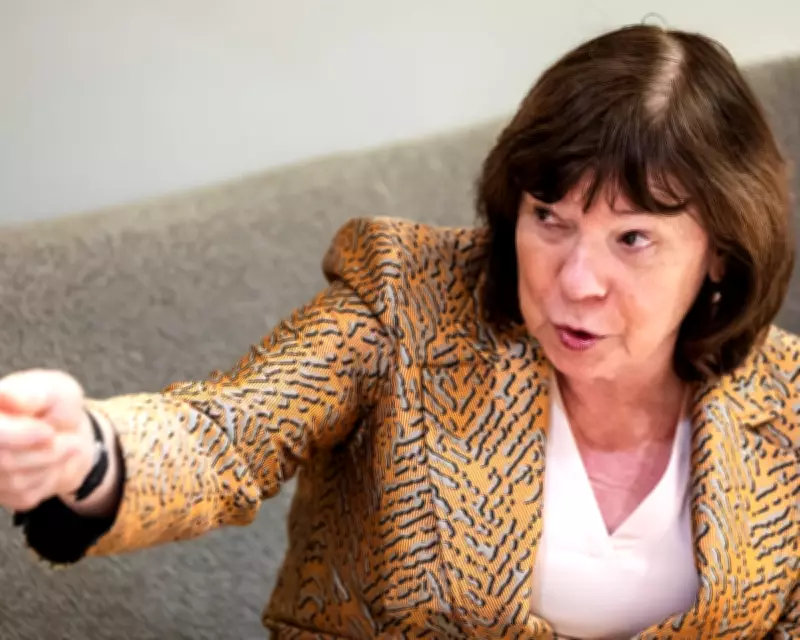
When Canadian judge Kimberly Prost discovered she had been placed under sanctions by the Donald Trump administration, the news arrived as a profound shock. For years, Prost has served as a judge at the International Criminal Court in The Hague, deliberating on grave accusations including war crimes, genocide, and crimes against humanity. Suddenly, she found herself listed alongside terrorists and organized crime figures. "It really was a moment of a bit of disbelief," she recounted.
Material and Psychological Fallout
The repercussions were both tangible and emotional. As her credit cards, Amazon, and Google accounts were abruptly cancelled, Prost grappled with what she termed a "direct and flagrant attack" on one of the world's most prominent judicial institutions. "These are coercive measures designed to attack our ability to do our jobs objectively and independently," she asserted. "We want people to appreciate how wrong this is."
Since Trump's return to power last year, his administration has systematically worked to undermine the Hague-based court. To date, eleven ICC officials—including the chief prosecutor and eight judges—have been subjected to sanctions. These measures encompass travel bans to the United States, alongside fines and potential prison sentences for American companies that provide them services.
Global Condemnation and Executive Order
In an executive order issued last year, Trump accused the ICC of engaging in "illegitimate and baseless actions targeting America and our close ally Israel," implying the sanctions were retaliation for investigations into US and Israeli officials. Notably, neither the United States nor Israel is among the 125 signatories of the Rome Statute, the 1998 treaty that established the court.
The executive order prompted seventy-nine countries—including Canada, Brazil, Denmark, Mexico, and Nigeria—to unite in support of the ICC. In a joint letter, they warned that the sanctions "increase the risk of impunity for the most serious crimes and threaten to erode the international rule of law."
Personal Hardships and Over-Compliance
Despite her prior five-year experience with the United Nations sanctions programme, Prost was taken aback by the extensive reach of these measures. "It has such a serious impact in terms of day-to-day life, it's not symbolic," she explained. "You lose all your credit cards, no matter where they were issued." Simple tasks like booking an Uber, reserving flights, or arranging hotel accommodations became impossible. Bank transfers now carried uncertainty, with no guarantee they would be processed.
For Peruvian judge Luz del Carmen Ibáñez Carranza, the US sanctions represented the second instance of targeting by a global superpower due to her ICC work. Previously, a Russian court had tried her in absentia, along with the court's chief prosecutor and seven other judges, following the ICC's issuance of an arrest warrant for Vladimir Putin over the invasion of Ukraine. They received sentences of up to fifteen years in prison.
However, the US sanctions posed a unique challenge given America's dominance in the global financial system. Shortly after being sanctioned, Ibáñez Carranza reported that her bank in the Netherlands cancelled her credit card. "Why? It's a European bank, not an American bank," she questioned. "We've seen a kind of over-compliance with the sanctions, because some banks are terrified about their relations with US banks or institutions."
Collateral Damage and Family Impact
Most distressing for Ibáñez Carranza was the sanctions' effect on her daughter, whose US visa and Google accounts were cancelled. "She lives in another part of the world, she has no link to the ICC," she lamented. "It's sad. This is pure retaliation for something she hasn't done." This pattern has extended across the ICC, where spouses, parents, and children of officials have been ensnared by the sanctions. "This is the kind of persecution that I think the world should not allow to happen," Ibáñez Carranza declared.
She emphasized the ICC's critical role in prosecuting crimes when nations are unable or unwilling to do so. "We serve humanity. We are delivering justice for the most vulnerable victims around the world, for millions and millions of women and children who have no voice," she stated. "So my call is for the entire world to defend this institution that is the cause of humanity."
Institutional Challenges and Resilience
The sanctions have compounded an already complex situation for the court, arriving months after its top prosecutor, Karim Khan, faced allegations of sexual misconduct, which he has denied. While the measures currently target individuals, there are growing concerns that Washington might impose sanctions on the court as a whole. "The concern is the sanctions will be used to shut the court down, to destroy it rather than just tie its hands," an ICC official revealed last year.
In response, the court has implemented preventative measures. "It has been taken very seriously and a number of preventative measures are in place," Prost noted. Both judges remain steadfast that the Trump administration's actions, while personally challenging, have not influenced the court's judicial work. "These measures are completely futile," Prost affirmed. "I can say that, on behalf of all of the judges of this court and the prosecutors, we will continue to do our jobs independently. It does not affect the way we look at our cases or how we decide them."