Israeli President Touches Down in Sydney for Emotional Bondi Attack Visit
Israeli President Isaac Herzog has arrived in Sydney, Australia, commencing a significant four-day official visit primarily focused on meeting survivors and families affected by the tragic Bondi terror attack. The visit, occurring amid heightened security measures and planned protests, represents a moment of both solidarity and controversy within Australian communities.
Official Welcome and Community Significance
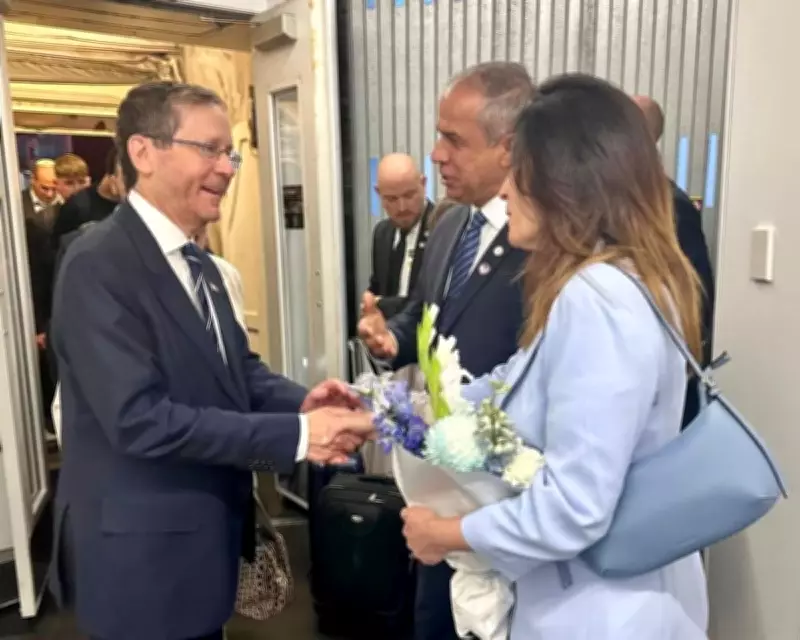
Upon landing at Sydney Airport on Monday, President Herzog and his wife, Michal Herzog, were formally greeted by Israel's Ambassador to Australia, Amir Maimon. The Israeli embassy promptly shared the arrival on social media platform X, extending a warm "Welcome to Australia, President Isaac Herzog!" to mark the occasion.
The Executive Council of Australian Jewry (ECAJ) has described Herzog's presence as profoundly meaningful. Alex Ryvchin, co-chief executive of the ECAJ, emphasised that the president's visit would "mean a great deal" to those directly impacted by the Bondi attack. Ryvchin expressed hope that it would "lift the spirits of a pained community" and potentially foster a "much-needed recalibration of bilateral relations between two historic allies."
Tightly Controlled Itinerary and Official Engagements
Details of President Herzog's schedule have been closely managed, with security considerations paramount. His initial activities included laying a wreath at Bondi before midday on Monday, followed by planned addresses at community events in Sydney. The itinerary subsequently involves travel to Canberra and Melbourne for further engagements.
According to Israel's government press office, Herzog aims to visit "Jewish communities across Australia to express solidarity and offer strength" following the Bondi beach attack. He is scheduled to meet with Prime Minister Anthony Albanese, Governor General Sam Mostyn, and various political leaders, alongside conducting media interviews.
Prime Minister Albanese extended the invitation after the antisemitic shooting on 14 December, intending the visit to promote greater unity. However, this objective faces significant challenges amid existing tensions.
Community Division and Protest Actions
While some welcome the visit, substantial opposition has emerged. Over 600 members of Australia's Jewish community signed a letter published in full-page advertisements in the Age and Sydney Morning Herald, declaring Herzog unwelcome. The letter, organised by the Jewish Council of Australia, argued that welcoming Herzog "betrays Jewish communities, multicultural Australia and everyone who stands for Palestinian human rights and international law."
This sentiment is partly rooted in a UN commission finding that Herzog, alongside Israeli Prime Minister Benjamin Netanyahu and former Defence Minister Yoav Gallant, "have incited the commission of genocide." Herzog has dismissed the genocide case at the International Court of Justice as a "form of blood libel" and defended his 2023 statement holding "an entire nation" responsible for the 7 October attacks.
Consequently, some groups have called for Herzog's arrest, while the Palestine Action Group planned a march from Sydney Town Hall to state parliament on Monday evening. This protest risked breaching existing public assembly restrictions, prompting a Supreme Court hearing to determine whether a "major event" designation should remain in place.
Security Measures and Calls for Calm
New South Wales Premier Chris Minns addressed the situation on Monday, urging calm and rejecting suggestions that special event powers were invoked to suppress protests. These powers allow police to move people on, close locations, and conduct searches.
Minns revealed a "massive police operation" involving 500 officers in Sydney's inner areas, with some carrying long-arm rifles in "various areas." Police negotiated with protesters to reroute their march south from Hyde Park instead.
Expressing concern about societal division, Minns stated, "it doesn't have to spill into conflict on Sydney streets." He acknowledged disagreements about the visit but stressed the importance of maintaining "calm and respectful" discourse for the "long-term unity of the city and the country."
As President Herzog's visit progresses, it underscores the complex interplay between international diplomacy, community trauma, and domestic political tensions, all unfolding under the watchful eye of extensive security arrangements.