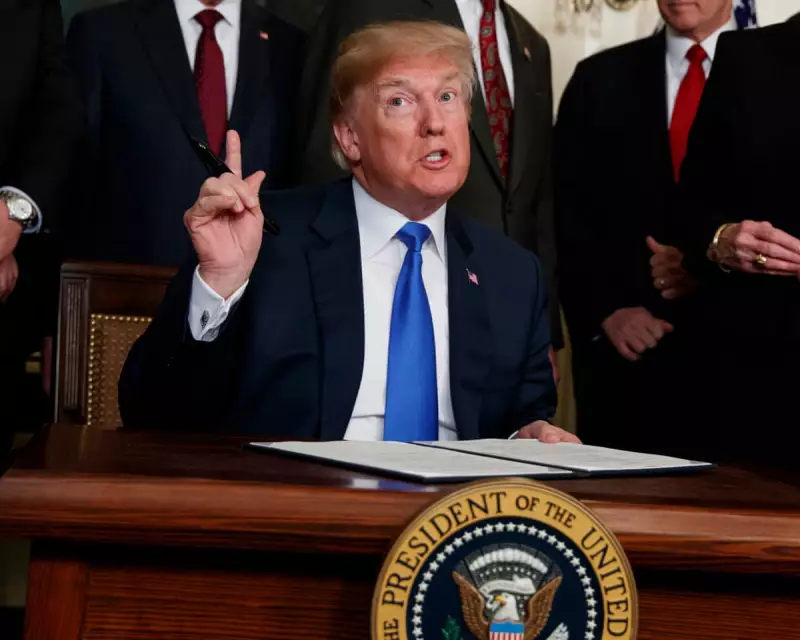
Governments around the world have responded with caution to an invitation from former US President Donald Trump to join a new international 'Board for Peace' initiative. The plan, which aims to resolve global conflicts, has been met with diplomatic concern that it could undermine the work of the United Nations.
Global Invitations and Cautious Responses
According to diplomatic sources, invitations began arriving in European capitals on Saturday and were addressed to approximately 60 nations. Among the invited leaders are those of Australia, France, Germany, Italy, Hungary, Canada, the European Commission, and key Middle Eastern powers. So far, only Hungary, whose leader is a staunch Trump ally, has offered an unequivocal acceptance.
Diplomats familiar with the matter have expressed apprehension, suggesting the initiative could potentially harm established multilateral efforts at the UN. The proposal has also sparked controversy in Israel, where far-right ministers have criticised the White House's selections for the panel, which include representatives from Turkey and Qatar—both nations have been openly critical of Israel's military actions in Gaza.
Structure and Funding of the Proposed Board
Documents seen by Reuters outline the proposed structure of the board. Donald Trump would chair the board for life, and its initial focus would be the conflict in Gaza before expanding to address other international disputes.
The financial mechanism revealed in the invitation letter is particularly notable. Member states would initially be limited to three-year terms. However, they could secure permanent membership by contributing US$1 billion each to fund the board's ongoing activities.
UN Mandate and Great Power Abstentions
The concept of a Board of Peace is not entirely new. The UN Security Council authorised a mandate for such a body in November, but with significant limitations. That mandate is set to expire in 2027 and is solely focused on the Gaza conflict.
The Security Council resolution passed with abstentions from two permanent, veto-wielding members: Russia and China. Both nations complained that the resolution failed to assign the UN a clear, leading role in determining Gaza's future, highlighting the complex geopolitical tensions surrounding any new peace initiative.
The cautious global reception, coupled with the substantial financial ask for permanent status, indicates that Trump's 'Board for Peace' faces a challenging path to becoming a functional diplomatic entity, potentially setting the stage for further friction between unilateral initiatives and established international institutions.