Ukrainian President Volodymyr Zelenskyy has declared that a potential peace agreement to end the war with Russia is now 90% ready, but insisted Ukraine will not accept a deal 'at any cost'. The statement came as Kyiv and its Western allies forcefully dismissed Russian claims that Ukraine had targeted a residence of Vladimir Putin with a drone, labelling the allegation as a transparent fabrication.
The Elusive Path to Peace
In his New Year's Eve address, President Zelenskyy offered a nuanced assessment of the conflict's potential end. "The peace agreement is 90% ready, 10% remains. And that is far more than just numbers," he told the Ukrainian people. However, he expressed deep scepticism about Russian intentions, warning that any deal must include robust security guarantees for Ukraine.
Zelenskyy directly countered Russian demands for control of the eastern Donbas region, stating, "Pull out from the Donbas, and it will all be over. That is how deception sounds." He affirmed Ukraine's desire for peace but ruled out surrender, saying, "We want an end to the war but not the end of Ukraine … Are we tired? Very. Does this mean we are ready to surrender? Anyone who thinks so is deeply mistaken."
In a show of allied support, French President Emmanuel Macron announced that European leaders meeting in Paris on 6 January would make firm commitments to protect Ukraine following any future peace deal with Russia.
A 'Laughable' Russian Claim and Military Strikes
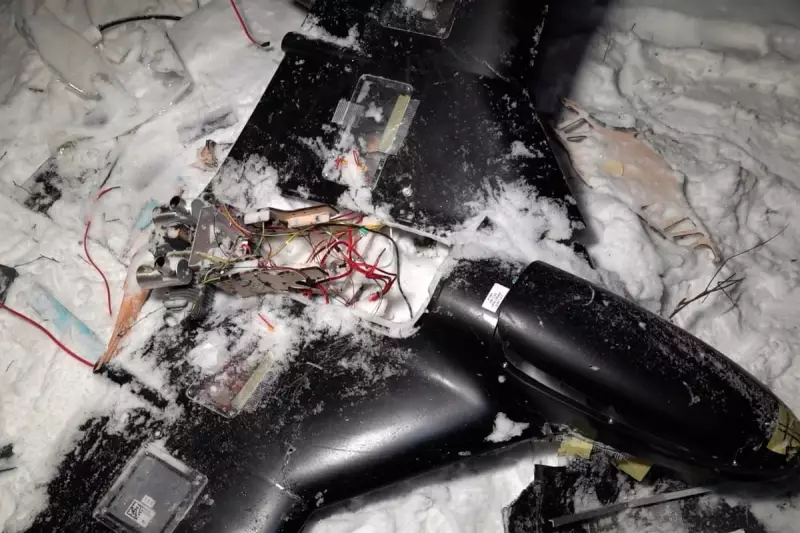
The diplomatic statements unfolded alongside continued military action and a bizarre propaganda claim from Moscow. Russia's defence ministry alleged that a Ukrainian drone had been downed near a Putin residence in the Novgorod region, releasing a video of a serviceman with drone fragments.
Ukraine's foreign ministry swiftly and scornfully rejected the accusation. "This is laughable," said spokesman Heorhii Tykhyi, criticising the delayed and unconvincing nature of the purported evidence. The sentiment was echoed by the EU's top diplomat, Kaja Kallas, who called Russia's claims "a deliberate distraction".
US intelligence officials, including the CIA, independently assessed that no such attack occurred. Reports indicate that former President Donald Trump, who initially appeared to give the Russian claim credence, was briefed on the matter by intelligence chiefs and subsequently shared an editorial critical of Russia.
Meanwhile, strikes continued on both sides. A Ukrainian security official said long-range drones hit the Temp oil depot in Rybinsk, Russia. In Ukraine, a Russian drone attack damaged apartment buildings and energy facilities in Odesa, injuring six people, including children.
Wider Context: North Korean Troops and Sanctions
The war's ramifications extended beyond the immediate theatre. North Korean leader Kim Jong-un, in a New Year's message, hailed troops fighting in an "alien land," which analysts interpreted as a reference to soldiers supporting Russia in Ukraine. South Korean and Western intelligence believe thousands of North Korean troops have been deployed, with high casualties reported.
In a related economic development, the US granted the majority Russian-owned Serbian oil company NIS a sanctions reprieve until 23 January. The company, which supplies most of Serbia's fuel, had been forced to shut its refinery due to sanctions aimed at crippling Russia's war economy.
As the conflict entered its 1,408th day, the gap between Zelenskyy's cautiously hopeful calculus for peace and the grim reality of ongoing attacks and disinformation underscored the profound challenges facing any resolution.