
The Transformation of War Reporting: From Observers to Targets
My friend was killed for telling the truth. Today, powerful entities have become even more determined to silence journalists who challenge their narratives. Governments and armed groups that once viewed reporters like Marie Colvin as mere annoyances now systematically target them as legitimate threats to their control over information.
A Personal Connection to Suppression
Recently, I discovered my name appeared in the Epstein files, though apparently for benign reasons. This unexpected connection reminded me of a disturbing episode following Marie Colvin's death in Homs, Syria, in February 2012. After government shelling killed my colleague, I sought help from Norwegian diplomat Terje Rød-Larsen to retrieve her body from the intense conflict zone.
Unbeknownst to me, Rød-Larsen forwarded my request to Jeffrey Epstein, whose alleged Mossad connections were not widely known at the time. Ultimately, nothing came of this troubling connection, but it highlighted how truth-seeking efforts can become entangled with shadowy networks.
The Cost of Truth-Telling
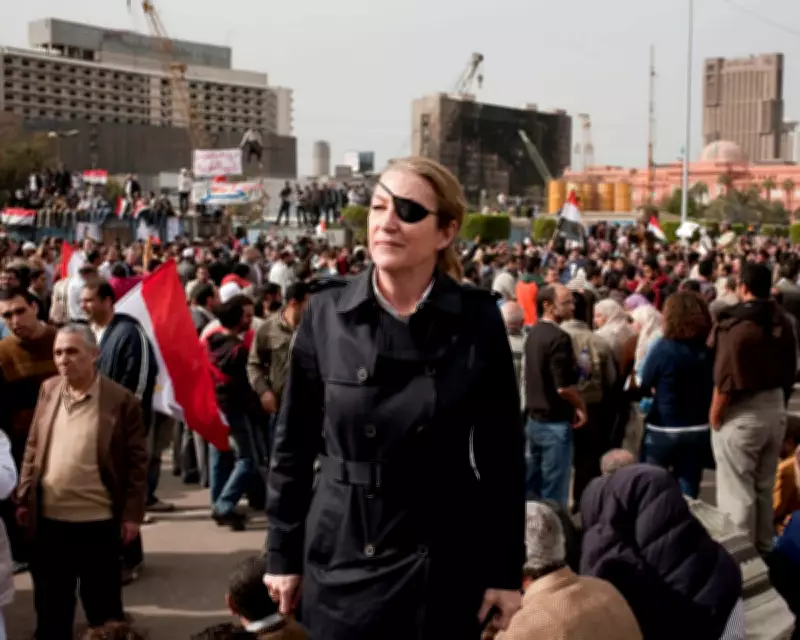
Marie Colvin exemplified the dedicated war correspondent, relentlessly pursuing stories that exposed the civilian costs of conflict. Her commitment came at tremendous personal expense: she lost an eye in Sri Lanka and ultimately her life in Syria. American courts later determined she wasn't a random casualty but had been deliberately targeted by Assad's forces.
We worked in the same dangerous environments, documenting broken neighborhoods in Homs, Daraya, and Aleppo. As journalists, we believed our words could reach crucial audiences and potentially influence policy. We calculated that the risks were worth taking to gather evidence that might make a tangible difference.
The Changing Landscape of Journalism
Fourteen years after Marie's death, journalism has transformed dramatically. Beyond shrinking newsrooms and AI replacing careful analysis, the fundamental risk has shifted to systematic manipulation and suppression of truth. In Gaza, international reporters face complete bans, while Palestinian journalists pay a horrific price: at least 248 have been killed by Israeli forces.
According to Reporters Without Borders, 2025 marked the deadliest year ever for journalists globally. The organization emphasizes that "journalists do not just die. They are killed. This is where hate and impunity lie." This impunity has become standard practice across conflict zones.
Global Patterns of Suppression
Russia targets journalists in Ukraine, Sudan has become nearly impossible for professional reporters to operate in, and Mexico ranks as the second-most deadly country for journalists after Palestine, where criminal organizations hunt down reporters. Even after journalists are killed, sophisticated disinformation campaigns work to legitimize their deaths.
At the Munich Security Conference, I discussed with Belarusian political scientist Alina Kharysava how disinformation thrives in information vacuums. The solution lies in insisting on ground-level reporting and evidence collection. At The Reckoning Project, we train local journalists to collect legally binding testimonies from atrocity survivors, creating verified evidence for courts while countering false narratives.
The Power of Access and Witness
When reporters cannot independently enter conflict zones, governments and armed groups shape narratives by default. While satellite imagery, geospatial analysis, and open-source intelligence tools provide valuable data, they cannot replace human intelligence gathering and firsthand observation.
Without access to independent reporting, the public faces forced choices between competing narratives, leading to polarization rather than understanding. Historical examples show journalism's potential impact: reporting on Kosovo's refugee crisis in 1999 directly influenced NATO's bombing campaign against Serbia. Today, denied access creates space for bloggers, influencers, and conspiracy theorists to manufacture alternative realities.
Preserving Truth in Dangerous Times
Marie Colvin died serving as a witness at the heart of battle. Her death reminds us how urgently we must preserve truth-telling mechanisms. When borders close to journalists, disinformation flourishes, narratives become manufactured, and accountability disappears. Without independent witnesses, lies can too easily dictate reality.
The fundamental message remains clear: access equals power in conflict reporting. As governments and armed groups increasingly target journalists to control information, preserving spaces for independent reporting becomes not just a journalistic concern but a fundamental requirement for accountability and truth in our increasingly polarized world.




