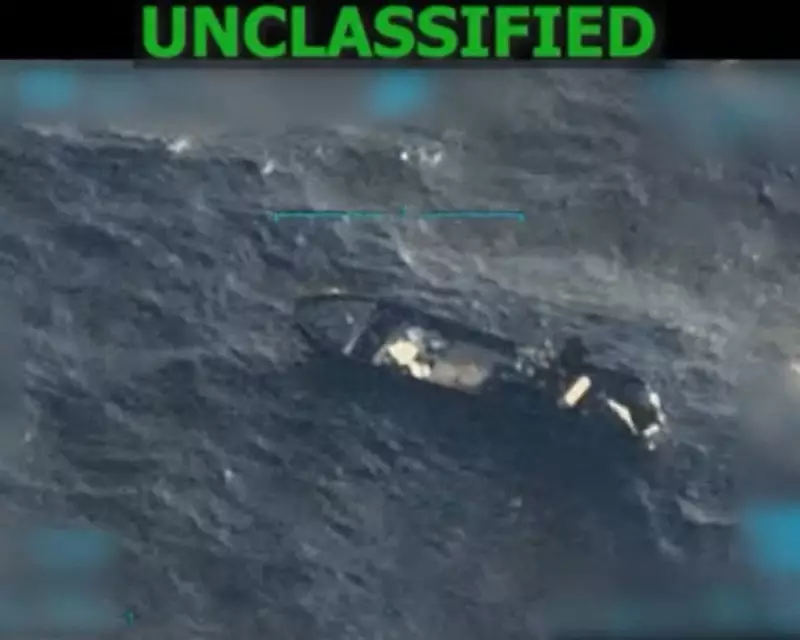
Disturbing video footage shown to US senators has revealed that two survivors of a US airstrike on a suspected drug smuggling vessel clung to wreckage for approximately an hour before being killed in a follow-up attack.
The Fatal Hour-Long Ordeal
According to sources who viewed the classified recording, the incident occurred on 2 September in the Caribbean Sea. An initial airburst munition exploded above the boat, killing nine of the crew. Two shirtless men, who were unarmed and carried no visible communications equipment, were seen desperately trying to stay afloat.
The video, described by one Democratic congressman as "one of the most troubling things I've seen," followed the pair for about sixty minutes as they struggled in the water. "You could see their faces, bodies... Then boom, boom, boom," one source told Reuters. The men were reportedly trying to turn a severed section of the hull upright before three additional munitions were fired, killing them.
Mounting Legal and Political Scrutiny
The footage was presented to lawmakers behind closed doors on Thursday amid growing concerns that US Defence Secretary Pete Hegseth and other officials may have committed a war crime. This scrutiny intensified after a Washington Post report alleged Hegseth had verbally directed the military to "kill them all" during the operation.
However, Admiral Frank Bradley, the US Navy officer who commanded the strike, told senators that no such blanket order was given. The legal basis for the entire campaign is under intense debate. The Trump administration argues the US is at war with drug traffickers, making such strikes legal under the rules of armed conflict. Most independent legal experts vehemently dispute this.
Rebecca Ingber, a former legal adviser to the US State Department, stated: "It is manifestly unlawful to kill someone who's been shipwrecked." The US Department of Defense's own Law of War manual prohibits attacking combatants who are shipwrecked, so long as they abstain from hostilities.
A Campaign of Strikes and a Social Media Post
This controversial strike was the first in a campaign that has now seen 22 similar attacks in the Caribbean Sea and eastern Pacific Ocean. The Pentagon announced another strike on Thursday in the eastern Pacific, killing four men and bringing the total death toll to at least 87.
Shortly after the initial 2 September operation, President Donald Trump posted video of it on his Truth Social platform, framing it as action against "drug boats." He has vowed to release the full video, but the Pentagon has not yet done so. The footage of the follow-up attack that killed the two survivors remains unreleased to the public.
Reactions in Congress split along party lines. Republican Senator Tom Cotton defended the strike, saying he saw "two survivors trying to flip a boat, loaded with drugs bound for the United States, back over so they could stay in the fight." Democrats expressed profound distress, with Congressman Jim Himes asserting any American would see it as "the United States military attacking shipwrecked sailors."
As the Pentagon and White House continue to face questions, experts warn of dangerous precedents. Marcus Stanley of the Quincy Institute asked: "What's the next step?... The American people should get as much transparency and information here to judge what's being done in their name as possible."