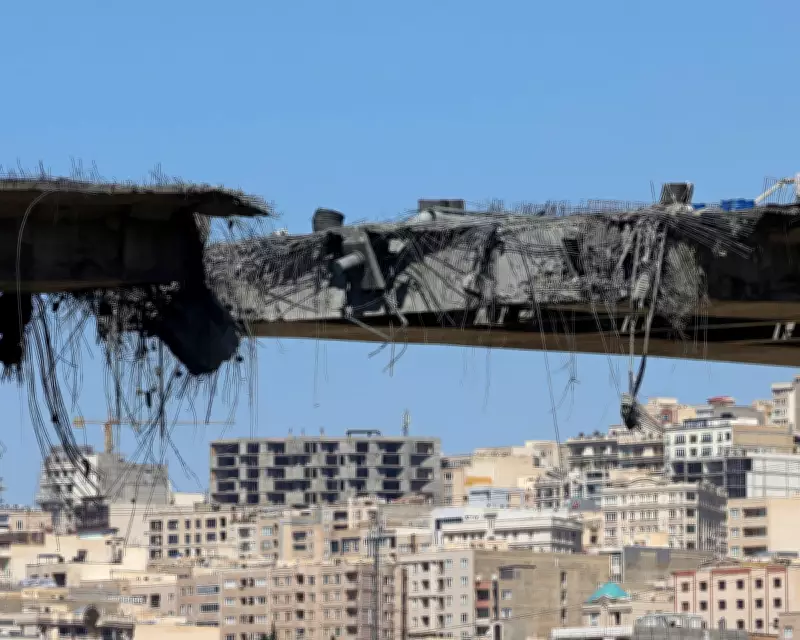
US Strikes on Iranian Civilian Infrastructure Spark War Crime Allegations
International law experts are raising alarm over recent US military actions targeting civilian infrastructure in Iran, following threats by former President Donald Trump to "bring Iran back to the stone ages." In a stark escalation, US forces struck the unfinished B1 bridge near Tehran, with Trump warning of more attacks to come. This move has ignited a fierce debate about potential violations of international humanitarian law, with legal scholars from top universities expressing grave concerns.
Legal Experts Condemn Attacks as Potential War Crimes
Erika Guevara Rosas, Amnesty International's senior director of research, advocacy, policy, and campaigns, emphasized that intentionally attacking civilian infrastructure like power plants is generally prohibited. She stated, "Even in limited cases where such targets qualify as military objectives, attacks cannot proceed if they cause disproportionate harm to civilians. Given that power plants are essential for meeting basic needs of tens of millions, targeting them could be unlawful and amount to a war crime." This principle was recently underscored in 2024 when the International Criminal Court issued arrest warrants for Russian officials over attacks on Ukraine's power grid.
More than 100 US-based international law experts from institutions including Harvard, Yale, Stanford, and the University of California have voiced serious concerns. In a letter published in the policy journal Just Security, they highlighted Trump's comments about conducting strikes "just for fun" and Defense Secretary Pete Hegseth's dismissal of "stupid rules of engagement." The experts noted attacks on schools, health facilities, and homes, such as a strike on a Tehran school that killed over 160 children and teachers.
International Law and the Protection of Civilian Objects
Under Article 52 of the First Additional Protocol to the Geneva Conventions of 1977, civilian objects are protected unless they serve as military objectives offering definite military advantage. The principle of distinction between civilians and combatants is paramount, with Rule 10 of customary international humanitarian law stating that civilian objects are shielded from attack unless they become military targets. This places obligations on both attackers to avoid civilian objects and defenders to prevent mingling military and civilian elements.
Tom Dannenbaum, a professor at Stanford Law School, criticized Trump's rhetoric, noting, "The reference to the stone age indicates targeting objects for their role in modern society, unrelated to military contribution—a condition necessary for lawful targeting in war." Sarah Yager, Washington director of Human Rights Watch, warned that crippling Iran's power plants would devastate civilians by cutting electricity to hospitals and water supplies, risking signals that military constraints are optional.
Global Response and Broader Implications
Mirjana Spoljaric, president of the International Committee of the Red Cross, condemned attacks on essential infrastructure, stating, "War on essential infrastructure is war on civilians. Deliberate attacks can amount to war crimes, and this trend is pervasive in conflicts worldwide." Historical precedents, such as US and allied strikes on Iraqi and Serbian power plants, add context to the current situation. As tensions escalate, the international community watches closely, with calls for adherence to legal standards to prevent further humanitarian crises.