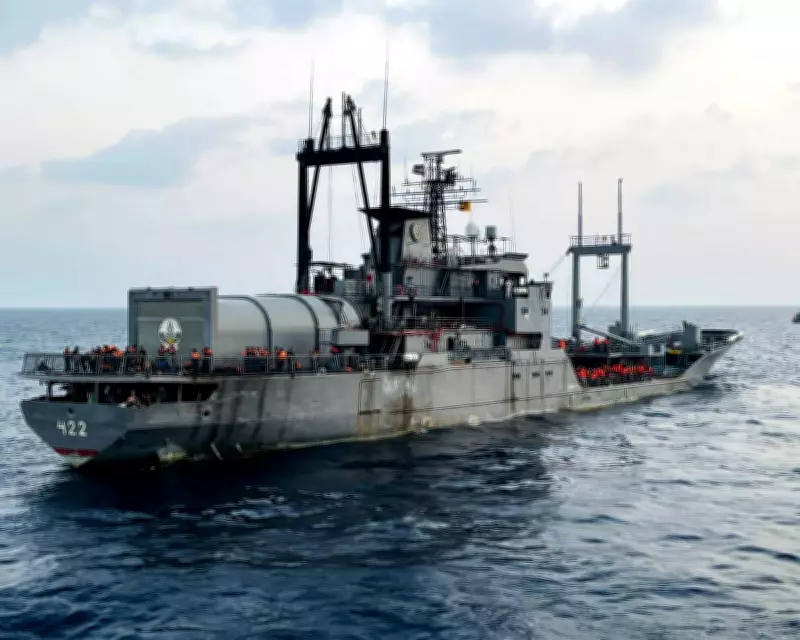
US Torpedo Strike Sinks Iranian Warship in Indian Ocean, Killing 84
The Sri Lankan navy received a distress call just after 5am, reporting a vessel in trouble approximately 19 nautical miles off the coast of Galle. By 6am, search and rescue boats were deployed through thick morning mist. Instead of finding a ship, they discovered a spreading oil slick, life rafts filled with survivors, and bodies floating in the waves. The IRIS Dena, an Iranian warship returning from an international fleet review in India, had already sunk to the bottom of the Indian Ocean.
Swift Attack with Powerful Torpedo
The warship sank in under three minutes after being struck by a Mark 48 torpedo, the world's most powerful, launched from the US nuclear-powered submarine USS Charlotte. The attack occurred more than 3,000 kilometers from the Persian Gulf while the Iranian vessel was not on an active combat mission, drawing comparisons to the controversial sinking of the Argentine ship Belgrano during the Falklands War.
At least 84 Iranian sailors were killed in the incident, with their bodies repatriated to Iran this week. The attack represents a significant escalation of US military action against Iran, bringing the conflict into the strategically vital Indian Ocean region.
India's Diplomatic Embarrassment
The IRIS Dena had been participating in an international fleet review in Visakhapatnam, India, just days before the attack. Iran was among more than 70 countries attending the naval showcase, which included the United States, Australia, and Russia. The friendly port visit was intended as a display of international naval cooperation.
India's former chief of naval staff, Admiral Arun Prakash, called the attack "shocking on multiple fronts" despite acknowledging its technical legality in international waters. "We are supposed to be friends and partners of the USA. To bring the war right to our doorstep was a perverse act," Prakash stated, adding that the targeting of a ship with approximately 130 people onboard "leaves a very bad taste in my mouth."
US Administration's Response
US Defense Secretary Pete Hegseth expressed satisfaction with the operation, stating that the Dena had thought itself safe until experiencing a "quiet death." President Donald Trump later boasted about the military strategy of sinking rather than capturing Iranian ships, commenting that "they like sinking them better" with apparent amusement.
Iran has condemned the attack as an "atrocity," while the Trump administration maintains the warship was a legitimate military target. The incident has raised serious questions about adherence to international conventions regarding warfare ethics and the responsibility to rescue survivors after such attacks.
Sri Lanka's Delayed Response
Questions have emerged about Sri Lanka's handling of the Iranian vessel's request for a friendly port call. Although Iran had formally requested permission for its three-ship flotilla to dock in Sri Lanka, official approval remained pending as the Dena reached the outskirts of Sri Lankan territorial waters.
Retired Rear Admiral Sarath Weerasekara, former chief of staff of the Sri Lankan navy, revealed that the ship waited for over 11 hours without receiving clearance. "We did not take any prompt action. We could have saved those lives also," he acknowledged, suggesting the delay contributed to the vessel's vulnerability.
Regional Security Implications
The attack has exposed significant vulnerabilities in Indian Ocean security monitoring. The presence of a US submarine operating undetected so close to Indian territory, without notification to New Delhi despite close defense ties, represents a serious intelligence failure.
Defense analyst Sushant Singh described the incident as a "humiliation" for Prime Minister Narendra Modi's government, stating that "this sends a signal to the larger region that India is not that influential in the Indian Ocean region, not even close to its own shores."
Retired Vice Admiral Shekhar Sinha, who had personally interacted with Iranian naval personnel during the fleet review, expressed particular distress about the attack's implications. "It's clear we need to relook at Indian Ocean security and underwater surveillance," he warned. "If an American submarine is floating in the Indian Ocean so close by and we did not know, then we better buck up."
Broader Geopolitical Concerns
The incident has provoked fears that the Trump administration's Middle East policies will have wider ramifications throughout the geopolitically sensitive Indian Ocean region. The attack on a vessel that had been participating in peaceful international naval exercises just days earlier has undermined trust in diplomatic engagements and raised questions about the future of maritime security cooperation.
As regional powers reassess their security arrangements and surveillance capabilities, the sinking of the IRIS Dena serves as a stark reminder of how quickly geopolitical tensions can escalate into direct military confrontation, even in waters far from traditional conflict zones.