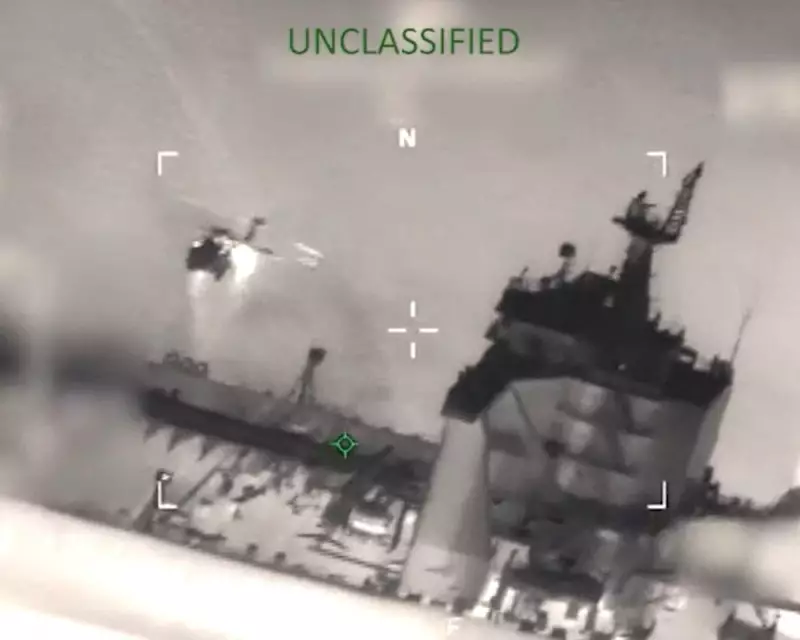
In a significant demonstration of military reach, United States forces have conducted twin maritime operations, seizing a Russian-flagged oil tanker in the Atlantic Ocean and intercepting another vessel in the Caribbean Sea. The actions mark a bold enforcement of sanctions against Venezuela's oil trade.
Dramatic Two-Week Pursuit Ends in Atlantic
On Wednesday, US European Command confirmed it had boarded the Russian-flagged tanker Marinera, bringing an end to a dramatic, two-week pursuit. The operation began in the Caribbean and concluded in the Atlantic, with the US alleging the vessel was involved in sanctions violations linked to Venezuela.
While initial reports suggest the ageing tanker was empty and en route to collect Venezuelan crude, its seizure is poised to strain relations with the Kremlin. The incident comes at a sensitive diplomatic moment, amid ongoing Ukraine peace talks and following the recent US capture of Venezuela's president, Nicolás Maduro, a key Russian ally.
Pre-Dawn Caribbean Interdiction
In a separate but related operation on the same day, the US Coast Guard intercepted the dark-fleet tanker M/T Sophia in a pre-dawn raid in the Caribbean. A video released by US Southern Command on 7 January 2026 showed US military forces interdicting the vessel, which is also under international sanctions.
Commenting on the twin seizures, the White House signalled a continued hardline approach. This follows former President Donald Trump's imposition last month of what he termed a "complete blockade" on ships transporting oil for Caracas.
Risks and Reactions
When questioned on whether seizing a Russian-flagged vessel risked escalating tensions with Moscow, a US official did not directly address the geopolitical ramifications. Instead, it was stated the crew could be transferred to the US for prosecution "if necessary".
The aggressive maritime operations have ignited familiar political divisions in Washington. Republicans have largely supported the actions as lawful enforcement, while Democrats warn of potential illegal acts of war that could plunge Venezuela into deeper chaos and set a dangerous precedent for unilateral presidential power.
These high-seas incidents underscore the Trump administration's willingness to project military power to enforce its foreign policy objectives, directly challenging both Venezuelan interests and their international backers.