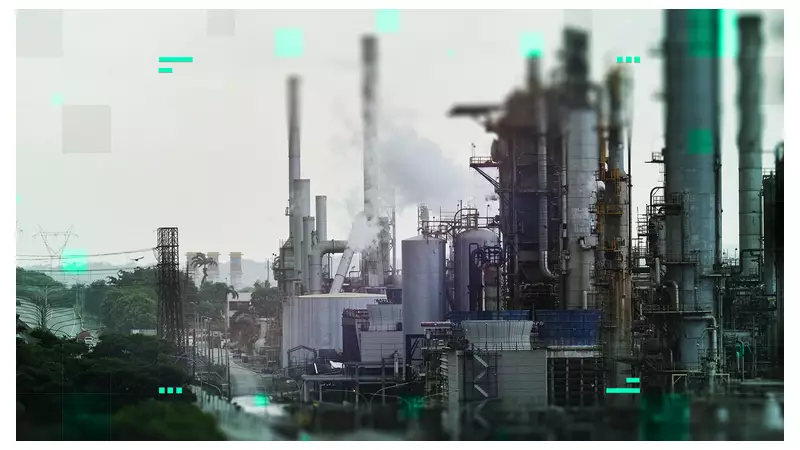
At the heart of Donald Trump's strategy following the US-led ousting of Venezuelan President Nicolas Maduro lies a monumental challenge: resurrecting the nation's crippled oil sector. The former US President has promised a rapid revival, but industry experts warn the reality involves a staggering financial outlay and a timeline stretching years, not months.
The Scale of the Ambition Versus Reality
Speaking shortly after the operation that removed Maduro on 3 January 2026, Trump outlined his vision. He called for major US oil firms to invest billions to fix the "badly broken" infrastructure, claiming expanded operations could be functional in under 18 months. He also stated Venezuela would soon hand over 30 to 50 million barrels of crude to the US, worth approximately £2.1bn.
However, analysts immediately questioned the feasibility. Jorge Leon, Vice President of Rystad Energy, stated bluntly: "This is not gonna be cheap, this is not going to be fast, and this is not going to be easy." His firm's analysis suggests that even under a best-case scenario of swift political stabilisation, it would take five to seven years for production to double to two million barrels per day. That level would still be a million barrels shy of its early-2000s peak.

The financial cost is eye-watering. Rystad estimates the necessary investment at a minimum of £80bn. Barney Gray, global crude oil editor at Independent Commodity Intelligence Services (ICIS), echoed the scepticism, noting the infrastructure needed for higher production simply no longer exists. "To replace everything... would be possibly an unimaginable cost that private US majors are simply not prepared to bear," he said.
A Decaying Infrastructure: From Extraction to Storage
The decay within Venezuela's oil industry is systemic, affecting every link in the supply chain. Data from the Baker Hughes Rig Count Report reveals the stark decline in exploration: only two operational rigs were active in Venezuela throughout 2025, a drastic fall from 67 a decade ago.
Compounding the extraction problem is the complex nature of Venezuela's primary resource. The vast reserves in the Orinoco Belt produce an "extra heavy" crude that requires specialised pre-processing in facilities called upgraders. Clay Seigle, a senior fellow at the Centre for Strategic and International Studies, explained that only one of the country's four upgrading units is currently operational. This sole functioning unit is run by US giant Chevron in a joint venture. Building or renovating these complex plants represents a multi-billion dollar, long-term undertaking.
The blockade and sanctions have also forced the country to stockpile oil. While analytics firm Kpler estimated 22 million barrels were in onshore storage in December 2025, much of the capacity is unusable. Analysis by satellite imagery firm Kayrros indicates about a third of storage tanks appear derelict. Antoine Halff, co-founder of Kayrros, noted that rust from lack of maintenance leads to leakage and crude contamination, rendering tanks useless.
Immediate Hurdles and Long-Term Prospects
In the short term, the source of the 30-50 million barrels Trump mentioned is unclear. Kpler data indicates about 40 million barrels are in storage globally, with half idling on ships near Venezuela. Sky News tracking identified roughly 30 sanctioned vessels near the coastline. Notably, some tankers continue to move: the Minerva Astra was captured by satellite imagery passing Cuba on 5 January, just days after Maduro's removal.
American companies themselves are part of the current, limited flow. Chevron, exempted from sanctions in 2022, accounts for the 20% of Venezuelan oil still imported by the US. Sky News identified 16 tankers with a history of carrying Venezuelan crude to the US, with several arriving in or en route to Venezuela in early January 2026.
The ultimate barrier to revival may be investment security. With the political situation in flux and corruption endemic, international capital remains wary. "The answer at the moment is not very," said ICIS's Barney Gray regarding investor willingness. "They've got a long way to go before the economics can be even remotely demonstrated."

The environmental legacy of the decay further complicates the picture. Sky News analysis of International Energy Agency data reveals Venezuela's methane emissions intensity is exceptionally high, at approximately 10kg per barrel of oil produced, more than double that of the next largest polluter among major oil nations, a consequence of leaking, dilapidated infrastructure.
While the ambition to restart Venezuela's oil engine is clear, the path is littered with logistical, financial, and political obstacles that suggest Trump's 18-month timeline is profoundly optimistic, with a full recovery measured in years and tens of billions.