US Military Builds Formidable Force Within Striking Distance of Iran
A powerful US military force is currently assembling within striking distance of Iran, marking a substantial escalation in regional military presence. This deployment, which will be fully operational by this weekend, represents a significant shift from the limited US military footprint in the region just over a month ago.
Three Key Elements of the Deployment
The US military buildup consists of three main components that together create a formidable strike capability:
Naval Power: The aircraft carrier USS Abraham Lincoln and its Carrier Strike Group 3 will soon be joined by the USS Gerald Ford and its Carrier Strike Group 12. The Ford is currently passing through the Gibraltar Strait and is expected to reach its position south of Cyprus within approximately four days at normal cruising speed.
These two Nimitz-class carriers will bring additional air defense capabilities and Tomahawk-carrying destroyers, bringing the total number of identified US destroyers in the region to eleven. They will join three Littoral Combat Ships already stationed in the area, along with numerous support vessels.
Each carrier strike group typically includes a nuclear attack submarine, likely of the Virginia class, though these are rarely officially named. There may also be an Ohio-class submarine in the region specifically designed for launching Tomahawk and other missiles at land targets.
Air Defense and Refueling Capabilities
Air Defense Assets: Over the previous ten days, an extensive series of C-5 and C-17 transport flights have delivered air defense systems to US bases throughout the region. These deployments appear designed to provide cover against potential Iranian retaliation following any US military action.
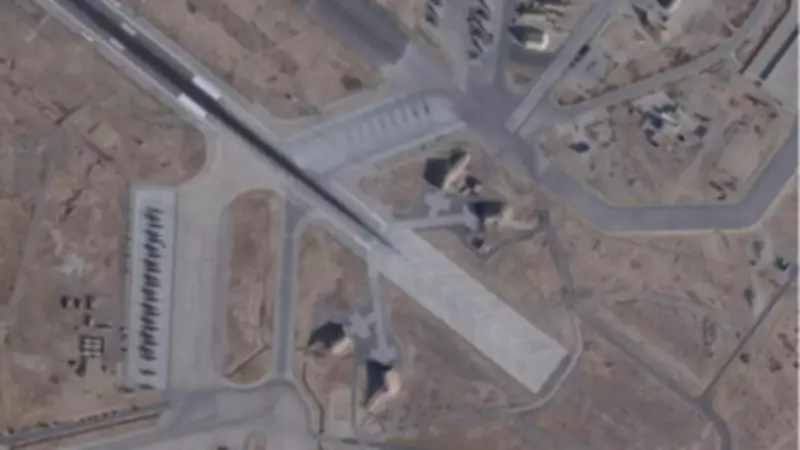
Israeli "Iron Dome" air defense batteries have also been repositioned from the Gaza frontier to eastern borders, likely for similar defensive purposes. Satellite imagery confirms the presence of F-15s and A-10 Thunderbolt aircraft at Muwaffaq Salti Air Base in Jordan.
Aerial Refueling Expansion: The US has significantly bolstered its air-to-air refueling capabilities with additional KC-130 tankers. Six tankers departed from the British base at Mildenhall on February 16 bound for Greece, followed by ten more on February 18 traveling from continental US bases via Britain to locations in Greece and Bulgaria.
These tanker deployments suggest two important possibilities: US aircraft might operate from bases less politically sensitive than those of America's Middle East allies, and any potential air campaign could be prolonged rather than a brief, one-time attack.
Command and Control Capabilities
The deployment includes six E-3 Sentry aircraft, which serve as flying command centers capable of surveying and controlling all military activity within their operational area. These aircraft essentially function as mobile headquarters from which a country could manage military operations.
US combat aircraft are currently stationed at multiple locations including the British base at Akrotiri in Cyprus, Aviano in Italy, the Azores, Spain, and the Chagos Island base of Diego Garcia. More than 100 combat aircraft - including F-15s, F-18s, F-22s, F-35s, and B-2 bombers - are now available to US military planners in the potential theater of operations.
Tracking the Military Movements
Tracking data reveals detailed information about the ongoing military buildup. The USS Abraham Lincoln, a nuclear-powered aircraft carrier carrying 90 aircraft and 5,680 crew members, was last observed in the Arabian Sea approximately 240 kilometers off the coast of Oman. This carrier leads a strike group that includes three destroyers.
The USS Gerald Ford, the lead ship of the US Navy's nuclear-powered aircraft carriers, was approximately 600 kilometers from the Strait of Gibraltar as of January 18. Like the Lincoln, it forms a carrier strike group with three destroyers. In total, more than twelve US ships are now reported to be in the Middle East region.
More than fifteen refueling tankers have repositioned toward the Middle East and Europe since January 16. These K-135 aircraft can carry up to 200,000 pounds of fuel and 83,000 pounds of cargo, operating at speeds up to 530 miles per hour and altitudes reaching 50,000 feet. They originated from multiple locations including RAF Mildenhall in the UK, Tampa in Florida, and Sioux City in Iowa, landing at various airports in Greece and Bulgaria.
Iranian Military Activity
Satellite tracking data shows approximately six Iranian Navy vessels positioned just off the coast of Bandar Abbas as of January 16. Among these ships is the Iranian drone carrier IRIS Shahid Bagheri, located about ten kilometers from the coast and frequently observed in the Strait of Hormuz area. This vessel can deploy approximately sixty drones along with helicopters.
The purpose of this substantial US military buildup remains a subject of speculation, coming just over a month after former President Donald Trump told protesters in Iran that "help was coming." At that time, there was minimal US military presence in the region that could have made a meaningful difference. While Trump previously referred to a "great armada" assembling, the current deployment far exceeds that earlier rhetoric in both scale and capability.