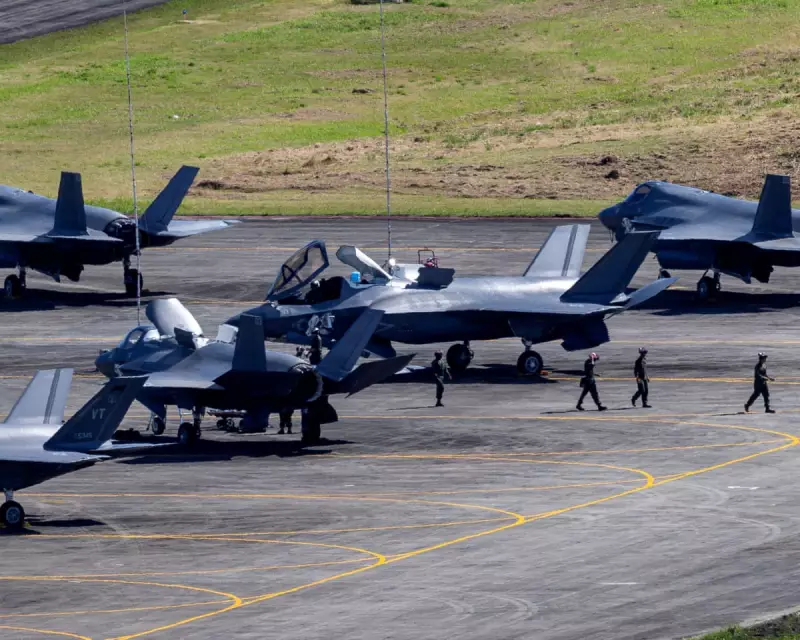
A United States military aircraft involved in a lethal airstrike in the Caribbean was reportedly disguised to look like a civilian plane, a tactic international legal experts warn could constitute a war crime.
Details of the Controversial Airstrike
The incident occurred on 2 September last year, when a US aircraft attacked a small boat, killing 11 Venezuelan men. According to a report by The New York Times, the aircraft had been painted to hide its military identity, and its weapons were concealed inside the fuselage instead of being mounted visibly on the wings.
In a deeply controversial follow-up, the same aircraft reportedly bombed the wreckage a second time, killing two survivors who were clinging to debris in the water. The Venezuelan government has denied the victims were involved in gang activity, while Washington has provided no public evidence linking them to drug smuggling.
Legal Experts Condemn 'Perfidy'
Specialists in the laws of armed conflict state that using a plane disguised as a civilian aircraft to catch targets off-guard represents the war crime of 'perfidy'. This is prohibited under both international law and the US military's own legal standards.
"If we move from the legally incorrect premise that this is a lethal operation governed by the laws of war, then the concept of perfidy here is relevant," said Nehal Bhuta, Professor of Public International Law at the University of Edinburgh. He warned that such disguises have a corrosive effect, potentially making any civilian-marked aircraft a target.
Professor Bhuta added that, in the absence of a recognised armed conflict, the strikes should be classed as extra-judicial killings, making the 'perfidy' debate a distraction from the operation's fundamental illegality.
Broader Campaign and Internal Military Concerns
The Trump administration conducted over 35 similar attacks on small boats in the Caribbean and Pacific following the September strike, killing more than 120 people. The Pentagon has justified this by claiming the US is 'at war' with drug cartels, a stance most international legal experts reject.
Concerns have been raised about the erosion of legal oversight within the US defence establishment. Craig Jones, a war law expert at Newcastle University, noted that Defence Secretary Pete Hegseth sidelined senior legal advisers in the Judge Advocate General (JAG) corps upon taking office.
"We're left with a quite terrifying situation whereby those who are supposed to be ensuring compliance are not even part of the conversation," Jones stated.
The Pentagon, which did not comment on the specific allegations, told The New York Times that all aircraft deployments undergo a rigorous process to ensure compliance with domestic and international law, including the law of armed conflict.