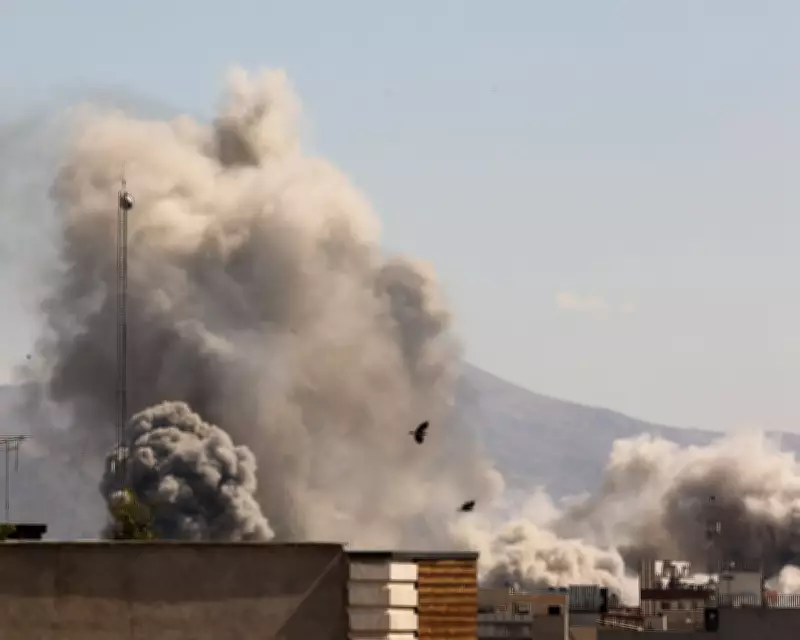
US-Israel Military Strikes Target Tehran, Resulting in Significant Civilian Casualties
In a dramatic escalation of hostilities, smoke billowed over Tehran on March 1, 2026, following coordinated strikes by Israel and the United States on Iranian targets. The Israel Defense Forces confirmed the operation in a social media statement, declaring they were hitting "targets" of the Iranian "regime in the heart of Tehran." This aggressive move comes in response to Iran's recent missile and drone attacks on Israel and several Gulf cities, which were launched as retaliation for the killing of Supreme Leader Ali Khamenei, who had governed Iran since 1989.
Widespread Impact Across the Region
The conflict has triggered chaos across the Middle East, with multiple rounds of sirens heard in central Israel and parts of the occupied West Bank on Sunday morning. Explosions were reported in key urban centers, including Doha, Dubai, and Manama, while blasts also resonated near Erbil airport in Iraq's autonomous Kurdistan region, a base for US-led coalition troops. According to the US-based Human Rights Activists News Agency (HRANA), at least 133 civilians have been killed and 200 injured during the US-Israel strikes on Iran, highlighting the severe humanitarian toll of the ongoing warfare.
Travel Disruptions and Airspace Closures
The military actions have led to significant disruptions in air travel, with Israel, Qatar, Syria, Iran, Iraq, Kuwait, and Bahrain closing their airspace. This has left hundreds of thousands of travelers either stranded or diverted to alternative airports, exacerbating the regional instability. The closures underscore the broader economic and logistical impacts of the conflict, affecting not only local populations but also international transit through one of the world's most critical aviation hubs.
Call for Personal Accounts and Safety Considerations
As the situation unfolds, there is a growing need to document the human stories behind the headlines. Individuals living or working in the region are encouraged to share their experiences of how the US-Israel conflict with Iran has affected them, whether through displacement, economic hardship, or personal safety concerns. It is emphasized that security is paramount; contributors should assess their safety before sharing information, with options for anonymous submissions via encrypted channels to protect identities. For those over 18, sharing stories can help illuminate the real-world consequences of geopolitical tensions, with all data handled confidentially and used solely for journalistic purposes.
The Guardian provides secure methods for communication, including encrypted forms and messaging services, to ensure privacy. As the conflict continues to evolve, these personal accounts will be crucial in understanding the full scope of its impact on communities across the Middle East and North Africa.