US and Israel Escalate Military Campaign Against Iran with New Wave of Attacks
The United States and Israel have intensified their military offensive against Iran, launching fresh waves of airstrikes across the country on Sunday. This marks the second day of a coordinated campaign aimed at overthrowing the Iranian government, plunging the Middle East into a volatile regional conflict with unpredictable consequences.
Destruction in Tehran and Escalating Rhetoric
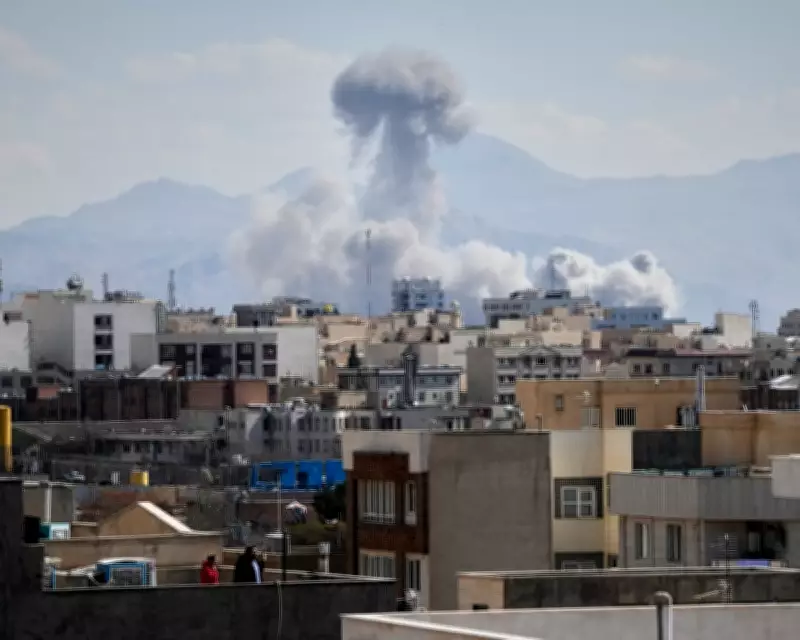
Numerous buildings in Tehran have been destroyed by US and Israeli airstrikes that began on Saturday. A massive explosion shook the Iranian capital on Sunday morning, sending plumes of smoke into the sky near key government installations including the police headquarters, state television buildings, and defense ministry facilities.
The Israel Defense Forces confirmed their air force was striking "in the heart of Tehran" with efforts focused on dismantling Iran's remaining air defense systems. Meanwhile, US President Donald Trump issued a stark warning on Sunday, threatening to hit Iran "with a force that has never been seen before" if Tehran carries out retaliatory measures following the death of Supreme Leader Ayatollah Ali Khamenei in an Israeli airstrike on Saturday.
"Khamenei, one of the most evil people in history, is dead," Trump declared in a social media post. "He was unable to avoid our intelligence and highly sophisticated tracking systems and, working closely with Israel, there was not a thing he, or the other leaders that have been killed along with him, could do."
Civilian Casualties and International Response
Iranian authorities reported significant civilian casualties from the attacks. Amir-Saeid Iravani, Iran's ambassador to the United Nations, told an emergency UN Security Council meeting that hundreds of civilians had been killed or injured in the US-Israeli strikes, accusing both nations of deliberately targeting civilian neighborhoods across multiple Iranian cities.
Particularly devastating reports emerged from southern Iran, where authorities stated more than 100 children were killed at a school in the city of Minab. The attacks have created widespread fear among Iranians, with many expressing a complex mixture of terror and hope as the bombings continue.
British Defense Secretary John Healey described the situation as "a really serious and deteriorating situation, [with] rising risks of increasing Iranian indiscriminate retaliatory attacks." Healey further accused Iran of "lashing out" in response to the military campaign.
Regional Impact and Economic Consequences
The conflict has already triggered significant regional disruption. Iranian retaliation has targeted Israel as well as civilian infrastructure and US military bases across Arab Gulf states. Loud explosions were reported for a second consecutive day in Dubai and Doha, with visible missile interceptions creating puffs of white smoke over Dubai's skies.
Major Middle Eastern transportation hubs have sustained damage, including:
- Dubai's Burj Al Arab hotel and its international airport
- Airports in Abu Dhabi and Kuwait
- Critical port facilities in Dubai
The attacks have caused one of global aviation's most severe disruptions in years, with Dubai International Airport—the world's busiest international travel hub—remaining closed. Analysts warn that prolonged conflict could lead to global economic turmoil, particularly if oil supplies are affected.
Ships navigating the Strait of Hormuz reported hearing radio broadcasts purportedly from the Iranian navy announcing a ban on transit through the vital maritime corridor, which serves as a crucial chokepoint for approximately one-fifth of the world's oil supplies. Authorities in Oman confirmed damage to at least one oil tanker, though the attacker's identity remains unclear.
Political Fallout and Leadership Changes
Trump has explicitly stated that the military campaign's goal is regime change, calling on "the Iranian people to take back their country." Both Trump and Israeli Prime Minister Benjamin Netanyahu have urged Iranians to overthrow the clerical regime that has governed since the 1979 revolution.
Iranian officials have responded with defiant rhetoric. Parliament Speaker Mohammad Baqer Ghalibaf declared that Netanyahu and Trump had "crossed a red line" and would "pay for it." Senior Iranian officials announced plans to appoint a temporary leadership group, with Ghalibaf vowing to continue Khamenei's path.
The Iranian regime faces multiple simultaneous crises, including:
- An economy suffering from extensive international sanctions
- Massive protests that were violently suppressed in January
- Regional proxy forces weakened by Israeli attacks
Regional Protests and Security Concerns
The US-Israeli offensive has sparked protests across the Islamic world. In Pakistan, police clashed with protesters who breached the outer wall of the US consulate in Karachi, resulting in nine fatalities. Similar demonstrations occurred outside the Green Zone in Baghdad, where the US embassy is located.
Air raid sirens sounded repeatedly across Israel early on Sunday, with loud explosions reported in Jerusalem and Tel Aviv as Israel's sophisticated air defense systems intercepted incoming Iranian attacks. The conflict represents the second time in eight months that the Trump administration has used military force against Iran, opening a new chapter in US intervention in the Middle East.
As the situation continues to evolve, the international community watches with growing concern about the potential for wider regional war, increased civilian casualties, and significant disruption to global energy markets and transportation networks.