
Nuclear Negotiations Reach Critical Juncture as Military Threat Hangs Over Geneva Talks
High-stakes diplomatic negotiations between the United States and Iran regarding Tehran's nuclear program extended deep into Thursday night, with substantial differences persisting between the two sides. The prolonged Geneva discussions have heightened concerns that former President Donald Trump might authorize an unprecedented military strike against Iran as tensions escalate across the Middle East.
Diplomatic Marathon Continues Amidst Growing Tensions
Iranian foreign ministry officials attempted to downplay suggestions that the Geneva talks had collapsed, instead emphasizing that new proposals had emerged requiring additional consultation in both capitals. The lead American negotiator, Steve Witkoff, created frustration within Tehran's delegation when he temporarily suspended discussions with Iranian Foreign Minister Abbas Araghchi to attend separate meetings with Ukrainian representatives across the Swiss city before his scheduled return.
Omani mediators similarly rejected claims of a breakdown in negotiations, asserting that innovative concepts were being exchanged with remarkable transparency during what has been described as the third decisive round of indirect consultations. The United States continues to demand permanent Iranian commitments regarding uranium enrichment and inspection protocols that would satisfy Washington that Tehran cannot develop nuclear weapons—an objective Iran has consistently denied pursuing.
Core Issues: Uranium Enrichment and Ballistic Missiles
At the heart of the negotiations lies the fundamental question of whether Washington will attempt to prohibit Tehran from all uranium enrichment activities except at minimal levels, such as those required for medical applications at the aging Tehran research reactor. This facility, a five-megawatt unit dating back to 1967 originally supplied by the United States for medical isotope production, represents just one aspect of the complex enrichment debate.
The domestic right to enrich uranium has long been viewed as an absolute symbol of Iranian national sovereignty, a concession granted by the United States in the 2015 nuclear agreement. Some enrichment disputes have been temporarily deferred since Trump claimed that Iran's three primary nuclear facilities at Fordow, Natanz, and Isfahan were destroyed by American bunker-busting bombs in June, theoretically preventing high-quantity uranium enrichment for the foreseeable future.
Tehran has refused to permit the International Atomic Energy Agency (IAEA) to inspect the extent of damage at these sites following the American attack. Secretary of State Marco Rubio commented on Wednesday: "They're not enriching right now, but they're trying to get to the point where they ultimately can."
Stockpile Disputes and Verification Challenges
A significant impasse concerns the fate of Iran's uranium stockpile enriched to 60% purity—dangerously close to weapons-grade material. The IAEA reports that Tehran has yet to disclose the location of approximately 400 kilograms of this highly enriched uranium, sufficient to construct five to six nuclear devices comparable to the bomb that devastated Nagasaki in 1945. The agency additionally estimated in May of last year that Iran possessed 8,000 kilograms of uranium enriched to 20% purity or lower.
This highly enriched stockpile could potentially be down-blended within Iran as Tehran proposes, or exported to Russia or the United States. Transferring the entire 8,000-kilogram stockpile to American control would represent a major concession from Iran, even if it resulted in the lifting of numerous US and UN economic sanctions. One Iranian official in Geneva firmly stated: "The principles of zero enrichment forever, dismantling of nuclear facilities and transferring uranium stocks to the US is completely rejected."
Military Buildup and Domestic Political Pressures
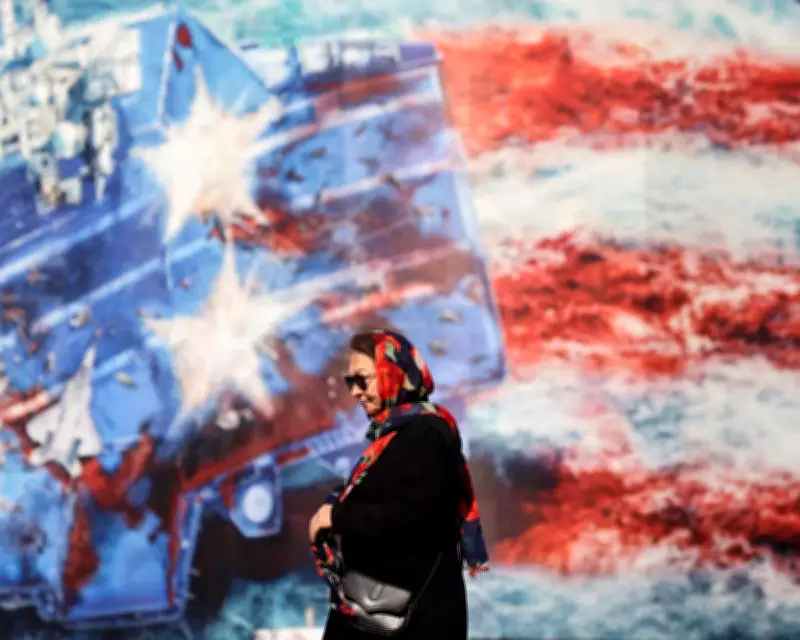
The negotiations unfold against the backdrop of Trump's unprecedented military buildup in the region, including two aircraft carrier strike groups, attack aircraft, aerial refueling equipment, and submarines armed with Tomahawk missiles. Trump now possesses the military capability to strike Iran either through an extended assault aimed at regime change or a more targeted operation designed to force Tehran into greater negotiating flexibility.
Domestically, Trump faces mounting pressure to demonstrate that he has not led the United States into a diplomatic dead end, with Democratic lawmakers demanding congressional votes on what they characterize as his "war of choice." An Associated Press poll this week revealed that 56% of Americans distrust Trump's ability to make appropriate decisions regarding military force deployment outside US borders.
Non-Nuclear Issues and Regional Implications
Tehran maintains it will not negotiate on matters beyond nuclear concerns, explicitly ruling out discussions about its ballistic missile program or support for "resistance groups" throughout the Middle East. Iran describes its ballistic missiles—some with ranges extending 1,300 miles (2,000 kilometers)—as purely defensive weapons.
Secretary Rubio acknowledged on Wednesday that the ballistic missile program would require attention at some point, suggesting the subject might not appear on the immediate agenda but could not be excluded from future discussions. He emphasized: "Iran refuses to discuss the range of its missiles with us or anyone else, and this is a big problem for us. Iran has missiles that increase their range every year, and this could be a threat to the United States because the range of the missiles may reach American soil." Rubio further noted that shorter-range Iranian missiles could target US bases throughout the region.
The IAEA Director General Rafael Grossi has assumed a central role in negotiations, as his endorsement is essential to convince Washington that Iranian guarantees regarding future low-level enrichment can be technically verified. As diplomatic efforts continue against this tense backdrop, the international community watches anxiously to see whether dialogue or military confrontation will prevail in this high-stakes geopolitical standoff.




