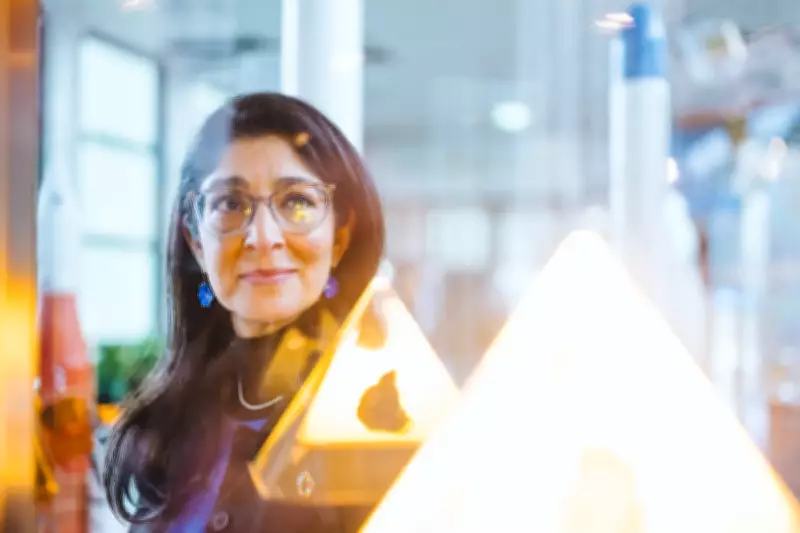
The Guardian of Earth's Safety in Vienna
Aarti Holla-Maini, a British lawyer with extensive experience in the satellite industry, holds a critical position at the United Nations. As the director of the UN's Office for Outer Space Affairs (Unoosa), she is the designated official responsible for alerting the world if a significantly large asteroid is detected on a potential collision course with Earth. Based in the Vienna International Centre, a modest 1970s concrete complex beside the Danube River, Holla-Maini and her team of 35 employees manage a vast portfolio, from promoting international space law to registering satellites.
A Real-World Asteroid Alert
In late December 2024, a robotic telescope in Chile identified a distant rock, initially estimated to be the size of a small building, hurtling through space. Named 2024 YR4, this asteroid's Earth impact probability gradually increased over three weeks, rising from less than 0.05% to more than 1% for a potential strike in 2032. This met Unoosa's criteria for issuing a global notification, established as part of the UN's planetary defense collaboration in 2013.
Romana Kofler, a programme officer at Unoosa and the point of contact for planetary defense, recalls the moment vividly. "We had trained for this with simulations, but this was the real thing," she says. "The adrenaline kicked in." After informing Holla-Maini, they drafted a letter to UN Secretary General António Guterres, who would disseminate the warning to 193 member states. "This was the first real-time test of an international response," Holla-Maini notes.
The Torino Scale and Potential Impact
2024 YR4 reached level three on the Torino Impact Hazard Scale, which ranges from zero (no risk) to 10 (certain collision threatening civilization). Although the chance of impact was minuscule, with a 99% likelihood of a miss, the asteroid's size and speed meant a strike could release energy comparable to hundreds of times the power of the Hiroshima bomb, potentially wiping out a city or region. This activation prompted the Space Mission Planning Advisory Group to explore deflection strategies, such as using an intercepting spacecraft, similar to NASA's 2022 Dart mission.
The threat from space objects is not theoretical. In 2013, a 20-meter meteor exploded over Chelyabinsk, Russia, releasing energy equivalent to 500 kilotonnes of TNT, injuring over 1,200 people and causing widespread damage. For a brief period, 2024 YR4 was the most significant near-term threat since Apophis in 2004, later downgraded after observations showed no threat for at least a century.
Beyond Asteroids: Unoosa's Broader Mission
Pronounced "Younoosa," the agency operates far from the bustling UN hubs in Geneva and New York. Established in the 1950s during the dawn of the space age, it aims to prevent political rivalries from extending into space. Today, its responsibilities include:
- Managing the official register of satellites, with over 10,000 in orbit and many more planned, addressing congestion and collision risks in Earth's traffic zone.
- Running the Space for All programme, helping non-space-faring nations access orbital benefits.
- Operating UN-Spider, a disaster response programme that provides satellite imagery for natural disasters.
Holla-Maini recounts a tense incident in June 2024 when the Malaysian Space Agency contacted Unoosa about a potential collision between a non-manoeuvrable Malaysian satellite and a North Korean satellite, with only 75 meters separating them. With no direct diplomatic line to Pyongyang, Unoosa sent information to known email addresses, and the North Korean satellite moved without a response. "The best you can do is send whatever notes and information you can to every official point of contact," Holla-Maini explains.
Efficiency in a Small Team
Despite limited staff and budget, Holla-Maini emphasizes that her team "punches well above its weight." "Because we have been in this straitjacket of not enough staff, not enough budget, it has forced the office to be extremely efficient," she adds. Whether facilitating disaster relief for floods in Morocco or preventing orbital collisions, Unoosa's work is crucial in an increasingly crowded space environment.
The 2024 YR4 scare served as a valuable test for planetary defense protocols. By February 2025, the asteroid's impact probability peaked at over 3% before dropping to negligible levels. "All of a sudden," Holla-Maini says, "it was gone." This event underscores the importance of vigilance and international cooperation in safeguarding Earth from celestial threats.