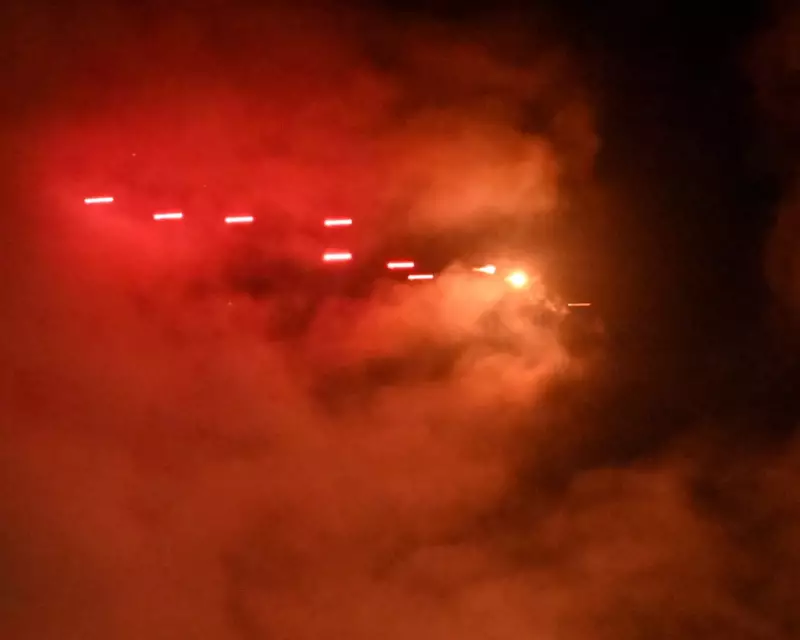
Ukrainian President Volodymyr Zelenskyy has declared a significant overhaul of the nation's air defence capabilities, introducing a new system involving mobile fire groups and interceptor drones. This announcement comes as Ukrainian intelligence warns of an imminent, massive Russian strike, with the country still recovering from devastating attacks earlier this month.
A Transformed Defence System
In his nightly video address on Monday, Zelenskyy stated that Ukraine's armed forces are implementing a new approach to air defence. "There will be a new approach to the use of air defences by the air force, concerning mobile fire groups, interceptor drones and other 'short-range' air defence assets," the president said. He emphatically added, "The system will be transformed."
To oversee this critical innovation, Zelenskyy announced the appointment of a new deputy air force commander, Pavlo Yelizarov. The move is a direct response to a severe wave of Russian strikes in early November that crippled power and heating for thousands of apartment blocks in Kyiv and other regions during freezing winter temperatures.
Imminent Threat and Energy Attacks
Zelenskyy issued a stark warning to citizens, urging them to be "extremely vigilant." He revealed that Russia has prepared for a massive strike and is waiting for the moment to carry it out. The president called on every region to enhance preparedness for a rapid response.
This warning was underscored by a recent barrage of drone strikes. Overnight to Monday, Russian forces launched 145 drones at Ukrainian energy infrastructure. Ukrainian air defences successfully intercepted 126 of them. The attacks resulted in power cuts across five regions—Sumy, Odesa, Dnipropetrovsk, Kharkiv, and Chernihiv—amid sub-zero conditions.
Ukrainian Energy Minister Denys Shmyhal informed the International Atomic Energy Agency (IAEA) about Russian preparations for further strikes on energy facilities, including those critical to the operation of nuclear power plants. Separately, the IAEA confirmed a back-up power line to the Russian-occupied Zaporizhzhia nuclear plant had been reconnected after repairs conducted under a ceasefire it brokered.
Broader Challenges: Elections and Diplomacy
Beyond the immediate military threat, Ukraine faces profound logistical challenges. The head of the country's Central Election Commission, Oleh Didenko, told Reuters that organising the first elections since Russia's 2022 invasion would be an enormous task due to shattered infrastructure and millions of displaced people.
This issue sits amid complex diplomatic efforts. While US President Donald Trump has demanded Ukraine hold elections—a move prohibited under martial law and opposed by most Ukrainians—talks continue. Ukraine's top negotiator, Rustem Umerov, confirmed discussions with US officials on ending the war would proceed at the World Economic Forum in Davos this week. Reports also indicate a planned meeting there between a Putin envoy and members of the US delegation.
The convergence of a new military strategy, sustained attacks on critical infrastructure, and intense political pressure defines a critical phase in the conflict, now in its 1,427th day.