Four Years After the Invasion: Europe's Intelligence Missteps
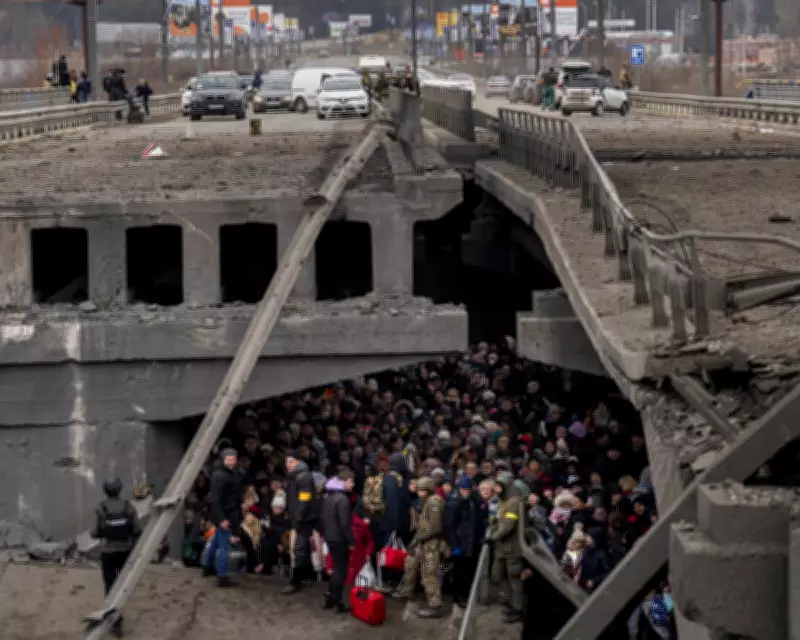
Tuesday marked the fourth anniversary of Vladimir Putin's full-scale invasion of Ukraine, a moment that irrevocably altered the fate of Ukraine and the history of Europe. On the morning of February 24, 2022, the world watched as Russian forces launched a brutal assault, catching many by surprise despite warnings from Western intelligence agencies.
The Night Before the Storm
Around 9 p.m. on February 23, 2022, a colleague at another news outlet sent an unequivocal message from an intelligence source: the war would start that night. The Guardian's Ukraine reporting team and international editors discussed the warning. Emma Graham-Harrison, who was on an overnight train from Kyiv to Mariupol, decided to disembark halfway and catch the first train back to Kyiv. This proved a wise decision, as Mariupol soon fell under siege, becoming a scene of horrific carnage. Emma remained in Kyiv, covering the initial Russian attack on the capital.
Adapting to a Grim Reality
Four years later, millions of Ukrainians have been forced to adapt to the grim reality of living in a war zone. They have endured the withdrawal of Russian forces from Kyiv and the atrocities left behind, the euphoria of liberating cities like Kherson, and the subsequent grinding attritional war that persists today. On this anniversary, many fear that Donald Trump's negotiations will lead nowhere, and the conflict could drag on for months or years.
Memories of Chaos and Displacement
In the early days, war was a terrifying and unpredictable new world. The maelstrom at Kyiv's train station, as thousands tried to flee amid fears of Russian arrival, remains a vivid memory. I recall sheltering in the apartment of a Kyiv taxi driver south of Kyiv on the second night of the war, along with his wife and three children. When I returned a few days later, the place was silent and empty; his family had fled to Poland, joining millions of Ukrainian families split by the war.
Odder images linger, such as a fancy supermarket filled with mangos and dragon fruits on the third day of the war, absurd mementoes of a world torn apart by Putin's attack. Before the invasion, I was among those skeptical of an assault on Kyiv, believing Russian military action in eastern Ukraine was more likely. I assumed Putin's intelligence services would inform him that holding Ukraine or imposing a pro-Russian leader was unfeasible. Volodymyr Zelenskyy shared this view; even as London and Washington warned of war, most Ukrainian sources dismissed it as nonsense.
Behind-the-Scenes Intelligence Games
As the war progressed, I sought to revisit those prewar moments to understand what happened behind the scenes. Why were the US and UK so certain, while others, including Zelenskyy, dismissed the warnings? Why did France and Germany ignore the alerts, leaving the head of Germany's intelligence service stranded in Kyiv on invasion day? How did we know enough to pull Emma off the night train, while Ukraine's defense minister went to bed unprepared?
Starting a year ago, I interviewed over 100 officials in high positions from Ukraine, Europe, and the US, including senior intelligence figures and much of Ukraine's 2022 security elite. This research revealed an untold story of behind-the-scenes intelligence games, resulting in one of the most deeply researched articles of my 13-year career at the Guardian.
Lessons from History
So why did France, Germany, and other European governments doubt the US warnings? One reason was the legacy of faulty US and UK intelligence over Iraq in 2003. A European foreign minister recalled telling US Secretary of State Antony Blinken, "I'm old enough to remember 2003, and back then I was one of those who believed you." Another factor was misreading Putin as a rational actor. A British defense intelligence official noted, "I think they took as a starting point: 'Why would he?' And we took as a starting point: 'Why wouldn't he?' And that simple semantic difference can lead you to wildly different conclusions."
This research is not just a historical trip; it offers crucial lessons for an increasingly dangerous and unpredictable world. Part of why Paris and Berlin didn't believe in a full-scale war was that the idea seemed too unlikely. As concluded in the story, the key intelligence lesson from Ukraine is stark: do not rule things out just because they once seemed impossible.