Ukrainian Concerns Mount Over Greenland Crisis Impact on War Effort
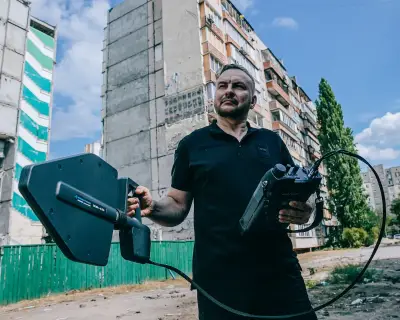
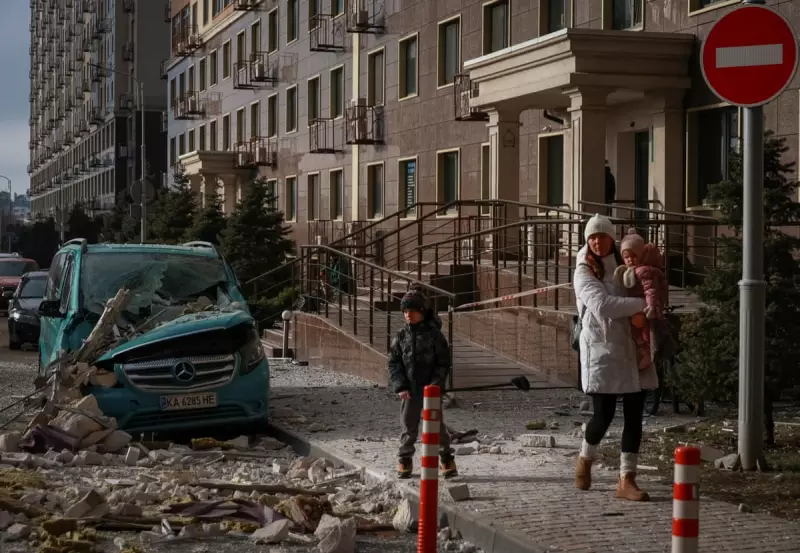
As Russian drone strikes continue to devastate Ukrainian cities like Odesa, where residents walk past the wreckage of recent attacks, another international crisis has captured attention far from the front lines. The Greenland territorial dispute involving former US President Donald Trump has sparked significant concern among Ukrainian officials and citizens who see disturbing parallels with Russia's aggression against their country.
Distraction from Critical Support
In a cafe in the port city of Odesa, where a giant wooden map features Greenland prominently at its apex, the connections between different territorial disputes become immediately apparent. While the waiter admits he hasn't been following the Greenland crisis closely, he recognises the familiar pattern of powerful nations making claims on others' territory. "They're crazy. The pair of them," he remarks about Trump and Russian President Vladimir Putin.
For Ukrainian officials monitoring the situation more closely, the Greenland crisis represents more than just another international dispute. Oleksandr Merezhko, chair of the Ukrainian parliament's foreign policy committee, identifies three fundamental problems emerging from the situation. "Firstly, it is a distraction from the situation we are in now," he explains. "And any distraction among our European partners weakens the coalition supporting us. It weakens Nato, and it weakens transatlantic solidarity."

Undermining International Order
The crisis raises serious questions about the erosion of international legal principles that have governed territorial disputes since the Second World War. As an expert in international law, Merezhko emphasises that "territorial integrity is sacrosanct" and expresses concern that the Greenland situation could validate Putin's vision of dividing the world into spheres of influence.
Leo Litra of the New Europe Centre has articulated similar concerns in Ukrainian media, writing that "US actions regarding Greenland effectively legitimise aggressive territorial claims by stronger states against their neighbours." He warns that such policies, which previously faced unequivocal condemnation, now threaten Ukraine's defence efforts and force a fundamental reassessment of Europe's security architecture and relationship with the United States.
Russian Exploitation of the Crisis
The Kremlin has been quick to exploit the Greenland situation for its own propaganda purposes. Russian officials have made statements that echo their justifications for invading Ukraine, with Foreign Minister Sergei Lavrov claiming that "Greenland isn't a natural part of Denmark." Kremlin spokesperson Dmitry Peskov has suggested that Trump's potential control of Greenland would be historically significant, regardless of its legality.
Russian-controlled networks have amplified disinformation linking Ukraine to the Greenland crisis, including a fabricated video falsely showing President Volodymyr Zelenskyy supporting Ukrainian troop deployment to defend the Arctic territory. This manipulation demonstrates how the Kremlin seeks to use international crises to further its own agenda in Ukraine.
European Exhaustion and Shifting Focus
For ordinary Ukrainians enduring Russian airstrikes, freezing temperatures, and power cuts, the Greenland crisis highlights another worrying trend: European exhaustion with the ongoing conflict. President Zelenskyy addressed this concern at the World Economic Forum in Davos, criticising Europe's continued indecisiveness. "Europe remains in Greenland mode: maybe someone somewhere will do something," he lamented, suggesting that little had changed despite his previous warnings about European defence needs.
Oleksii Striapko, an IT specialist in Kharkiv, observes the practical reality of attention shifting away from Ukraine. "As a Ukrainian who has been living in a state of war for four years now, I feel not so much Europe's indifference as its war fatigue," he explains. "When new crises arise, such as those in the Middle East, tensions in the Arctic, Donald Trump's statements about Nato, Greenland or the 'quick end to the war', the media and politicians naturally switch their focus."

Potential Silver Linings
Despite these concerns, some Ukrainians see potential benefits in the renewed focus on European security. Bohdan Honcharenko, a Kyiv-based entrepreneur, suggests that "the challenges with Greenland are not something to be afraid of" since military intervention would require US Congressional approval. He views Trump's statements as primarily rhetorical attacks on Europe rather than immediate threats.
Both Honcharenko and Merezhko identify a possible "silver lining" in the crisis: it may push Europeans to take greater responsibility for continental security, including stronger support for Ukraine against Russian aggression. Honcharenko emphasises Ukraine's strengths in military technology and modern combat tactics, suggesting that European consolidation around Ukraine could ultimately strengthen their position.
As the war enters its fifth year, with Russian attacks continuing daily, the Greenland crisis serves as both a distraction and a potential catalyst for re-evaluating European security commitments. While it threatens to divert attention and resources from Ukraine's defence needs, it may also highlight the interconnected nature of territorial integrity principles and the importance of maintaining international legal standards against aggressive expansionism.