The Ministry of Defence has no system for examining whether UK military action has killed or injured civilians in war, a study commissioned by the department has revealed. The MoD also does not maintain a central register of civilian harm incidents or allegations, and despite mass casualties caused by other countries, has concluded there is no need to do so because its existing mitigation is considered effective.
Processes that did exist, leading to payments of £31.8 million in more than 6,500 cases relating to incidents of civilian death, injury, and torture in Iraq and Afghanistan, have now fallen into disuse, the study said. The revelation comes after it emerged that the Foreign Office was closing its international humanitarian law unit, which investigates the conduct of other countries.
MoD Review Summary
The findings were made in a seven-page review summary released last week by the MoD in response to freedom of information requests made by Ceasefire, an international charity representing civilian rights in conflicts. Mae Thompson, an advocacy officer from Ceasefire, said: "The UK's inability to detect civilian harm calls into question its ability to comply with international humanitarian law, which requires states to take 'constant care' to spare the civilian population and take 'all feasible precautions' to avoid or minimise civilian harm."
The MoD summary conceded the UK lacks a coherent policy framework for mitigating civilian casualties and that relevant responsibilities are not contained in a single unit but are dispersed across multiple domains. It concluded that the prevention of civilian harm is deeply embedded in the military's targeting community, leading to a high degree of institutional confidence that civilian harm caused by current UK operations is extremely unlikely.
Risks and Reputation
However, the study warned that in the absence of a formal system, the British military risks being reactive rather than proactive, and its reputation could be at risk from a mobilising event involving multiple civilian casualties. An MoD spokesperson said that while all military operations carry risk, the UK military relies on careful targeting and weapons use and investigates all credible allegations of civilian casualties. They added that the UK conducts battle damage assessments after strikes and that the review confirmed that methods are sophisticated and robust, and mitigation practices have been diligently applied.
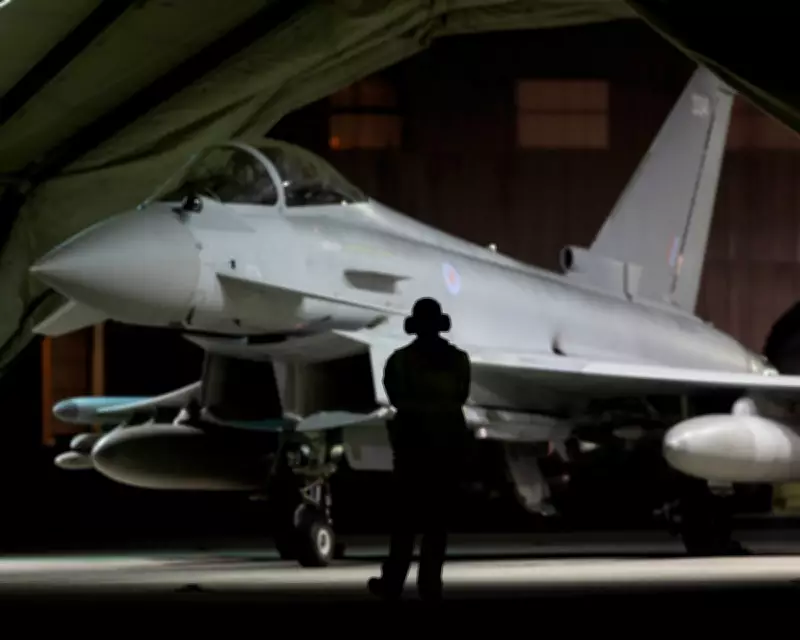
British forces remain on high alert in the Middle East, where pilots and drone crews have been protecting allies and bases in Iraq, Qatar, and Cyprus. RAF pilots and drone crews have flown over 11,500 missions against Islamic State in Syria and Iraq since 2014. Britain says it killed one civilian by mistake during the Operation Shader mission against IS, but other studies conclude casualty figures are higher based on further disclosures by US Central Command and on-the-ground research.
Independent Studies
A study by Action on Armed Violence reported that 29 civilians were likely killed in nine RAF airstrikes in Iraq and Syria between 2016 and 2018. A second analysis by Airwars concluded that 26 civilians were killed in six airstrikes in Mosul alone. The MoD summary said that while other countries have driven forward policies for civilian harm reduction, they did so after conducting airstrikes that led to mass casualties, while the UK has not made a similar deadly mistake.
"In contrast to the Dutch and US, the UK has lacked a galvanising event whereby the mass civilian casualties have forced the need and political urgency to strengthen its response systems," the summary said. The US review was commissioned after a New York Times investigation concluded 10 civilians, including seven children, were killed in Kabul, Afghanistan in August 2021. Under the Trump administration, the US effort has been significantly cut back amid a focus on enhancing lethality.
A Dutch F-16 bombed a weapons factory in Hawija, Iraq, in June 2015, killing an estimated 85 civilians when it led to an unexpected secondary explosion. The Dutch government apologised for the incident in January. Megan Karlshøj-Pedersen, a policy specialist at Airwars, said the MoD summary confirms the UK does not have systems in place to monitor what happens to civilians after it conducts an airstrike, and the most lethal arm of the state is not capable of understanding the human cost of its actions.
The full analysis, the MoD said, had been merged into a related study and contained material considered too sensitive to publish. Thirteen separate teams within the MoD would be required to review the document and redact classified information, the department said.