
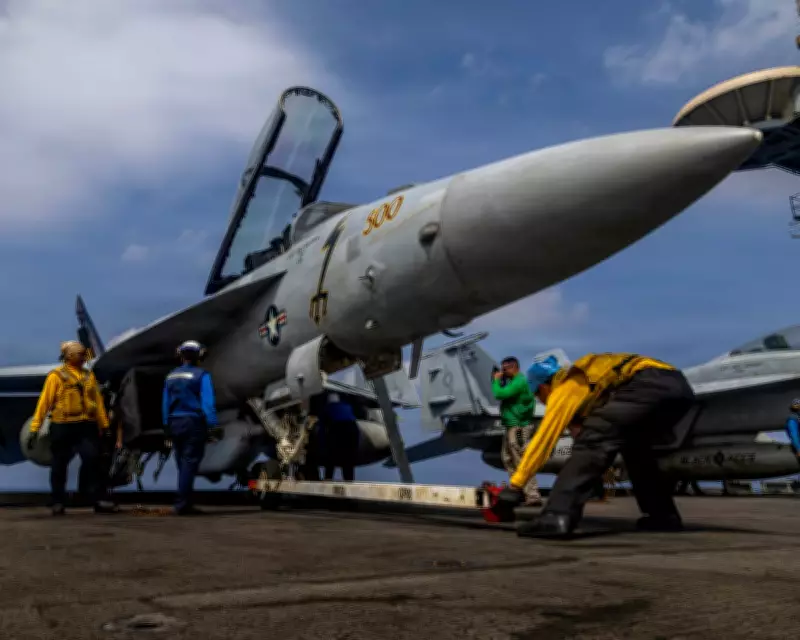
Trump's Massive Naval Buildup in Middle East Signals Imminent Iran Strike
Donald Trump has assembled the largest United States naval buildup in the Middle East since the start of the Iraq war in 2003, creating a formidable arsenal of war that suggests military action against Iran may be more imminent than previously believed. This unprecedented military mobilization comes as nuclear negotiations with Tehran appear to be stalling, despite diplomatic efforts in Geneva.
Coercive Diplomacy or Preparation for War?
While much attention focuses on diplomatic initiatives like the Board of Peace in Washington, the massive naval armada Trump has deployed represents a significant escalation in pressure tactics. According to well-connected reporter Barak Ravid, whose reporting is widely followed despite Iranian criticism, the Trump administration views recent talks as essentially meaningless, with preparations for a full-scale attack potentially complete within days.
The story has already impacted global markets, causing oil prices to spike and generating front-page coverage in major US newspapers about the imminent military readiness. This deployment appears to be part of a strategy of coercive diplomacy, where overwhelming military force serves as leverage in negotiations.
Iran's Negotiating Position Under Pressure
Iranian officials claim they will not negotiate under duress, yet that is precisely the situation they face with the largest US naval presence in the region in nearly two decades. The Iranian diplomatic corps has pushed back against claims they are deliberately stalling negotiations, insisting their team was prepared to remain in Geneva for extended discussions.
According to Tehran, it was actually Trump's special envoy Steve Witkoff and presidential brother-in-law Jared Kushner who shortened the talks due to other diplomatic commitments involving Ukraine and Russia. Meanwhile, Iranian Foreign Minister Abbas Araghchi has been in communication with UN nuclear inspector Raphael Grossi about verification procedures for Iran's nuclear facilities.
Nuclear Deal Parameters Taking Shape
Grossi expressed cautious optimism about progress, noting "there has been some progress, but there is still a lot of work to be done, and the problem is that we don't have much time." The outlines of a potential agreement are emerging, though Iran remains reluctant to publicly detail concessions.
The Iranian offer reportedly includes:
- Suspension of domestic uranium enrichment for up to five years
- Reduction of uranium stockpile enriched to 60% down to 3-6% levels
- Re-admission of International Atomic Energy Agency inspectors
- Retention of rights to enrich uranium for civilian purposes
In return, Tehran seeks the return of frozen assets, lifting of banking and oil sanctions, and potentially a US economic partnership modeled after arrangements with other nations.
Trump's Political Dilemma
The proposed agreement presents significant political challenges for Trump. First, it bears striking resemblance to the 2015 nuclear deal he famously criticized and abandoned in 2018. Accepting such terms would appear to be repairing damage from his own previous decisions.
Second, providing concessions to Iran's regime while simultaneously deploying unprecedented military force creates contradictory messaging. Third, after various foreign policy setbacks, Trump's credibility on international negotiations remains questionable.
Iran's Internal Calculations
According to Middle East analyst Omid Memarian of the Dawn thinktank, Tehran may be overestimating its position. "The calculus of the military establishment is very different to ordinary Iranians," he noted, explaining that Iranian leaders believe a US attack would rally nationalist sentiment and provide justification for cracking down on internal dissent.
Despite facing what Memarian describes as "an existential threat and a much bigger US attack," Iranian leadership apparently believes the regime could survive such confrontation. However, cracks are appearing within the establishment, with growing frustration toward Supreme Leader Ali Khamenei even among his inner circle.
The massive naval buildup represents the most significant military mobilization in the region since the Iraq invasion, creating a volatile situation where diplomatic negotiations occur against the backdrop of imminent military action. With both sides maintaining firm positions and the US naval presence growing daily, the Middle East faces one of its most dangerous moments in recent history.




