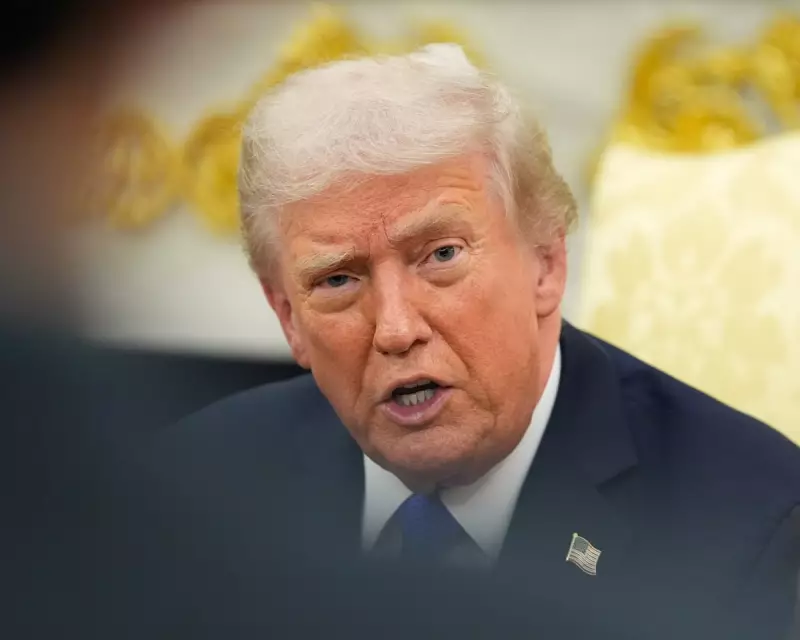
Alarm is growing among foreign policy experts as Donald Trump's repeated assertions that the United States must acquire Greenland for national security reasons risk destabilising the NATO alliance. His rhetoric, which includes refusing to rule out seizing the territory by force, has drawn stark comparisons to the Soviet Union's aggressive actions against its own allies during the Cold War.
A Dangerous Precedent from the Warsaw Pact
Analysts point to a disturbing historical parallel. During the Cold War, the Soviet Union twice invaded its allied partners within the Moscow-dominated Warsaw Pact. In 1956, Soviet troops moved into Hungary to crush a popular uprising, resulting in the deaths of up to 3,000 people. Later, in 1968, a multinational Warsaw Pact force invaded Czechoslovakia to suppress the liberalising reforms of the Prague Spring, led by communist leader Alexander Dubček.
While these invasions were framed as efforts to preserve the integrity of the communist alliance, they sowed deep distrust. "It was really the beginning of the decline of the Soviet Union because they got themselves in a position where they couldn't trust their own allies," said John Lewis Gaddis, a history professor at Yale University.
Collision Course with a NATO Ally
Trump's focus on Greenland, an autonomous territory of Denmark, directly challenges a fellow NATO member. He has suggested that acquiring the vast, ice-covered island "may be a choice" between that goal and keeping the transatlantic alliance intact. This stance has placed Washington on a potential collision course with Copenhagen.
Danish Prime Minister Mette Frederiksen has warned that any US attempt to take Greenland by force would destroy NATO. In such a scenario, Denmark could invoke NATO's Article 4 for emergency consultations, citing an imminent threat. If an attack occurred, invoking Article 5 – the alliance's collective defence clause – could theoretically pit the United States against the rest of NATO.
Charles Kupchan, a former White House director of European affairs, described the idea of the US being at war with a NATO ally as defying the imagination. "This is a White House that sees itself as on reality TV," Kupchan noted, downplaying the immediate likelihood of military action but highlighting the profound damage of the rhetoric.
Strategic Interests Versus Alliance Cohesion
Experts acknowledge the strategic value of Greenland, where the US has maintained military bases since 1941, established under President Franklin D. Roosevelt. The island's location holds significance for monitoring and potential defence against global rivals.
However, Professor Gaddis argues that cooperation, not coercion, is the sustainable path. "It seems to me it would be a lot easier to keep [the bases], and, if necessary, expand them, with the cooperation of the Danish government, not with this kind of unilateral provocation," he stated. The lesson from the Soviet experience, he suggests, is that an alliance is strongest when members want to be in it, not when they are coerced by the largest power.
The long-term impact of the Soviet Union's heavy-handed approach was the eventual splintering of the Warsaw Pact in 1989. While a direct military conflict within NATO remains highly unlikely, analysts warn that Trump's confrontational language over Greenland creates unnecessary friction and risks eroding the trust and solidarity that have been the bedrock of the alliance since its founding.