Former US President Donald Trump has once again thrust the vast, icy territory of Greenland into the geopolitical spotlight, renewing controversial calls for a United States takeover. His latest comments, stating he needs the island "very badly", have escalated tensions with Denmark and Greenland, and raised profound questions about the future of the NATO alliance.
Why Greenland is a Geopolitical Prize
The backdrop to Trump's advances is a region of growing strategic importance. Greenland's position in the Arctic, between North America and Russia, makes it a crucial asset for defence and surveillance. The US already operates a key ballistic missile early warning system at Pituffik (formerly Thule) Air Base, a cold war legacy. However, the rapidly changing climate is unlocking new opportunities and rivalries.
Melting ice sheets are opening potential access to vast reserves of oil, gas, and critical minerals like copper, lithium, cobalt, and nickel – materials essential for green technology. Furthermore, new Arctic shipping routes are emerging, promising faster passages between Europe and Asia. This has attracted global interest, notably from China, which dominates rare earth production. Acquiring Greenland is seen by some in Washington as a way to secure these resources and counter Chinese influence in the Arctic.
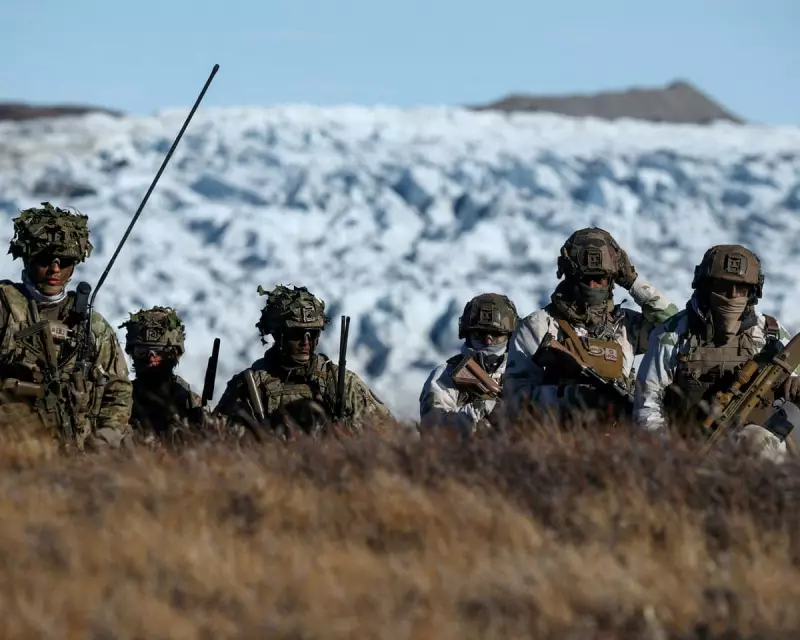
This heightened focus coincides with visible military activity in the region. Recently, home guard units from Denmark, Sweden, and Norway conducted joint military exercises in Kangerlussuaq, Greenland, practising threat detection in the harsh Arctic environment.
Denmark's Stance and Greenland's Quest for Identity
Greenland is an autonomous territory within the Kingdom of Denmark, which still controls its foreign and security policy. Danish Prime Minister Mette Frederiksen has issued a stark warning, stating that any US military attack on a NATO ally – including Greenland as part of Denmark – would mean the end of the alliance. Greenland's own Prime Minister, Jens-Frederik Nielsen, has urged Trump to abandon his "fantasies about annexation".
The relationship between Greenland and Denmark is complex and strained by history. There is deep-seated anger in Greenland over past Danish policies, including the forced contraceptive coil scandal of the 1960s and 70s, which a former Greenlandic leader labelled genocide. Denmark has since apologised and banned controversial practices that separated Greenlandic children from their parents. Support for full independence is growing in Greenland, though it requires a referendum under a 2009 agreement.
In a show of unity against external pressure, Greenland formed a new four-party coalition government in March, with the coalition agreement's first page declaring: "Greenland belongs to us."
A Threat to the Post-War Order
Trump's fixation on Greenland has evolved from describing it as a "large real estate deal" in 2019 to citing "national security" reasons today. His top aide, Stephen Miller, has claimed the administration is determined to acquire the territory, believing it can be done without military force. However, European leaders have rallied behind Denmark, affirming that "Greenland belongs to its people".
The implications extend far beyond a bilateral dispute. As Prime Minister Frederiksen told Danish TV2, a US attack on another NATO country would stop "everything" – including the post-Second World War security architecture. King Frederik X of Denmark, in his New Year's speech, praised the "strength and pride" of Greenlanders during this "turbulent time", in a move perceived by some as a subtle rebuke to Trump's ambitions.
As Arctic ice recedes and great power competition heats up, Greenland finds itself at the centre of a crisis that challenges international alliances, colonial histories, and the very sovereignty of its people.