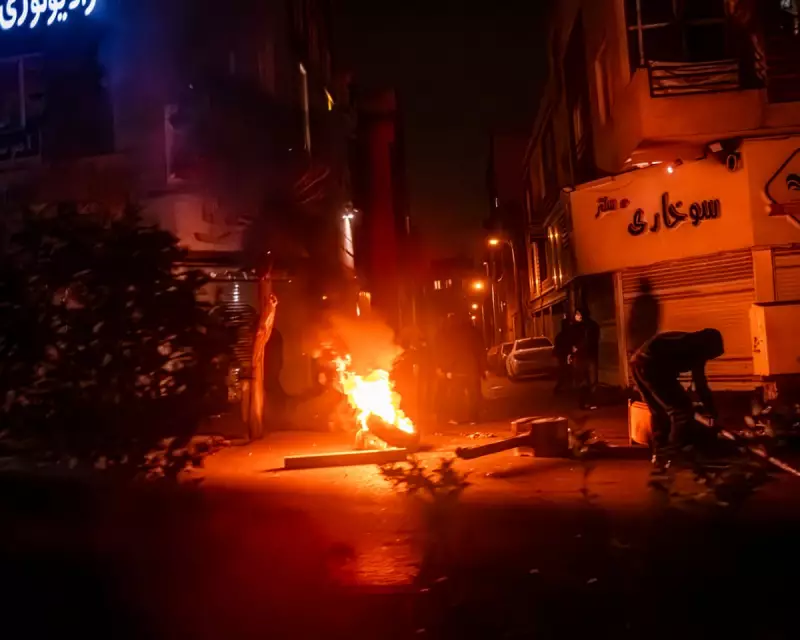
US President Donald Trump has stated he is contemplating "very strong" military measures against Iran's ruling regime, as the government's violent crackdown on nationwide protests reportedly sends the death toll soaring.
Protests Evolve into Major Challenge for Regime
The demonstrations, now entering their second week, were initially sparked by public anger over the rising cost of living. They have since evolved into one of the most significant challenges to the rule of 86-year-old Supreme Leader Ayatollah Ali Khamenei.
According to the US-based Human Rights Activists News Agency, at least 538 people have been killed in the surrounding violence, including 490 protesters. The group also reported that more than 10,600 people have been arrested by Iranian authorities.
Another monitor, the Norway-based Iran Human Rights group, confirmed on Sunday the killing of at least 192 protesters but warned the actual figure could already be several hundred or more, denouncing a "mass killing".
Trump's Threats and Tehran's Response
In a significant development, President Trump claimed on Sunday that Iran's leader had reached out to him and proposed negotiations. "A meeting is being set up ... They want to negotiate," Trump said, while adding the caveat that "we may have to act before a meeting".
This follows a post on his Truth Social platform on Saturday, where he vowed to "rescue" protesters if the Iranian government killed them, stating: "Iran is looking at FREEDOM, perhaps like never before. The USA stands ready to help!!!"
Tehran has responded defiantly, warning the US not to attack and vowing to hit back if it did. The Iranian government has also ordered counter-rallies in an effort to regain the initiative and declared three days of national mourning for "martyrs", including slain security personnel.
Information Blackout and Escalating Unrest
Protests have continued to grow in recent days despite an internet blackout that has lasted more than 72 hours, according to the monitor Netblocks. Activists say this shutdown is severely limiting the flow of information from the country.
In an interview broadcast on Sunday, President Masoud Pezeshkian accused Iran's arch-foes of "trying to escalate this unrest" and bringing "terrorists from abroad into the country". State television has aired images of burning buildings, including a mosque, and funeral processions for security forces.
Pezeshkian has urged people to join a "national resistance march" of nationwide rallies on Monday to denounce violence, which the government attributes to "urban terrorist criminals". Meanwhile, Reza Pahlavi, the US-based son of Iran's ousted shah, has said he is prepared to return to the country and lead a transition to a democratic government.