Syrian Government Forces Threaten Australian Convoy with Attack During Repatriation Attempt
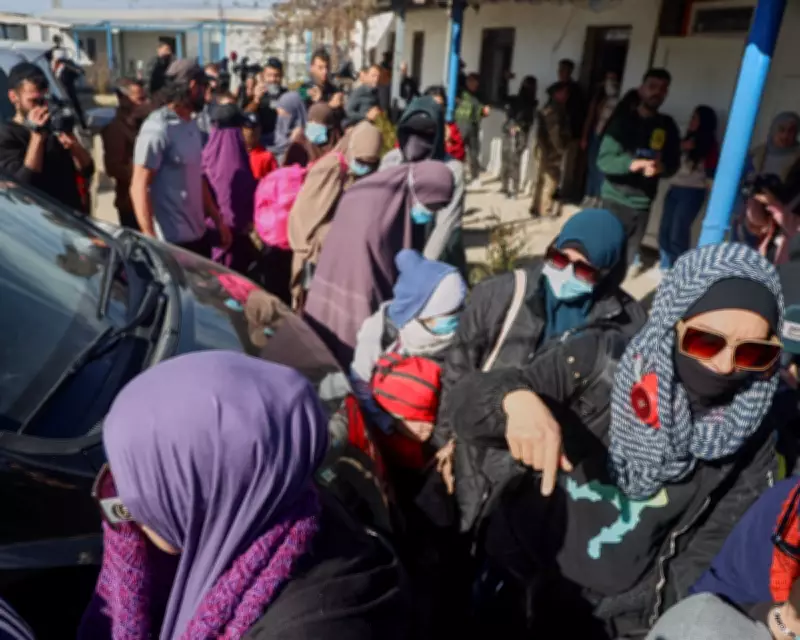
A group of 34 Australian women and children with connections to Islamic State militants faced a direct threat of being fired upon by Syrian government forces during a recent repatriation effort from al-Roj detention camp. The convoy, which included 11 women and 23 children who are wives, widows, and offspring of alleged IS members, was forced to abandon their journey to Damascus after receiving warnings that they would be "struck" if they proceeded into Syrian government-controlled territory.
Failed Coordination Leads to Dangerous Standoff
The incident occurred on Monday, February 16, when the Australian families left al-Roj camp under Kurdish military escort with plans to reach Damascus airport for eventual travel to Australia. Approximately 50 kilometers from the camp, Kurdish security forces received an urgent communication from Damascus authorities indicating the convoy would be attacked if they attempted to cross into government-controlled areas.
"We were halfway to Qamishli when my comrades informed me that Damascus said that once they reached government lands they would strike them, because the Australian government didn't coordinate with them," explained Çavre Afrin, an intelligence officer and head of al-Roj camp's security administration. The Syrian government confirmed the issue stemmed from "the absence of prior coordination" and stated they only learned of the repatriation attempt after families had already departed the camp.
Traumatic Return to Detention Conditions
The aborted escape left the Australian families deeply traumatized. Zahra Ahmad, a 33-year-old Melbourne mother of three, collapsed and experienced what she described as a seizure upon returning to the camp. Her 14-year-old son Mohammed lost feeling in his hands for days following the ordeal, while other children became emotional when recounting their forced return. Many of these children had never experienced life outside the detention facility.
Upon their return, the families discovered their tents had been disassembled and possessions removed—standard procedure when residents leave the camp according to administration officials. They have since recovered most belongings and rebuilt their living quarters, but now face increased anxiety about potential reprisals from more radical families within the camp following their failed escape attempt.
Political Controversy Intensifies in Australia
The repatriation attempt has sparked significant political debate in Australia, with government officials expressing strong opposition to the women and children's return. Home Affairs Minister Tony Burke stated the government was "actively making sure we do nothing to help them," while Prime Minister Anthony Albanese declared he had "nothing but contempt for these people," though expressing sympathy for the children caught in the situation.
The federal opposition has proposed legislation to criminalize assisting individuals with links to terrorist organizations from re-entering Australia. "We will take action and refuse to let people come here who abandoned Australia to support Islamic extremist terror overseas," stated opposition leader Angus Taylor.
Legal and Humanitarian Concerns Persist
Human rights organizations continue urging Australia to fulfill its obligation to repatriate stranded citizens, particularly children who have spent their entire lives in detention. Save the Children Australia's chief executive Mat Tinkler emphasized that "instead of investing effort in ways to stop help for innocent Australian children, politicians should be focused on finding ways to protect them."
The women have consistently stated their willingness to face trial upon returning to Australia, though only one has been issued a temporary exclusion order preventing entry for up to two years. Most claim they either didn't understand the situation in Syria or were coerced into traveling there, and none have faced formal charges or court appearances.
Australia previously repatriated eight orphaned children in 2019 and four women with 13 children in 2022, but has since hardened its position against further repatriations despite deteriorating conditions in al-Roj camp where disease spreads through squalid tent encampments and an IS resurgence creates additional security concerns.