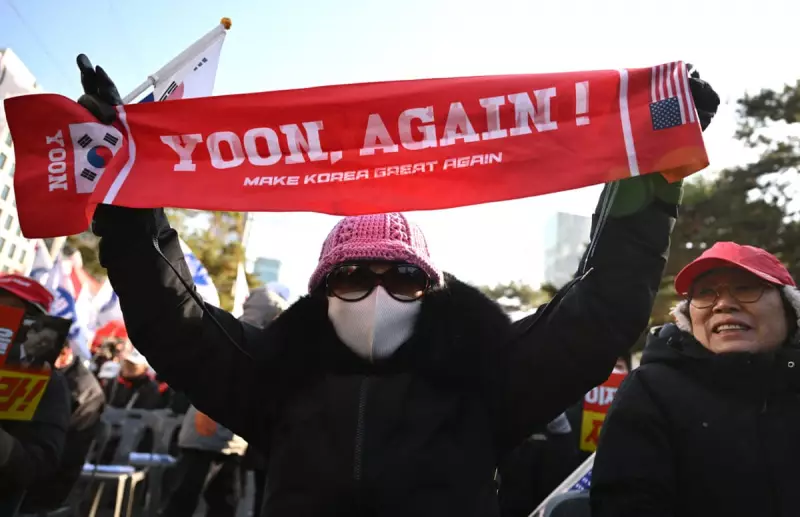
South Korea has been plunged into a profound political crisis after its President declared a state of martial law across the entire nation. The dramatic move, announced in a late-night televised address, marks one of the most severe political escalations in the country's recent democratic history.
President's Urgent Plea for Calm
In a sombre broadcast to the nation, President Yoon Suk Yeol called for unity and calm from the South Korean public. He framed the decision as a necessary, albeit grave, measure to restore order and protect the constitutional framework of the state. The President did not specify a clear end date for the martial law regime, stating only that it would remain in effect until stability is assured.
The declaration was made under Article 77 of South Korea's constitution, a clause that grants the president sweeping emergency powers during times of internal turmoil, external threat, or natural disaster. This legal basis allows for the restriction of civil liberties, including freedom of assembly and movement, and grants expanded authority to the military.
Military Deployment and Political Backlash
Following the presidential decree, South Korean military units have begun deploying to key locations in major cities, including the capital, Seoul. Reports indicate a visible increase in armed personnel around government buildings, transport hubs, and public squares. The government has stated the military's role is to maintain public order and ensure the continuity of essential services.
The move has ignited fierce condemnation from the political opposition and civil society groups. The main opposition Democratic Party has decried the declaration as an "unconstitutional coup" and a severe overreach of presidential power. Critics argue that the situation did not warrant such an extreme response and accuse President Yoon of using emergency powers to suppress legitimate political dissent and consolidate control.
Civil liberties organisations have raised immediate alarms about the potential for human rights abuses, citing the history of authoritarian rule under past martial law declarations in South Korea. There are growing concerns over the potential for censorship and the suppression of free speech.
International Reaction and Uncertain Future
The international community is watching the unfolding crisis with deep concern. Key allies, including the United States and Japan, are understood to be seeking urgent briefings from the South Korean government. The stability of the Korean peninsula is a perennial global security priority, and any internal instability in South Korea has significant regional implications.
Analysts are divided on what triggered the extreme measure. Some suggest it stems from an irreconcilable political deadlock and escalating street protests, while others speculate about deeper, unseen tensions within the government or security apparatus. The lack of a publicly stated, singular triggering event has fuelled widespread speculation and anxiety.
The immediate future of South Korea's vibrant democracy now hangs in the balance. The success of the President's call for unity appears deeply uncertain in the face of such a polarising action. The coming days will be critical in determining whether this state of emergency leads to a resolution of the underlying crisis or a further deterioration of democratic norms. All eyes remain on Seoul as the nation navigates its most serious political test in decades.