
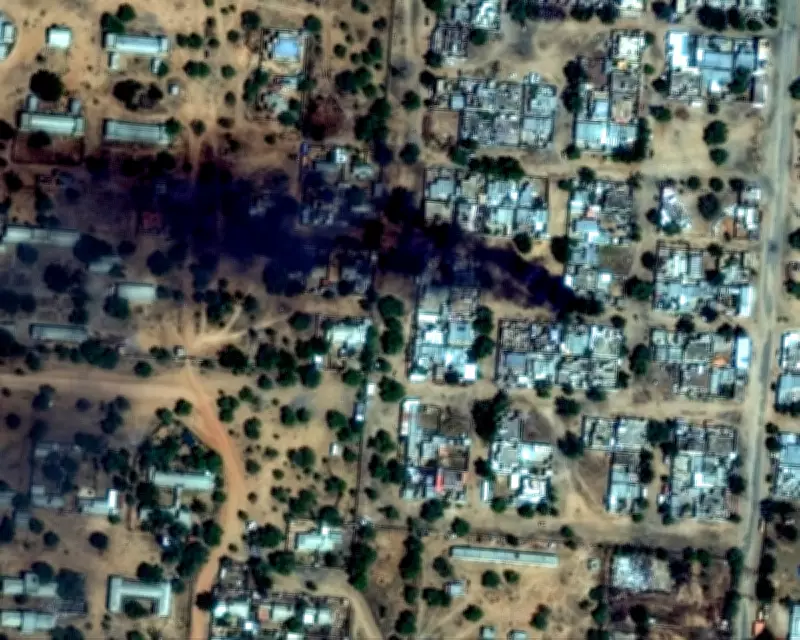
Satellite Evidence Shows Devastation in El-Fasher After RSF Takeover
Newly released satellite images provide stark visual evidence of the destruction in El-Fasher following the seizure of the city by Rapid Support Forces fighters. The photographs clearly show multiple fires and thick plumes of smoke billowing around the city's airport area, indicating widespread damage and chaos in the aftermath of the military takeover.
Forensic Investigation Reveals Horrific Massacre Details
Journalistic investigations have uncovered disturbing details about what occurred during two terrible days in October 2025 when Rapid Support Forces militia overran Darfur's capital city. According to authoritative international sources and witness accounts, between 8,000 and 10,000 people were massacred during the assault, with approximately 40,000 civilians still unaccounted for following the violence.
Mark Townsend's comprehensive reporting reveals that both UK and US governments received warnings about the impending bloodbath. The Rapid Support Forces had besieged El-Fasher for approximately 500 days before finally breaching the city's defenses, with clear intentions to commit atrocities against the civilian population. United Nations officials have stated that the events in El-Fasher display all the characteristic hallmarks of genocide.
Digital Violence Surges Across African Continent
Beyond the physical conflict in Sudan, another disturbing trend is emerging across Africa. Human rights activists and legal experts are raising urgent alarms about a dramatic increase in digital violence, particularly targeting women, girls, and young boys. The exponential growth of internet users under age 30 has created new avenues for online abuse that translates into devastating real-world consequences for vulnerable populations.
Other Critical Human Rights Stories
The reporting highlights several additional significant human rights developments:
- Tess McClure and Shah Meer Baloch conducted heartbreaking interviews with families of children killed in a US missile strike on an Iranian primary school in Minab, where approximately 160 children and teachers lost their lives
- Dr. Mahrang Baloch, a prominent human rights activist and leader of the Baloch Yakjehti Committee, managed to communicate her story from a 20-square-meter prison cell in Pakistan despite severe restrictions
- In Tanzania, a woman with severe intellectual disabilities had her death sentence overturned after more than a decade on death row, though she remains imprisoned awaiting retrial
- Myanmar nurses have been secretly training in jungle schools for three years, dodging airstrikes and surveillance drones to graduate and treat displaced people and pro-democracy fighters
Editorial Perspective on Documenting Atrocities
Tracy McVeigh, editor of Global Development, emphasizes the critical importance of documenting these terrible events despite their disturbing nature. She notes that amid the overwhelming suffering affecting millions in conflict zones and what she describes as the regressive policies of the current US administration, these stories risk being overlooked without dedicated journalistic attention.
The reporting represents what McVeigh calls "outstanding journalism" that goes beyond international headlines to give voice to people whose lives are fundamentally altered by global events. These stories, while difficult to confront, provide essential documentation of human rights violations and humanitarian crises that demand international attention and response.




