A public inquiry into the 2018 novichok poisonings in Salisbury has heard chilling evidence that the military-grade nerve agent used was of an exceptionally high purity, with the potential to have killed thousands of people. The attack, which targeted former Russian spy Sergei Skripal, spiralled into an international incident that tragically claimed the life of an innocent British woman, Dawn Sturgess.
The Salisbury Attack and a Tragic Mistake
On 4 March 2018, former Russian military intelligence officer Sergei Skripal and his daughter, Yulia, were poisoned at his home in Salisbury, Wiltshire. Both were left critically ill but ultimately survived. The weapon was novichok, a nerve agent developed by the Soviet Union.
Months later, on 30 June 2018, the crisis took a devastating turn. Dawn Sturgess, a 44-year-old mother of three from Amesbury, fell ill after spraying herself with what she believed was perfume. Her partner, Charlie Rowley, also became seriously ill. Sturgess died on 8 July, while Rowley survived but has suffered lasting health problems. The inquiry concluded she was caught "in the crossfire of an illegal and outrageous international assassination attempt".

Police believe Rowley found a counterfeit perfume bottle containing the novichok, discarded by the attackers, and gave it to Sturgess. A central mystery remains the whereabouts of the container between the March attack and its discovery in June.
Unprecedented Danger and Public Safety Questions
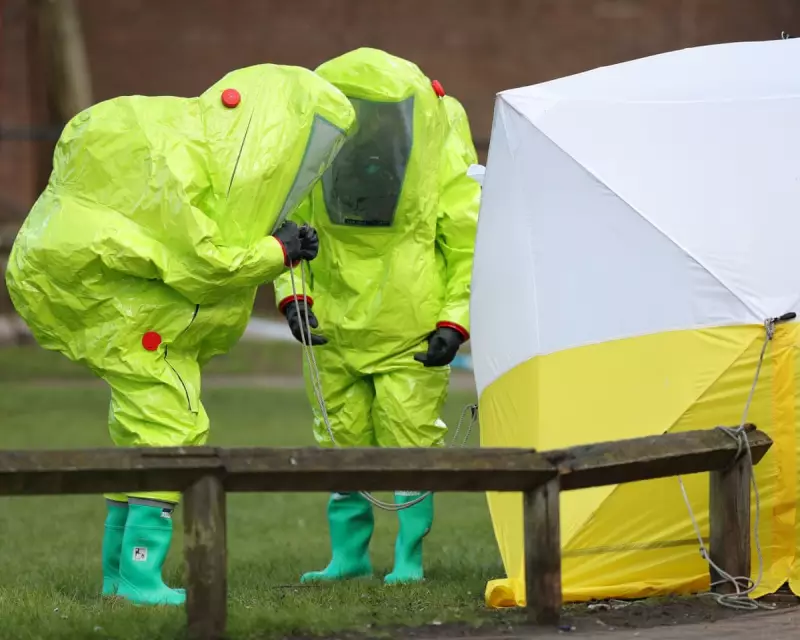
The inquiry was told the novichok used was of very high purity. A government scientist stated a "minuscule" amount – as small as a sixth of a grain of salt – could be fatal, and the total quantity could have killed thousands. In the aftermath, 87 people attended A&E fearing contamination, three police officers were affected, and emergency services scrapped 24 vehicles.
These events have raised serious questions about public protection. Sturgess's family argues that more should have been done to secure Skripal, a "clear and obvious" target, who is said to have refused security measures. They also question why no public warning was issued about picking up strange containers after the initial attack, a warning that only came after Sturgess was poisoned in June.
Emergency Response and Russian Denials
The response from emergency services received a mixed assessment. While there were numerous acts of bravery, Wiltshire Police has apologised for incorrectly categorising Dawn Sturgess as a user of illegal drugs, which delayed the true understanding of her case.
Meanwhile, the Russian state has consistently denied involvement. The Russian embassy in London claims there are "many unanswered questions", pointing to alleged inconsistencies in the timeline and the lack of CCTV at Skripal's home. UK police counter that the investigation has navigated hundreds, if not thousands, of red herrings.
Lingering Mysteries and a Fatal Chain of Events
The inquiry examined the audacious method of the Skripal attack. UK authorities believe two Russian agents, using the aliases Alexander Petrov and Ruslan Boshirov, applied the novichok to the front-door handle of Skripal's house between noon and 12:15pm on 4 March. The pair then vanished from CCTV for a "missing 33 minutes," during which they may have sealed and discarded the novichok container.
In a twist of fate, the inquiry heard that Sergei Skripal's survival may have been aided by a paramedic's error. The medic accidentally administered atropine, a drug used for nerve agent poisoning, after knocking over a medical bag, an action that may have saved Skripal's life.
The Salisbury novichok attack remains one of the most serious chemical weapon incidents on British soil, exposing the deadly reach of international espionage and its potential to shatter innocent lives.