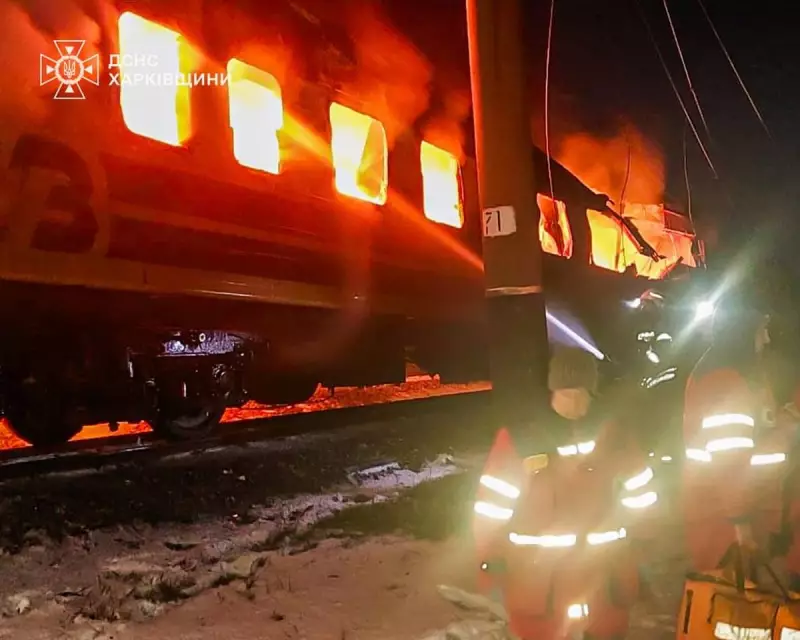
Russian Drone Attack on Ukrainian Passenger Train Kills Five Civilians
In a devastating incident in north-eastern Ukraine, a Russian drone strike has targeted a civilian passenger train, resulting in the deaths of five people. The attack occurred on Tuesday near a village in the Kharkiv region, with prosecutors confirming the grim discovery of fragments from five bodies at the scene.
Zelenskyy Condemns Act as Terrorism
Ukrainian President Volodymyr Zelenskyy has strongly denounced the assault, describing it as a clear act of terrorism that serves no military purpose. In a statement posted on the Telegram messaging app, Zelenskyy emphasised that such attacks undermine ongoing diplomatic efforts to end the conflict.
"In any country, a drone strike on a civilian train would be considered in exactly the same way – purely as terrorism. There is not and cannot be any military purpose in this," Zelenskyy wrote. He further warned that these strikes erode diplomacy and called on international allies to increase pressure on Moscow.
Details of the Attack and Evacuation Efforts
The train was operating from Chop, near Ukraine's western borders with Hungary and Slovakia, to the town of Barvinkove. According to reports, one drone directly struck the train, while two additional drones hit an area alongside it. Photographs from the scene show at least two carriages engulfed in flames next to a snow-covered railbed.
Initial figures from prosecutors indicated 155 passengers were on board, though Zelenskyy later stated the train was carrying over 200 people, with 18 in the wagon that was hit. He reported four fatalities and two injuries, while prosecutors confirmed five deaths. Deputy Prime Minister Oleksiy Kuleba labelled the attack a "direct act of Russian terror."
Railway Operations Continue Amid Heightened Security
Oleksandr Pertsovskyi, CEO of Ukrzaliznytsia, Ukraine's national railway, expressed gratitude to rescue teams and fellow passengers who assisted in the evacuation. Despite the challenges, he affirmed that train services would persist, albeit with enhanced security measures.
"Keeping things moving is becoming more difficult," Pertsovskyi wrote on Facebook. "We are regrouping. There will be additional strict security measures in some places, but even on those most frightening days, we cannot give up."
Broader Context of Russian Attacks
This incident is part of a wider pattern of Russian aggression, with a separate barrage of over 50 drones in the southern city of Odesa killing three people and wounding more than 30. Regional governor Oleh Kiper noted that among the injured were a woman who was 39 weeks pregnant and two girls, highlighting the civilian toll of the conflict.
The Black Sea city of Odesa, crucial for Ukrainian exports, has faced routine bombardment since Russia's invasion nearly four years ago. These attacks underscore the ongoing humanitarian crisis, with Ukrainians enduring harsh conditions, including freezing temperatures and power cuts.
As the war continues, such strikes on civilian infrastructure, like passenger trains, not only cause immediate loss of life but also complicate efforts to achieve peace, reinforcing calls for increased international support and diplomatic pressure.