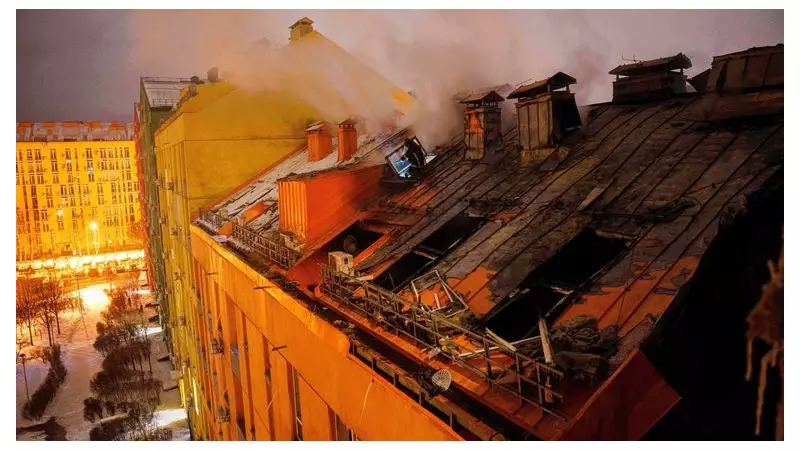
Russia has launched a significant and provocative missile strike on western Ukraine, deploying its advanced Oreshnik hypersonic weapon for the first time in over two years. The target was the city of Lviv, situated a mere 40 miles from the border with NATO member Poland, marking a stark escalation in the conflict's proximity to the alliance.
A Potent Weapon Returns to the Battlefield
The overnight attack on Thursday, 9 January 2026, involved a barrage of 36 missiles and 242 drones targeting infrastructure in the Lviv region, Kyiv, and surrounding areas. The centrepiece of this assault was the Oreshnik, a weapon capable of carrying both conventional and nuclear warheads at speeds exceeding 8,000 miles per hour. Ukrainian military officials confirmed the missile's use, noting it was only the second time Russia has employed it in Ukraine and the first since its initial wartime test in 2024.
Moscow justified the deployment as retaliation for what it called a Ukrainian attempt to target one of President Vladimir Putin's residences. This claim has been widely dismissed by both Ukraine and US President Donald Trump. A senior Ukrainian official suggested the Oreshnik likely carried a 'dummy' warhead, similar to its first use, indicating a continued testing phase combined with a demonstration of force.
International Condemnation and Wider Context
Kyiv's European allies interpreted the hypersonic strike as a deliberate act of intimidation, designed to deter their ongoing support for Ukraine. The attack followed a week of diplomatic and strategic setbacks for Russia, including the capture of its ally, Venezuela's deposed leader Nicolas Maduro, and US forces boarding a Russian-flagged oil tanker in the North Atlantic.
Gerhard Mangott, a Russia specialist at the University of Innsbruck, told Reuters the strike should be seen as "a signal to the United States and the Europeans" about Russia's military capabilities, stemming from frustration at being sidelined in recent diplomatic talks.
In a related development, Britain and France announced plans this week to deploy troops to Ukraine in the event of a ceasefire, a move Moscow said would make those soldiers legitimate combat targets. UK Defence Secretary John Healey was in Kyiv meeting with President Volodymyr Zelenskyy on the day of the report.
Humanitarian Impact and Damage
The consequences of the massive overnight bombardment were severe. Authorities reported that more than 20 people were injured in the capital, Kyiv. The assault on energy infrastructure knocked out electricity to over half a million homes amid heavy snowfall and temperatures around -10°C, a tactic President Zelenskyy condemned. "Moscow is trying to use cold weather as a tool of terror," he stated on social media.
The strike also damaged the embassy of Qatar, a country that has occasionally mediated in the conflict. Qatar confirmed no one was hurt in the incident. President Zelenskyy expressed gratitude for international support, specifically noting the UK's readiness to help with air defence systems, which he called an urgent priority.