Russia Claims Africa Corps Prevented Coup in Mali
Russia’s defence ministry has claimed that its Africa Corps – the successor to the former Wagner mercenary group – prevented a coup in Mali over the weekend, avoiding mass civilian casualties and inflicting “irreplaceable losses” on rebel insurgents. The ministry stated that its troops in the desert town of Kidal near the Algerian border fought for more than 24 hours while completely surrounded and vastly outnumbered. It also alleged, without providing evidence, that the militants had been trained by European mercenary instructors, including Ukrainians. The casualty toll was not specified.
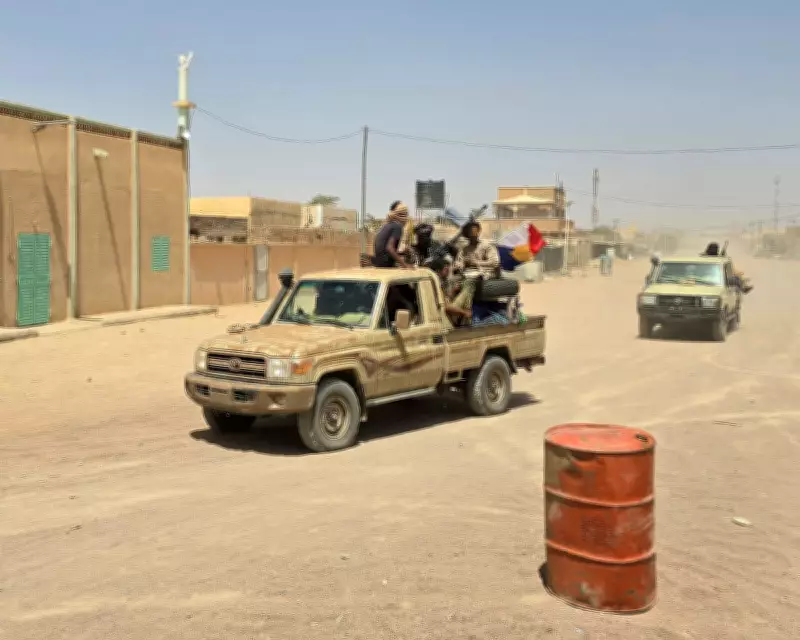
However, local reports on Monday suggested that, contrary to Russia’s claims, the Africa Corps troops negotiated their exit, with Algeria as a mediator. Rebel forces in Mali over the weekend drove the Africa Corps from Kidal, launched an attack near the capital, Bamako, and killed defence minister Sadio Camara – a key Moscow ally – in an apparent suicide bombing.
Kremlin’s Stance and Rebel Gains
Kremlin spokesperson Dmitry Peskov separately told reporters in Moscow on Tuesday that restoring peace and stability in Mali was a priority. The fall of Kidal – a city Russian forces first helped the junta recapture in 2023 – and handover of territory to the rebel alliance has been seen as proof of the limits of Moscow’s military influence in west Africa.
French state radio RFI quoted one Malian official as anonymously saying that Kidal’s governor had warned Africa Corps of the attack three days before it happened and that their exit was pre-negotiated. “The Russians betrayed us in Kidal,” the official said.
Background of Conflict
Mali has been gripped by violence on multiple fronts since 2012 after a rebellion triggered by Tuareg rebels. The security crisis hit a new peak on Saturday after the separatists and al-Qaida-linked jihadists joined forces to launch coordinated attacks, dealing a major blow to the country’s military junta and its Russian backers.
In recent years, Russia has made inroads in the Sahel, the semi-desert belt stretching across countries including Mali, Burkina Faso and Niger. All three have experienced military coups in which French and UN forces were expelled and replaced by Russian support, as juntas sought to shore up their rule and confront long-running Islamist insurgencies and separatist rebellions.
Russian Troop Deployment and Tactics
About 2,000 Russian troops are deployed in landlocked Mali under the Africa Corps banner, the successor to the Wagner group across much of the continent. Military bloggers close to the defence ministry previously said that one Russian helicopter had been shot down near the city of Gao, killing those on board. Footage posted on social media appeared to show Russian soldiers engaged in fighting with insurgents, with one clip showing rebels seizing Russian military hardware. Residents of neighbourhoods within and on the outskirts of Bamako also reported seeing al-Qaida affiliate Jama’at Nusrat al-Islam wal-Muslimin (JNIM) terrorists freely moving around in the last few days.
Analysts like Ulf Laessing, Bamako-based head of the Sahel programme at the German thinktank Konrad-Adenauer-Stiftung, say the Russians could change tactics in the short-term at least and move southwards. “I think the Russians will focus on defending the regime and leave the north to rebels,” he told the Guardian.
Uncertainty Over Mali’s Leader
Peskov told reporters Moscow had no information on the whereabouts of Assimi Goïta, the military ruler who deposed Mali’s civilian government in a 2020 coup and assumed office within a year, but had not been seen publicly since the unrest began. The Malian presidency posted a photo of him in a meeting with Russian ambassador Igor Gromyko on X on Tuesday afternoon, in a meeting purported to have happened on the same day. That, however, did not diminish speculation about Goita’s future as military ruler and reports of factions within the junta. “Goïta has lost his footing … he no longer has political legitimacy over the junta,” one former Malian diplomat told the Guardian under condition of anonymity.