A landmark public inquiry has concluded that Russian President Vladimir Putin is "morally responsible" for the death of British woman Dawn Sturgess, who was killed by a military-grade nerve agent smuggled into the UK by Russian intelligence operatives.
The Reckless Discarding of a Lethal Weapon
The inquiry chair, Lord Hughes of Ombersley, stated there was "overwhelming" evidence that the attack on former Russian spy Sergei Skripal in Salisbury in March 2018 was a Russian state operation. He found that the attempt, which used the nerve agent novichok, must have been authorised at the highest level by President Putin.
The key event leading to Sturgess's death was the operatives' decision to abandon the weapon. Lord Hughes described how the GRU agents, using the aliases Alexander Petrov and Ruslan Boshirov, brought a fake Nina Ricci perfume bottle containing novichok to Salisbury. After smearing the agent on Skripal's front door handle on 4 March 2018, they "recklessly discarded" the bottle in the city.

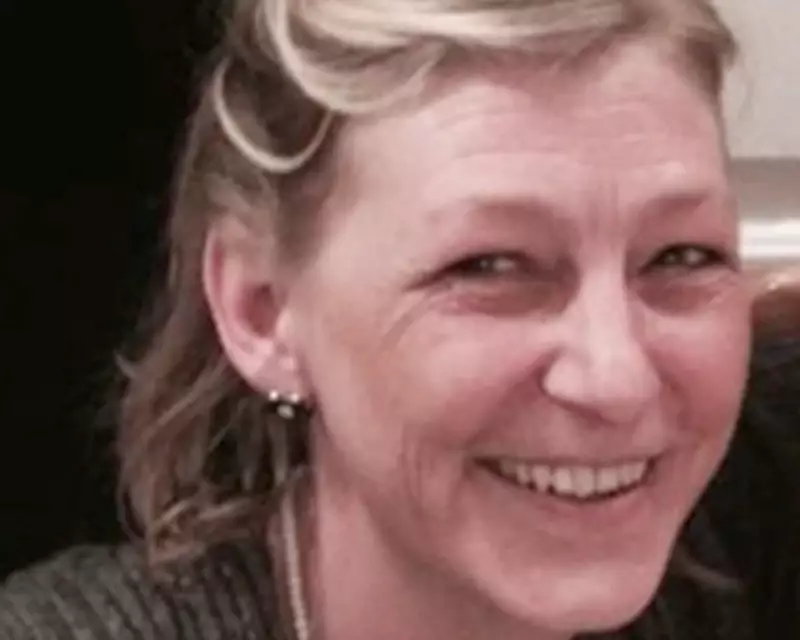
"They can have had no regard for the hazard thus created," Lord Hughes said, condemning the act as "astonishingly reckless." The bottle was later found by Charlie Rowley, who gave it to his partner, Dawn Sturgess. On 30 June 2018, at their home in Amesbury, Wiltshire, Sturgess sprayed the substance on herself, believing it to be perfume. She died days later.
A Chain of Causation Leading to Tragedy
Lord Hughes established a direct link between the assassination attempt and the subsequent death. "There is a clear causative link between the use and discarding of the novichok by Petrov and Boshirov and the death of Dawn Sturgess," he concluded.
The inquiry heard that the three Russian operatives—Petrov, Boshirov, and a third man, Sergey Fedotov—were all members of a GRU operational team. They had flown from Moscow to London on 2 March 2018 with the sole purpose of targeting Skripal. While the Skripals, Sergei and his daughter Yulia, survived the poisoning, the abandoned weapon claimed an innocent life.
"I conclude that all those involved in the assassination attempt... were morally responsible for Dawn Sturgess's death," Lord Hughes stated, explicitly extending that responsibility to those who sent the agents and authorised the mission.
Inquiry Findings on UK Response and Medical Care
The inquiry also examined the UK's handling of the case. It identified some failings, notably that sufficient, regular written risk assessments were not conducted for Sergei Skripal after he was settled in the UK following a spy exchange. However, it judged that the state's assessment that he was not at significant risk of assassination was not unreasonable at the time.
Lord Hughes was critical of Wiltshire Police for initially and incorrectly characterising Sturgess as a drugs user after she was poisoned. He also said that extra training for emergency services on nerve agent symptoms, developed after the Salisbury attack, should have been circulated more widely.
Nevertheless, the inquiry found that Sturgess received "entirely appropriate medical care" and that her condition was "unsurvivable from a very early stage" due to catastrophic brain injury caused by her heart stopping for around 30 minutes shortly after exposure.
The public inquiry, which heard evidence in Salisbury and London between October and December 2024 at a cost of £8.3 million, stands as a definitive official account of the events, attributing ultimate moral accountability to the Russian state leadership.