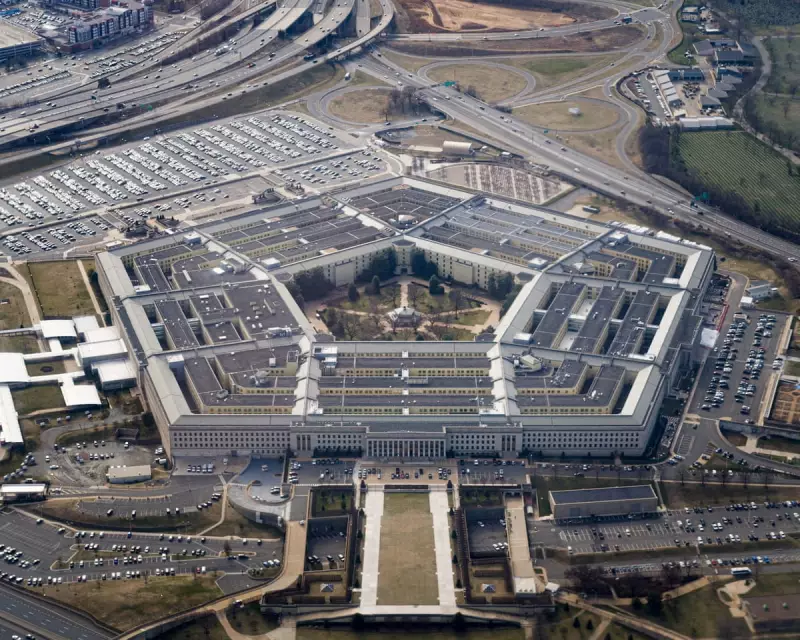
The New York Times has initiated legal proceedings against the US Department of Defense, marking a significant clash over press freedoms and constitutional rights. The lawsuit, filed on Thursday, contends that new Pentagon regulations for journalists represent a severe infringement on the First Amendment.
Details of the Controversial Pentagon Policy
The legal challenge centres on a set of reporting restrictions that were introduced by the Pentagon and became active in October. The new rules mandate that journalists must sign a pledge promising not to obtain unauthorised material. Furthermore, it limits reporters' access to specific areas unless they are escorted by an official, a significant shift from prior, more lenient guidelines.
In its court filing, the newspaper's legal team argued this policy constitutes a restrictive scheme that curtails both speech and press freedoms. They stated it is “exactly the type of speech- and press-restrictive scheme that the Supreme Court and D.C. Circuit have recognized violates the First Amendment.”
Widespread Media Opposition and Legal Action
The New York Times is not alone in its opposition. A coalition of prominent US news organisations, including The Guardian, the Washington Post, the Atlantic, CNN, Reuters, the Associated Press, NPR, HuffPost, and Breaking Defense, have collectively refused to sign the Pentagon's agreement.
Through this lawsuit, the New York Times is petitioning the US district court in Washington to issue an injunction that would halt the enforcement of the contentious press policy. The media giant has vowed to defend its rights robustly.
“The New York Times intends to vigorously defend against the violation of these rights, just as we have long done throughout administrations opposed to scrutiny and accountability,” the company affirmed in an official statement.
Implications for Press Freedom and Government Scrutiny
This legal battle underscores the ongoing tension between national security protocols and the media's role in holding power to account. The outcome could set a critical precedent for how the Pentagon and other government bodies interact with the press in the future. The case highlights a fundamental debate about the balance between operational security and the public's right to know, a principle enshrined in the US Constitution's First Amendment.